On Pekka Hamalainen’s “Indigenous Continent”: Finnish Historian’s View of Native American History

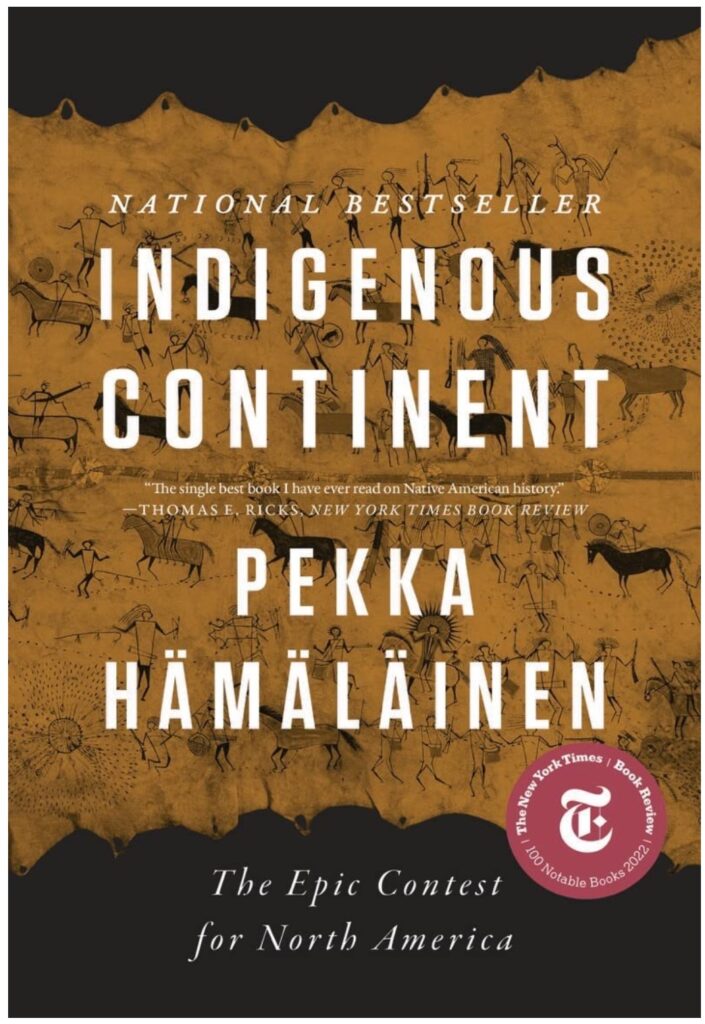
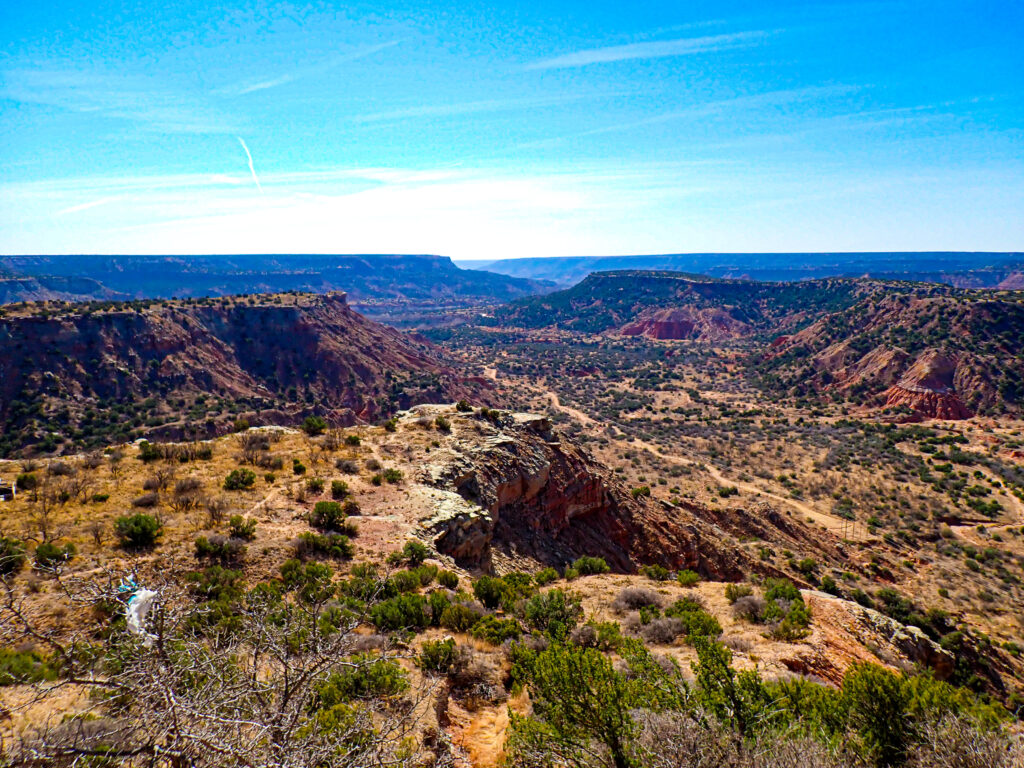
So I’ve just returned from a week in Santa Fe and a quick side trip to Palo Duro Canyon in north Texas, site of the infamous Battle of Palo Duro Canyon in September 1874. I grew up in the Hill Country of Central Texas, which was Comanche territory until the collapse of Comanche hegemony over the Texas plains that resulted from this battle. Hamalainen’s Indigenous Continent (2023) is an impressive book, long and detailed. 
Screenshot

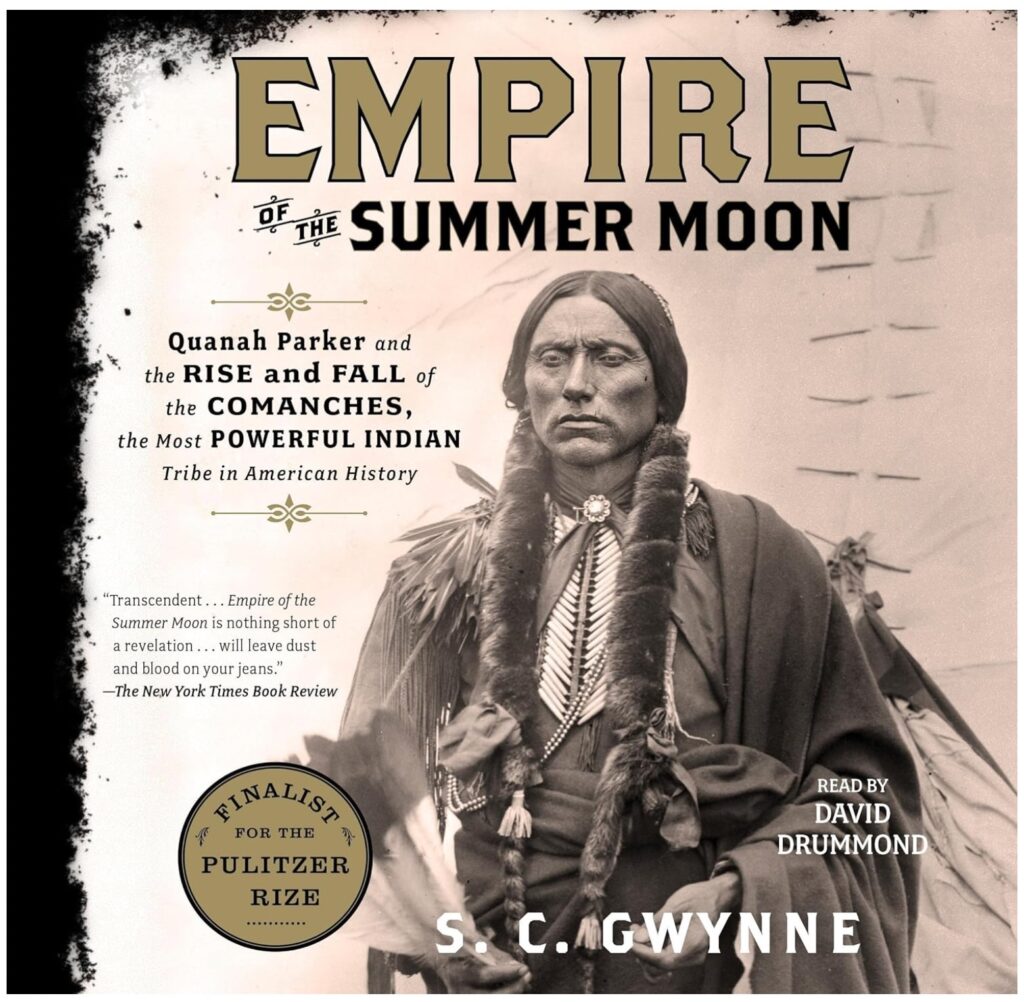
At times it suffers from its rhetoric that Native Americans were resourceful and intelligent traders and warriors. I of course don’t argue with that idea, but his insistence seems rather dated, as if he’s arguing against someone claiming Native Americans were simply “savages.” That viewpoint is a bit too old-fashioned to counter, so it seems he harps on it more than necessary. I was also skeptical of a Finnish historian’s take on North American history, and, for the most part, came away convinced. At times he seems a bit fuzzy about North American geography, but that’s understandable. The best aspect of the book is its comprehensive Native-American angle, showing how the many and various tribes interacted with each other and thrived in pre-Columbian North America, until they didn’t. Disease brought to the Americas by Europeans was the greatest cause of population depletion that set the stage for conquest. I’ve read several Comanche histories, including S.C. Gwynne’s best-selling Empire of the Summer Moon (2016).
Screenshot

He argues that one of the fundamental problems of Comanche history was their warrior culture, which relied on raiding both white settler and Mexican farming communities in northern Mexico, which doomed them to forever conflict with the encroaching Texans during the period of expansion in the 1830s-1880s. Hamalainan tends to rationalize the terror and depredations of the Comanche raids in Texas and Mexico as part of an “economic policy”—a policy based on murder, rape, and kidnapping. That Europeans from 1492 on committed similar atrocities is undeniable. It was a bloody period of history. Both sides were killers, at times, such as depicted in Cormac McCarthy’s epic Western Blood Meridian (1985). We camped a couple nights at Palo Duro Canyon and can see why it was so iconic to the Native tribes: On the flat plains of the Texas Panhandle it’s an oasis of sorts, with dramatic cliffs, creeks and rivers, woods and canyons that allowed Native peoples to thrive in a harsh landscape. 
Posted in History of the Southwest, Native American History, The West | Tagged , , | Leave a comment

The Year Without a Winter Ends: It’s Spring!

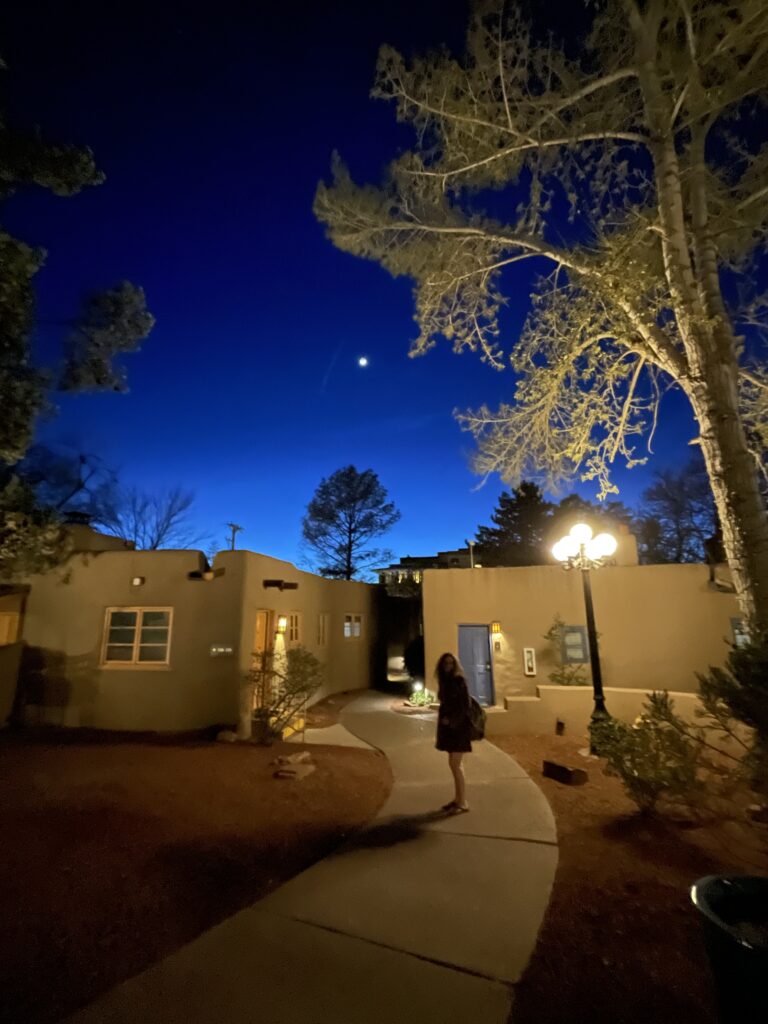
So it’s Spring in Santa Fe, New Mexico. The Cottonwoods and Cherry trees are blooming. And Venus is bright in a dusky sky.

Posted in Santa Fe, Year Without a Winter | Tagged , | Leave a comment

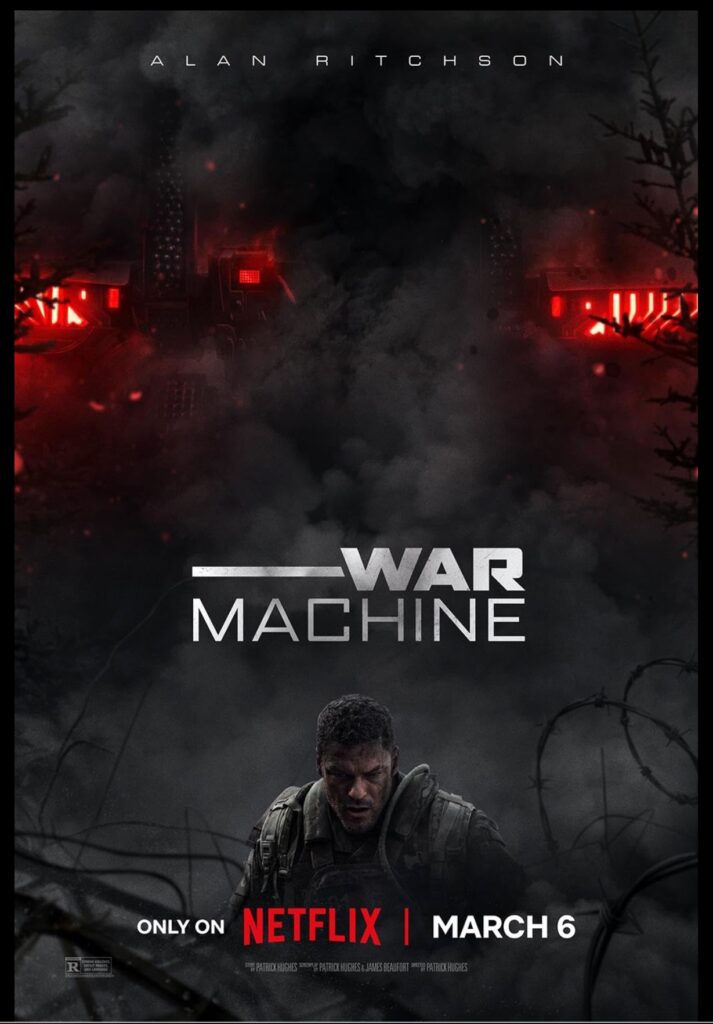
Review “War Machine”: Glimpse Our Future Wars Against Invading Robots

So it was with some amusement that I read the No. 1 movie on Netflix last week was War Machine, which I watched like all those other viewers. When it ended my wife said, “I can’t believe I watched that whole thing.”

Screenshot

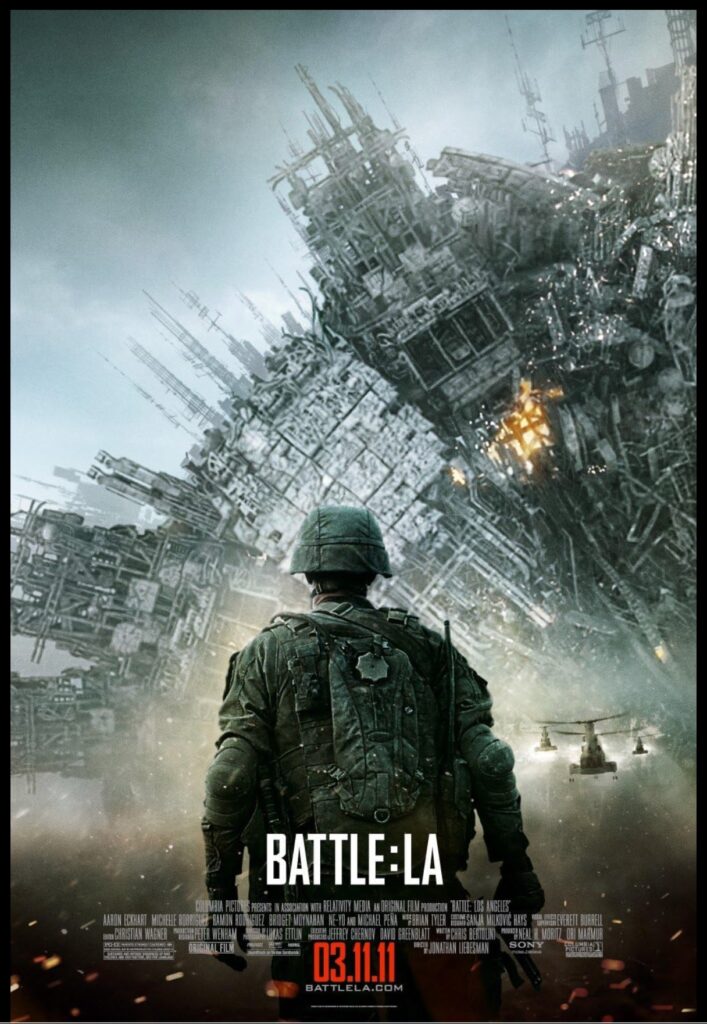
Although it’s filled with military jingoism and very, very improbable circumstances I have to tip my hat: It’s certainly a riveting flick. Alan Ritchson plays an Army vet, designated as “81,” who wants to go through Army Ranger school due to an unfortunate back-story involving his brother and some explosions. Against all odds he makes it to the final “training” mission in the Colorado Rockies. Meanwhile a series of meteors crashes to the earth and guess what? They aren’t meteors. Soon the alien robot war machine is blasting all the recruits to smithereens. With the foolish and overhyped War on Iran going on it’s easy to root for these guys and indulge in mindless violence, directed only against alien robots. It reminded me a bit of another, better movie: Battle Los Angeles (2011), starring Aaron Eckhart—which had actual aliens invading L.A. and wreaking havoc.

Screenshot
Posted in A.I. Apocalypse, Alien Intelligence, Scifi Movies | Tagged , | Leave a comment

Review: HBO’s “DTF St. Louis” Marches Toward Quirky Sex Fun and Murder

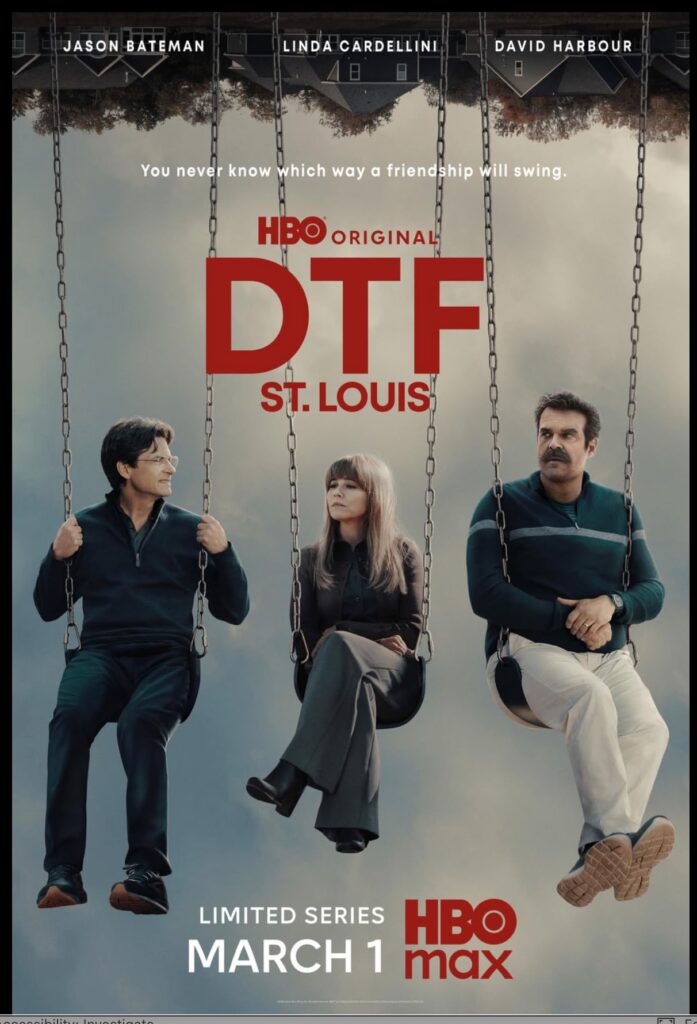
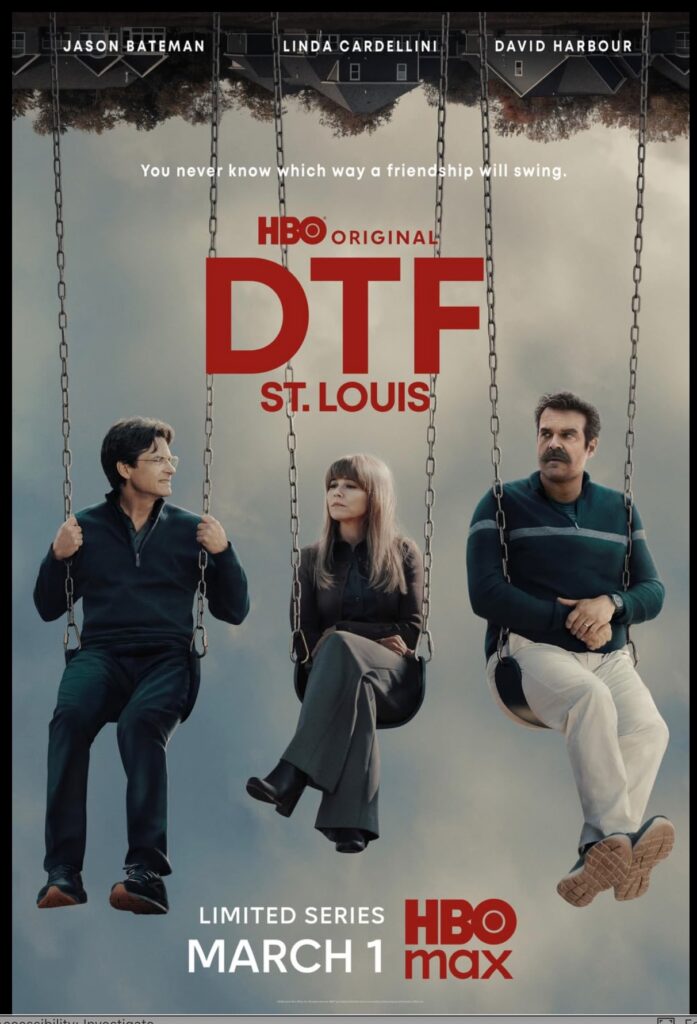
So I’m up to episode three in the new HBO series DTF St. Louis and digging it. My favorite show right now. Jason Bateman is playing against type: Usually he’s the good-hearted family guy with terrific comic timing, often playing the “straight man” character—the sane one around whom the wackos orbit. In this series, playing Clark Forrest, he’s a disturbed TV weather guy with kinky sexual fetishes that cloud his thinking. When he describes his sexual . . . proclivities . . . he’s hesitant, nebbishy, and captivating. But David Harbour, lately of Stranger Things fame (and infamy, kind of), plays the murder victim, Floyd, and does a great job. He’s a portly Sign Language expert with money problems, a wife whose side gig as a Little League umpire turns him off, and a stepson who (at first) hates him. Oddly enough he’s charming and funny and likable. Bateman has the tougher role as the more-successful friend who leads Floyd astray, sex-wise. Linda Cardellini plays Carol, Floyd’s wife, who is an obvious Suspect No. 1. But I don’t buy it. That would be too simplistic. My theory: Clark’s wife (Wynn Everett as Eimy Forrest) has been suspiciously absent so far. She’s not a suspect but we know nothing about her. Hmmm.

Screenshot
Posted in David Harbour, Film, HBO series, Prestige TV | Tagged , , , , | Leave a comment

The Year Without a Winter continues

So I’m well aware there’s been plenty of extreme winter weather in the eastern half of the U.S., but where I live, in the Southwest, it’s been a seriously weird weather stretch worthy of the phrase The Year Without a Winter. I’ve lived in Colorado off and on since 2002, which was a terrible drought year for the southern half of the state. Living in that drought year was good training: It made me aware of how dry it could be, but also how quickly the weather can change and the natural world can bounce back. Usually the El Nino/La Nina variations play a role in our drought, as it did this year: We’ve had La Nina conditions all winter, which tends to push the jet stream farther to the north, resulting in less moisture and cold in the Southwest, more snow in the Northwest. But this one has been a doozy. There’s a “heat dome” over the Southwest right now, breaking many record highs. Of course during this dry spell we’re also dealing with an idiot POTUS who is doing his best to kill renewable energy systems throughout the country and lavishing his praise on Big Oil. It’s embarrassing, so wrong-headed it makes no sense whatsoever. Now the War on Iran has driven oil prices up and Trump says that’s good because the U.S. is a great oil producer. That’s nice for the oil lobby but a money drain for the rest of us. All the other nations who have embraced renewable energy can withstand the price shocks better than we can. Below is a photo of my home in the Sangre de Cristo mountains west of Pueblo, Colorado. In a wet year we can have as much as 12 feet of snow or more. This year we’ve had maybe two feet total. This photo was taken recently, after a couple inches of snow.

Posted in 2025-26 Drought, Water Crisis, Weird Weather | Tagged , , | Leave a comment

“Good Luck, Have Fun, Don’t Die” Review: Our A.I. Future Will Be a Gilded Cage, Maybe

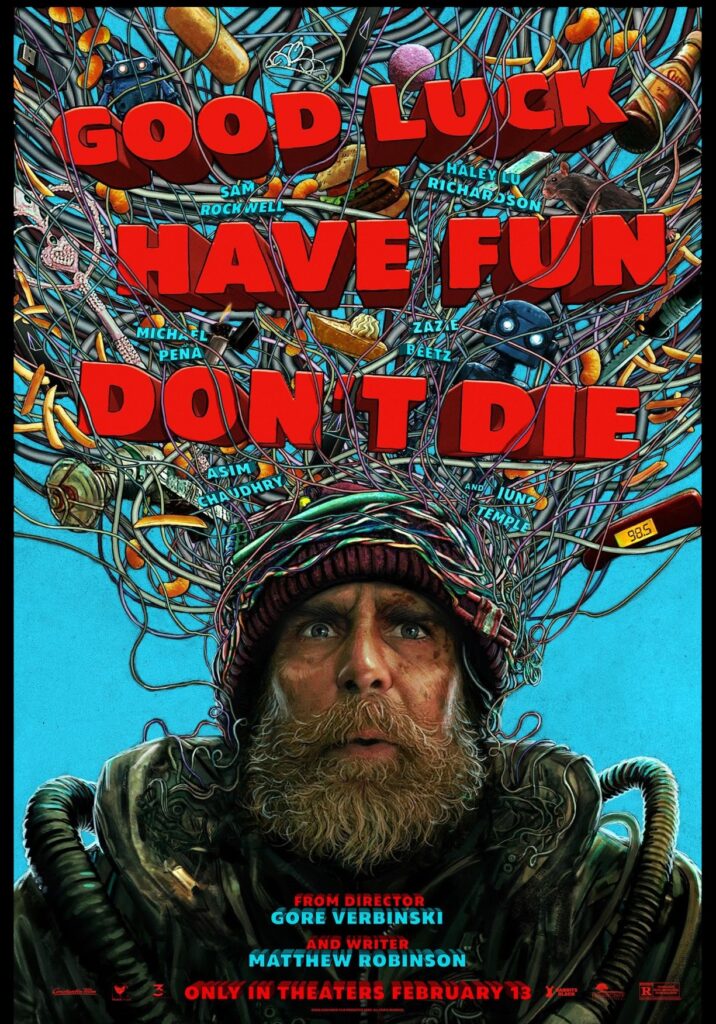
So Hollywood is rightfully worried about how A.I. fakes, perhaps in the (near) future, could disrupt its movie-making biz: In the meantime, A.I. is all over the big screen: Gore Verbinski’s new movie Good Luck, Have Fun, Don’t Die is right up that digital alley. 

Screenshot

It’s actually pretty good, wacky and frenetic, with an A.I. takeover/apocalypse of sorts at its heart. (Not one to miss a trend, last weekend SNL had a funny commercial about an A.I. product called “Otezla” that was clever.) Sam Rockwell, who had a scene-stealing performance in Season 3 of White Lotus, plays The Man from the Future, both to comic and dramatic effect. The plot is zany, hurried, and at first thoroughly confusing: Rockwell shows up at Norm’s diner in L.A., dressed in rags and plastic like a homeless man, and announces to all patrons that he needs volunteers to help him accomplish a mission for which he was sent to present day from some time in a murky, dystopian future in which humans are ruled by A.I. At first you wonder why the other customers put up with his harangue, but he does have a bomb strapped to his chest (or it looks like one). That’s the splashy/hyper beginning to the action and perhaps the zenith of its confusion.

Once that hostage-situation-of-sorts gets established the movies settles down and the fun starts. A handful of peripheral characters are introduced, who all have some reason to believe Rockwell. When the police come Rockwell and his “volunteers” set off on their Quest: To save the world by installing some A.I. coding safeguards that will prevent it from dominating humankind. The last third or quarter of the movie is the best: It’s at times funny, whimsical, and action-packed. Juno Temple plays a crucial role as a mother with a video-game-obsessed teenager and Haley Lu Richardson (who also starred in Season 2 of White Lotus) as a gal allergic to computers and wifi. The director, Gore Verbinski, is known for a string of big hits, including the Pirates of the Caribbean movies and The Ring (2002), and as crazy as the action gets, everything makes sense by the end.

Posted in A.I., A.I. Apocalypse, A.S.I. (Artificial Super Intelligence), Comic Movies, Gore Verbinski movies | Tagged , , , , | Leave a comment

On Maggie Gylenhaal’s “The Bride”: Bonnie & Clyde in Stitches

So yesterday I caught the phantasmagorical brilliance of Maggie Gylenhaal’s The Bride. First I should note I really wasn’t interested in seeing this movie. Why another Frankenstein? Didn’t they just make one with Oscar Isaac and Jacob Elordi last year? And saying it’s based on Mary Shelly’s Frankenstein (1818) novel isn’t a big draw for me. I’ve read the book and it’s . . . okay, mainly iconic for being one of the Gothic classics that originated in the famous Year Without a Summer of 1816. It’s certainly a great idea, one of those stories that demands attention. But enough already. The only thing worse than Frankenstein remakes are Dracula remakes. (There’s one out right now, too, which at least stars the always-good Christopher Waltz.) Or maybe Wolfman remakes. Which is all to say, after arriving at the theater with low expectations, I’m impressed to have liked The Bride so much.

Screenshot

The Bride is a quite a complicated contraption of plot and character. Mary Shelly appears on screen and gives her two cents. There are multiple plots and narratorial threads—including Penelope Cruz and Peter Sarsgaard as detectives on the case—that seem mystifying in the beginning but somehow all come together nicely by the end. Most obviously, it’s a movie about movies. Set in the 1930s, it’s reanimated in the same era of as James Whale’s Frankenstein (1931), which famously starred Boris Karloff as the Monster. But Gylenhaal nods to the many other Frankenstein iterations, most notably Mel Brooks’s Young Frankenstein (1974), one of my all-time favorite comedies: There’s an elaborate dance number to “Puttin’ on the Ritz,” complete with top hats and canes, reminiscent of the Gene Wilder and Peter Boyle stage-show in that film. The spirited gender-bending hijinks of The Rocky Horror Picture Show (1975) lurk more in spirit than in allusion, while the crime-spree chaos of Natural Born Killers (1994) arises from the cultural popularity of Frank and his Bride. Last but not least, there are numerous echoes of the seminal outlaw-lovers of Bonnie & Clyde (1967). The tagline below works for Frank and his Bride: “They’re young . . . they’re in love . . . and they kill people.”

Screenshot

Critics will no doubt zoom to the feminist message of the film, but that’s a bit reductive. Before I saw it I wondered why Christian Bale would want to play Frankenstein’s Monster (though usually he goes by Frank). He’s great in everything, but my personal favorite is still the classic The Prestige (2006). Now I know why: He gets to cut his chops and chew the scenery in several over-the-top scenes, and makes it all look easy. Jessie Buckley plays the eponymous Bride and does a great job. I liked her performance here better than in Hamnet (2025). It’s audacious, nutty, and way fun—a crazy-good work of art, not simply a story to get a point across. 

Posted in Frankenstein remakes, Horror Movies, Literary Fiction, Movies about movies | Tagged , , , | Leave a comment

On George Saunders’ New Novel “Vigil”: Jumping the Shark Across the Heavens

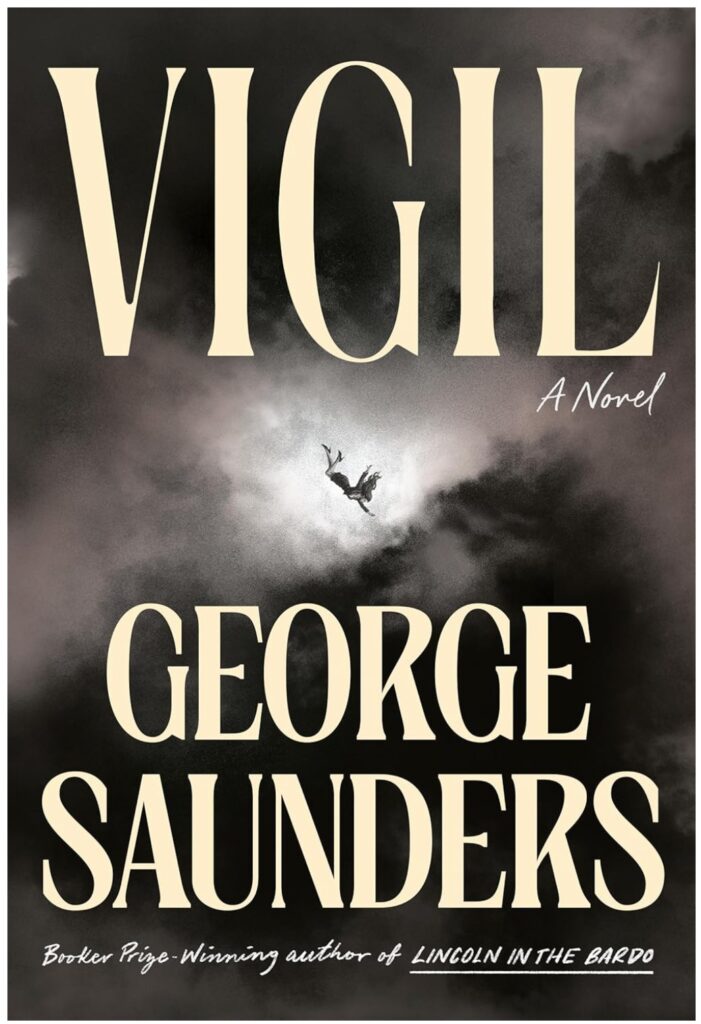
So George Saunders’ new novel Vigil is out and about and it seems everywhere you look George is staring back, from an interview in the New York Times that labels him a “secular saint” and “guru of goodness” to a new film adaptation (now in production) of his novel Lincoln in the Bardo—starring Tom Hanks as Abe Lincoln no less. (I’m not saying he’s overexposed, but the George Saunders action figures are a bit much. And so pricey! You have to pay extra for the tiny writing desk and lectern.) Disclaimer: I know George and like him, consider him a friend, though it’s not like we go shoot pool together or anything. I was instrumental in bringing him to the Penn State campus for a couple of readings. Both went well. After one of them we had a party at my home and George was supernice to my students. “Secular saint” and “guru of goodness” was hardly what I (or, I imagine, what those students) would have characterized him as. For one event he read his great story “Sea Oak,” about a woman who comes back from the dead to save her nieces and a nephew who works as a male stripper at a Chippendale’s-like nightclub. There’s a funny point in the story in which the dead zombie-aunt screams at her nephew, “Show them your cock!” So before we go warming up the anointing oil and filling the holy water font, let me say George certainly did not come across as some kind of self-righteous do-gooder. I love his stories, especially the books Tenth of December, Pastoralia, andCivilWarLand in Bad Decline. All that said, let’s take a look at his new novel, Vigil.

Screenshot

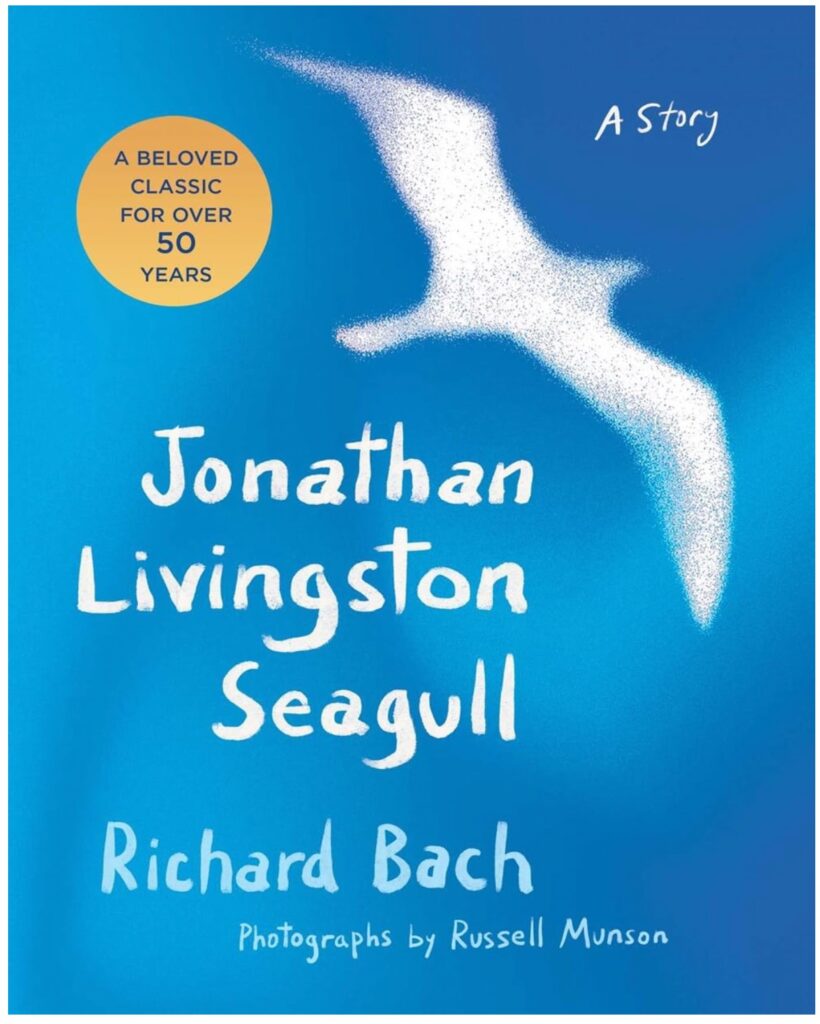
At times I’ll admit that the shenanigans in Vigil are somewhat difficult to keep track of: The story involves two angels who are playing a rather scrambled version of Clarence in Frank Capra’s It’s a Wonderful Life(1946), shepherding (somewhat) an oil baron in his last moments of mortal existence. At times the action is cartoony: The angels seem to plummet to Earth (from Heaven?) and land with a sharp splat, then dust themselves off and get to work. They bicker a lot. One of them is French, although his vocabulary is so simple even I could translate it. Like Lincoln in the Bardo (2018), there are stories within stories within stories. It creates a curious fabric to the narrative style: Part satire, part realistic histories, part wacky fun. At times I had trouble keeping up with the many shifts in perspective and had to return to an earlier passage to get my bearings. From the NY Times quasi-apotheosis of Saint George I would have expected the book to be preachy: It’s not. The Dwight Garner review of Vigil in the Times was decidedly mixed, and mentioned Richard Bach’s 1970s classic inspirational book Jonathan Livingston Seagull (1972)—which I loved as a kid—and I recognize why: The angels are wise, chippy, and zoom around the mortal realm, much as Jonathan Livingston Seagull zooms around his shorelines and seascapes. At times this zooming feels as if it’s leaping the storyline, performing its own kind of “jumping the shark” maneuver a la the TV sitcom Happy Days. But the shark that’s being jumped is the oil baron on his deathbed, and the overall arc is not toward preachiness and platitudes, but rather toward understanding and transcendence. Of course for anything we read or watch the thorny question ultimately arrives: But is it good? As I’ve admitted, I’m a biased narrator. You be the judge.

Screenshot
Posted in Artistic writing, Literary Fiction, Uncategorized | Tagged , , , , | Leave a comment

On HBO’s New Series “DTF St. Louis”: Charm & Glory of the Mundane

So the best show on TV I’ve seen lately is the new HBO series DTF St. Louis, starring Jason Bateman, Linda Cardellini, and David Harbour. I’d heard a little about it but was pleasantly surprised. For one thing, it’s billed somewhat as a sex comedy, as the title arrives via an eponymous app that’s essentially a hook-up site for horny St. Louisans. That’s mainly played for awkward laughs between the two stars, Jason Bateman and David Harbour, as they negotiate some sexless marriages. But I would have expected several of these dates for comic milking. Wrong. 

The show quickly moves past that hookup-app setup and into the lives of the characters, including a murder. Now in the past I’ve complained how it seems too many TV shows include a murder or unnecessary violence to draw in an audience, but the case here is more in the category of an offbeat Forensic Files than a typical murder mystery. I’ve only seen Episode One (which debuted last Sunday) but I’m already hooked on the mystery: We know who is killed but not exactly how. Several suspects but the most likely is almost surely not the perp. So there’s some zing built for the second episode, as the audience wants to know more to do their own sleuthing. But the real charm of the show is the details: David Harbour is married to Linda Cardellini but sexually turned off by her uniform as a Little League baseball umpire. Jason Bateman rides a recumbent bicycle that makes him look super dorky, including a somewhat oddly shaped bike helmet. David Harbour is the stepfather of a bratty teenager who steals the show each time he appears, often sullenly throwing rocks at houses. 
I actually know St. Louis fairly well: My wife grew up in a suburb on the west side. Does the series look like St. Louis? Not exactly. The street and neighborhood scenes are pretty generic. I can’t say it affected my viewing in the least. Jason Bateman plays a popular TV weatherman and for that reason I suppose St. Louis is a city of the right size/cultural importance to anchor the story. 

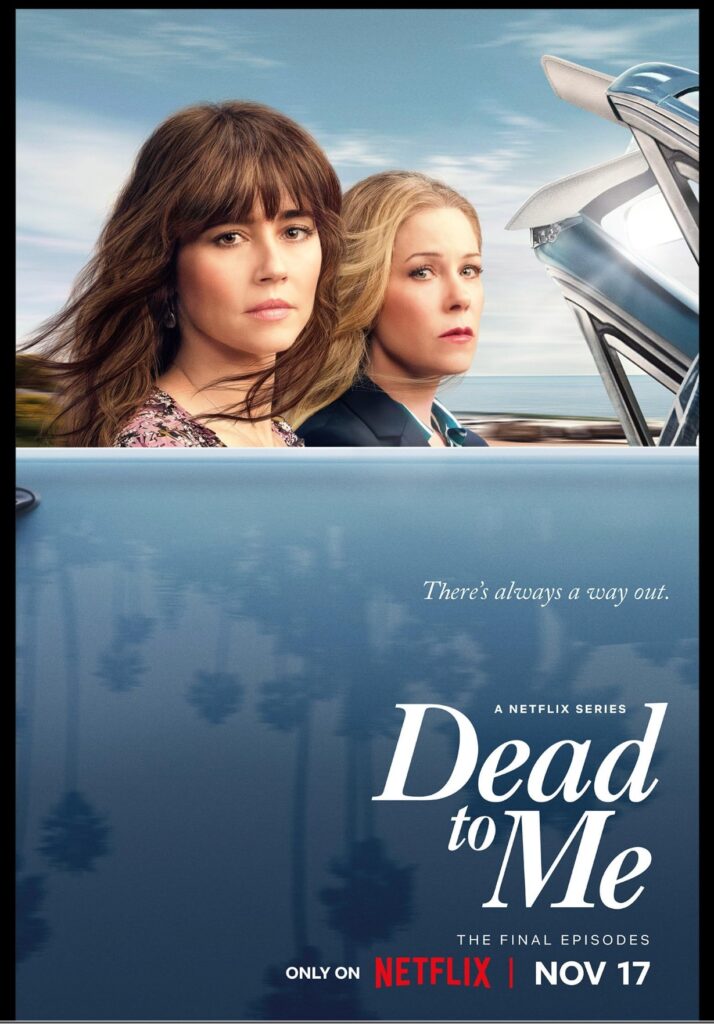
So far much is being withheld. Linda Cardellini—a terrific actress whose last big series was the Dead to Me (2019) comedy/action series with Christina Applegate—is a total mystery. I expect we’ll find out more about her shortly. 

Posted in David Harbour, Good TV, HBO series, Jason Bateman, Linda Cardellini | Tagged , , , | Leave a comment

On “Dr. Strangelove” 62 Years Later: General Jack Ripper in Charge Now

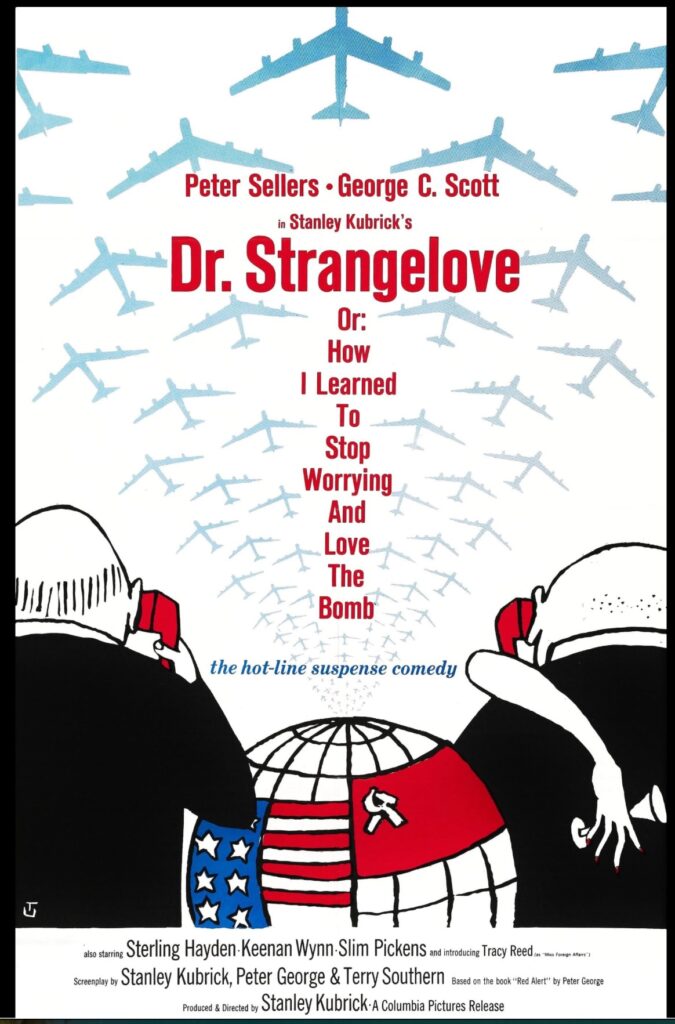
So there’s nothing quite like the genius of Stanley Kubrick to underscore the absurdity of our present Wag-the-Dog war on Iran. In Dr. Strangelove: Or How I Learned to Stop Worrying and Love the Bomb (1964), General Jack Ripper is a lunatic starting WWIII over an issue of foreigners invading our country to steal our “precious bodily fluids.” His monologues sound like an RFK Jr. press release. The IMDB website description is a good beginning to this comparison: “A mentally unstable American general orders a hydrogen bomb attack on the Soviet Union, triggering a path to global nuclear holocaust that a war room full of politicians and generals frantically tries to stop.” We only have to make minor edits to sum up our current international crisis: “A mentally unstable American President orders a missile attack on the Islamic nation of Iran, triggering a path to global holocaust that politicians at a war room in Mar-a-Lago, while noshing on boiled shrimp and cocktails, do everything to encourage.” Their exuberant glee in the destruction of another country and the killing of many “foreigners” is particularly disgusting. Reports are coming out that military officials are telling our troops that Trump has been anointed by Jesus to start Armageddon. (“One combat unit commander reportedly said that the war is ‘part of God’s divine plan’ and that ‘President Trump has been anointed by Jesus to light the signal fire in Iran to cause Armageddon and mark his return to Earth'” (https://www.democracynow.org/2026/3/4/headlines). Our Secretary of War now brags about having “no mercy.” Lord help us.

Screenshot
Posted in Stanley Kubrick films, War on Iran | Tagged , | Leave a comment