So last Spring when I was arranging a week-long kayaking trip on Shoshone Lake in Yellowstone National Park I read a number of Trip Reports, on various blogs and backcountry-travel sites. They were helpful. Some of them were kooky, such as the group who did a Shoshone Lake trip on paddleboards. (They looked like they had fun, though I think it’s a little crazy.) I’ll repay the favor by offering my own trip report. There were some surprises.
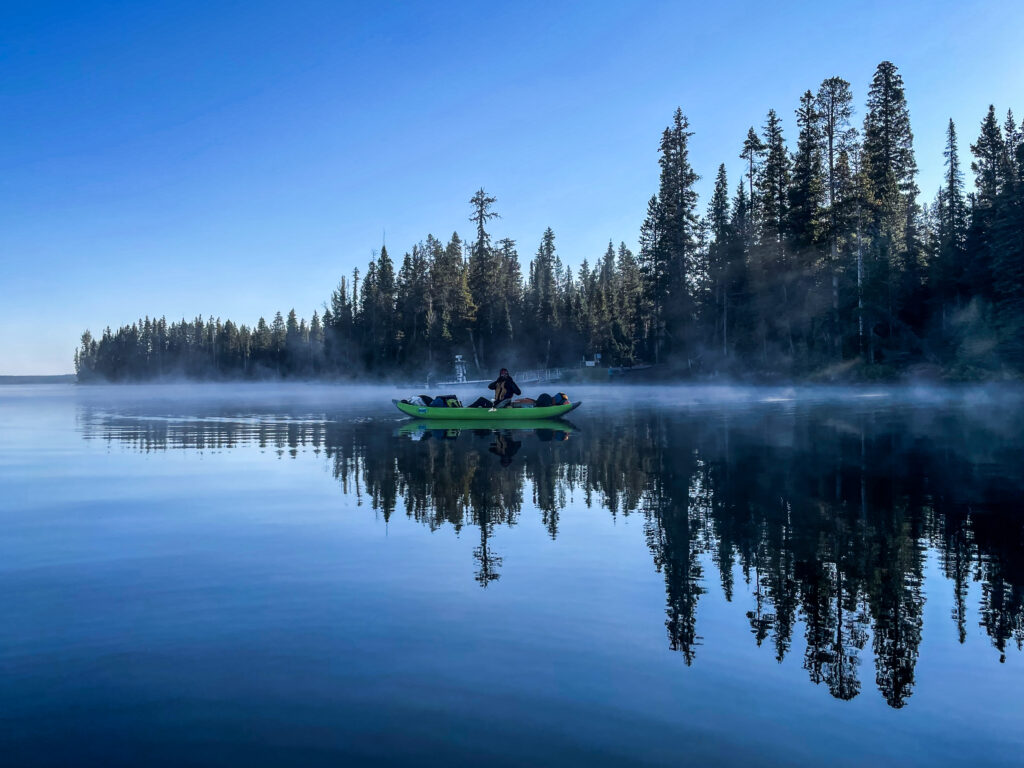
First off, Shoshone Lake is defined as the largest backcountry lake in the Lower 48. It’s “backcountry” in that you can’t access it from any road. You can hike to it via various trails (it’s a big lake) but if you want a paddle trip most people access the lake via the Lewis Channel, which is essentially a small river flowing out of Shoshone Lake and into Lewis Lake. We launched kayaks from the Lewis Lake boat dock and paddled the 4 miles across it to the channel, then about 3 miles paddling upstream the channel to the lake. From there our first campsite (site 8Q9) was less than a mile away, so our first day was probably less than or around 8 miles.
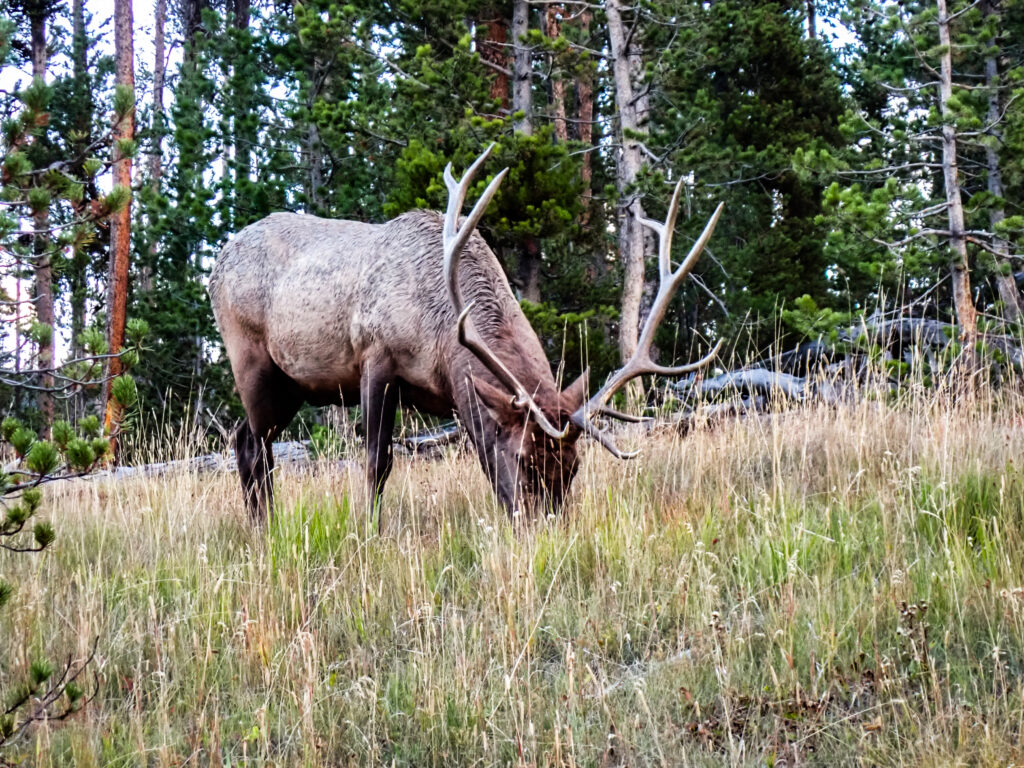
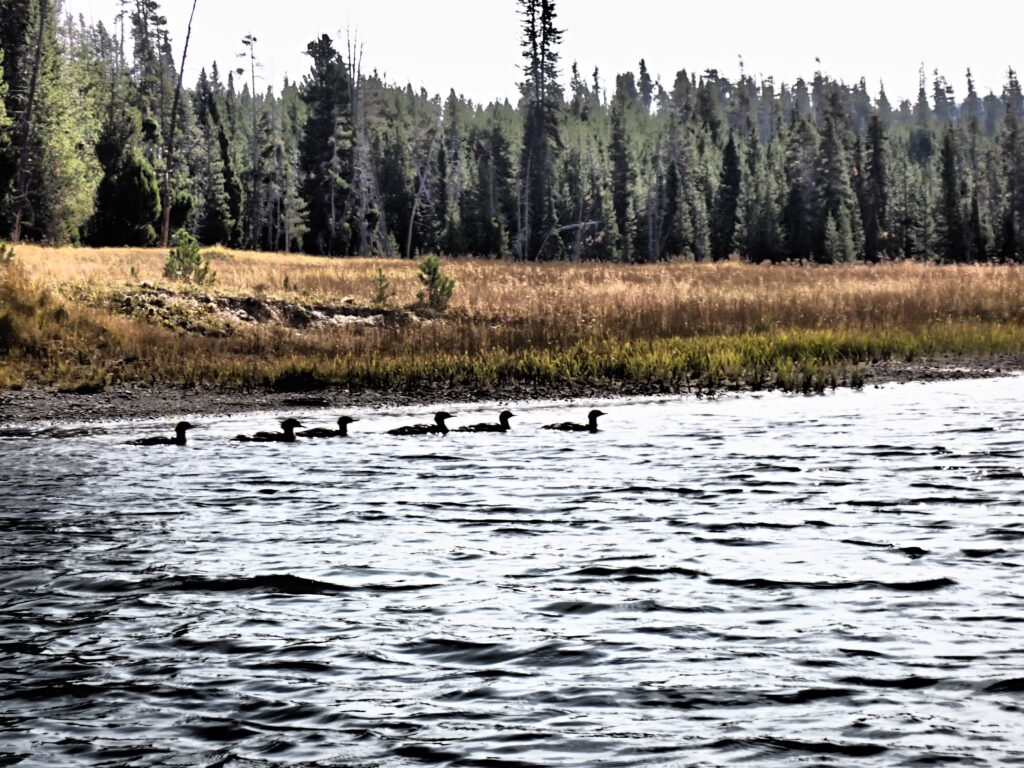
Wildlife: A common complaint or observation from other trip reports was the lack of wildlife sightings on Shoshone Lake. Our trip was in early September. While we saw no grizzlies (thank god) or black bear, we did see mule deer, elk, beaver (close to bank), Sandhill cranes, Bald Eagles, Mergansers, Swans, and other waterfowl.
That first day there were numerous Mergansers in the Lewis Channel, as well as Trumpeter Swans.
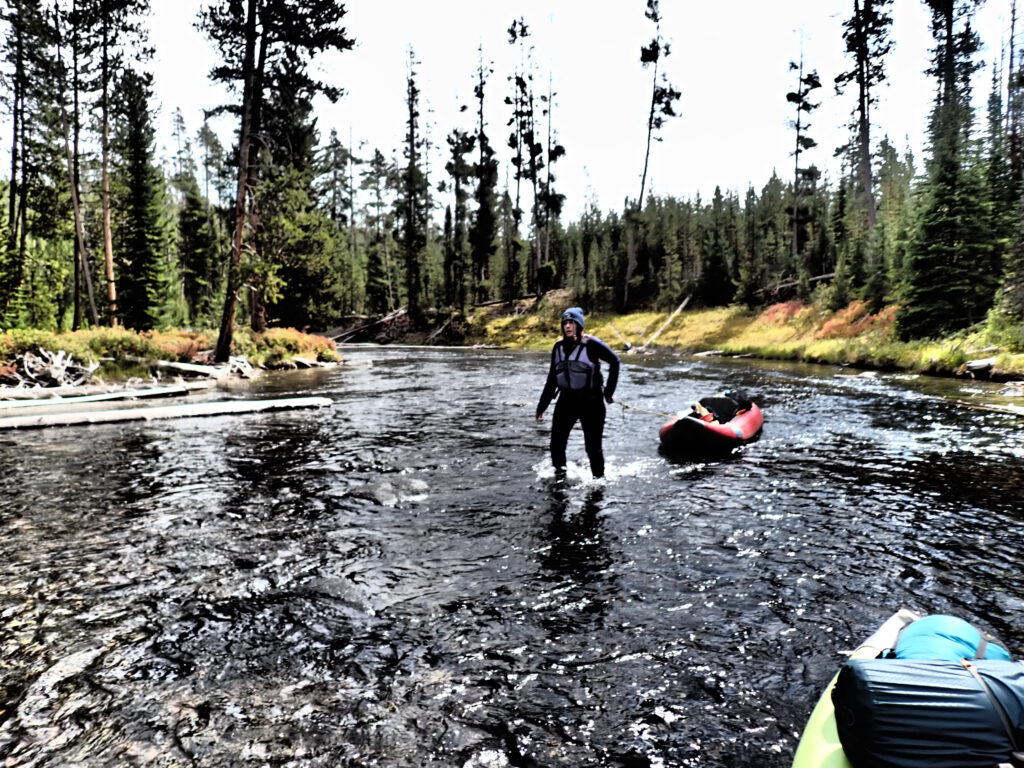
When we reached Shoshone Lake I saw a stately bull elk with huge antlers trotting in the line of trees off the eastern shore. Eagles perched high in the spruce trees near every one of our campsites. (And for those wanting bear sightings, we did see both Blacks and Grizzlies in the park, just not at Shoshone Lake.) At night we heard wolf howls and the deep hoots of a Great Gray Owl. And a word of caution: While we didn’t see any grizzlies a ranger told us one had been sighted on the banks of the Lewis Channel. It’s a narrow river with often a relatively thin strip of bank/shoreline before a line of forest and hills on either side, so if you saw a grizzly it would probably be relatively close to you. The first half of the Lewis Channel you paddle upstream (against weak current) until the “Rock Garden,” where the river gets shallow. At that point you line the kayaks upriver.
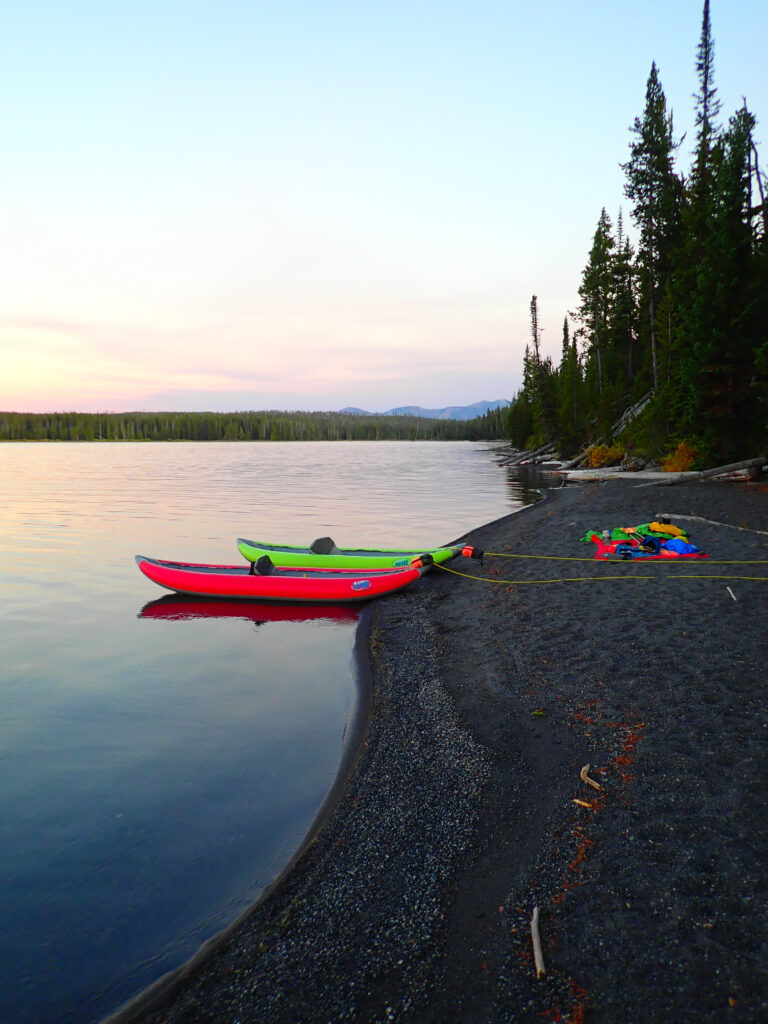
Campsite quality: I’ve kayaked and backpacked from Alaska to Mexico and Shoshone Lake had some of the finest backcountry sites I’ve ever visited. They even have pit toilets! Know that most of the lake shore is steep cliffs, so the campsites tend to be either in flat areas close to shore, like Moose Creek sites (3 of them), or, more commonly, on plateaus above the lake accessed by short, steep hikes.
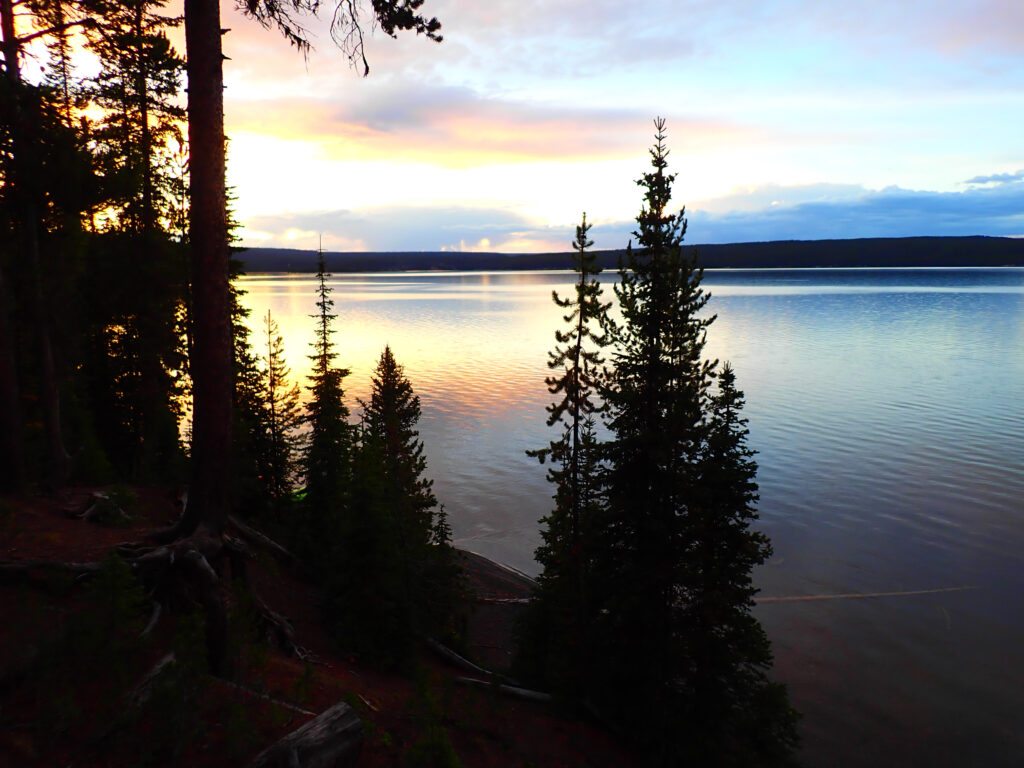
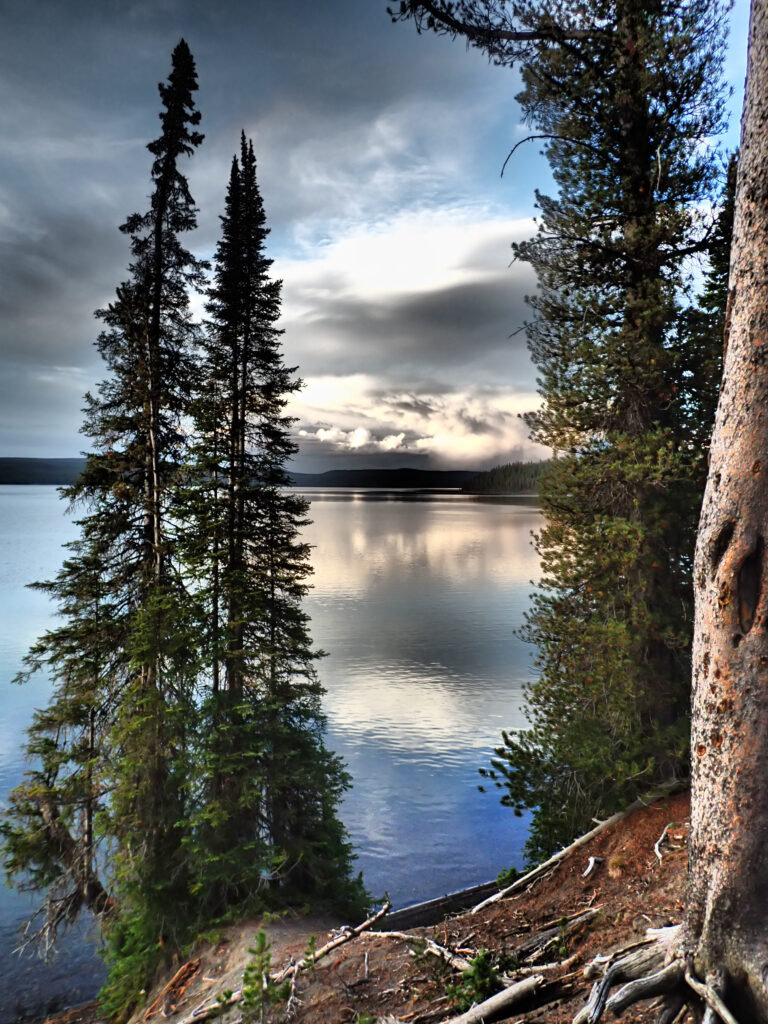
The views from the cliff sites were fantastic. We ate lunch and dinner on cliffs watching the beautiful blue lake, completely devoid of people. Which leads me to a surprise:
They aren’t kidding about “backcountry”: We were shocked and pleasantly surprised at how isolated it was. People complain about crowds in Yellowstone? When we launched we saw one other paddler, a solitary guy in an aluminum canoe. He launched before us and once we reached the Lewis Channel we never saw him again. (Think he was a day-tripper.) That was Monday. From then until Friday we had the entire lake to ourselves! We didn’t see any other people, until the weekend, when a few groups did show up. Even then I don’t think there were more than 10 people on the lake, total, during our visit.
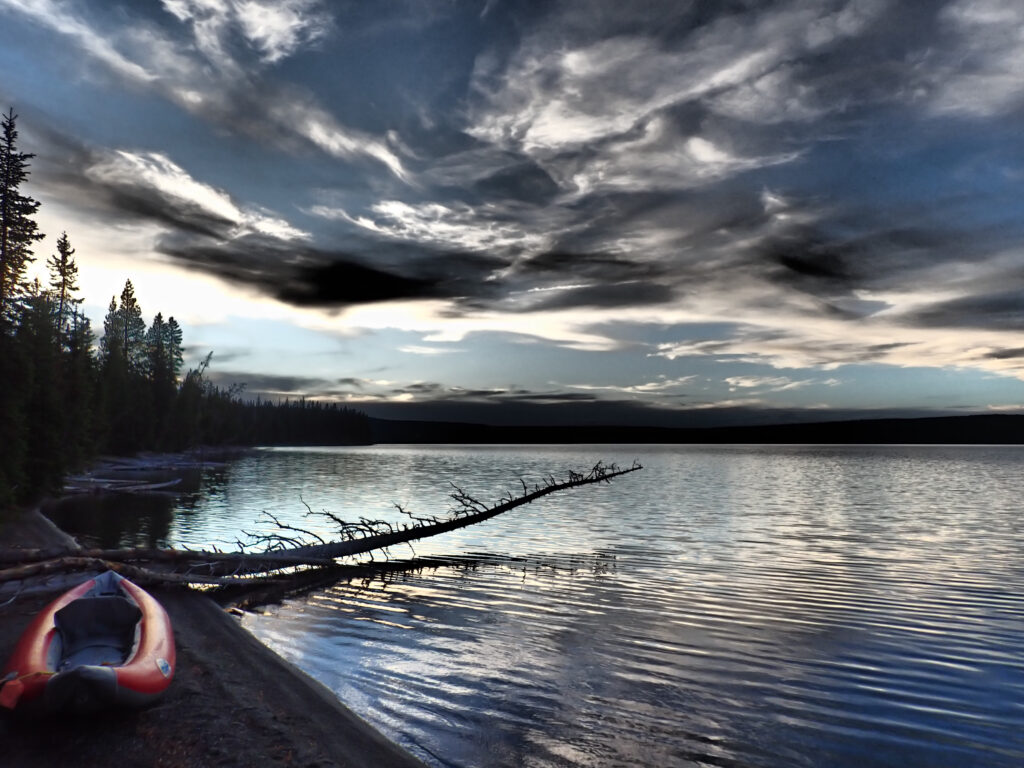
It was spectacular: A big, cold lake surrounded by forest. With no people. It was like having Lake Tahoe all to ourselves.
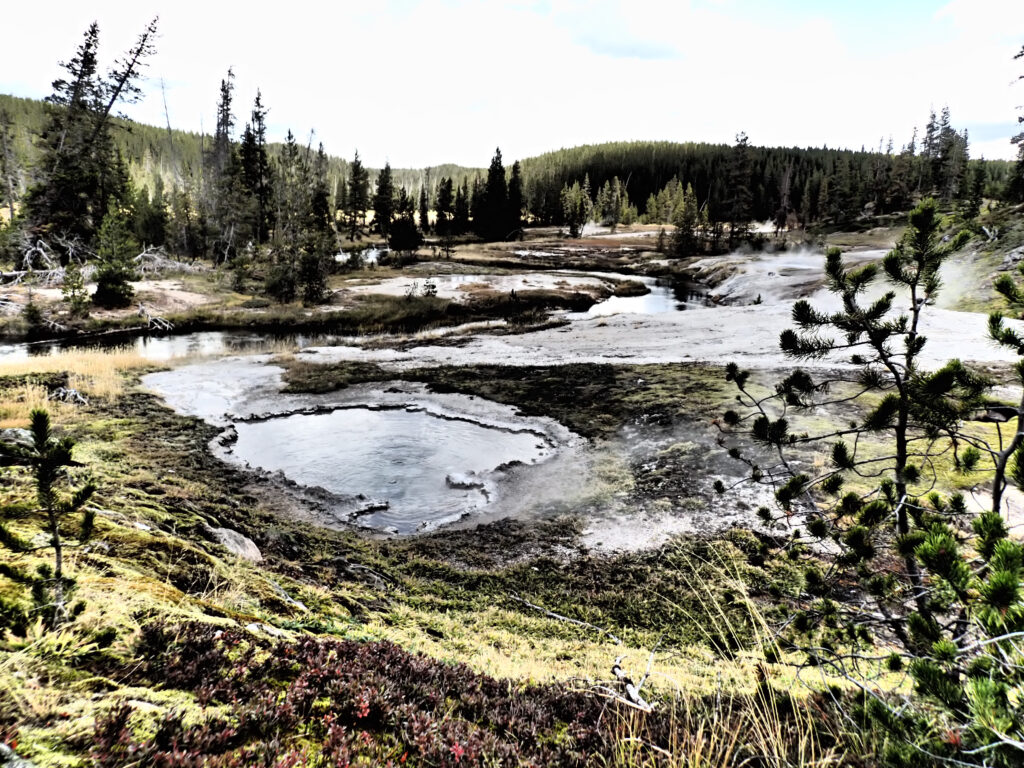
Geyser Basin: The western end of the lake is maybe 10-12 miles southeast of Old Faithful Geyser Basin and other thermal sites like the Firehole River. It has its own Shoshone Lake Geyser Basin there, quite large and spread out, with no crowds. Our afternoon there we met two hikers leaving the basin and two park-ranger hydrologists studying the geysers. That’s it. The coolest sound we heard on the whole trip occurred in the marshes on the lake side of the Geyser Basin: A loud warbling call, haunting and resonant—the call of Sandhill Cranes. They were feeding in the marshy grasslands near the shore. Huge birds closely related to Whooping Cranes. We had seen them before in Yellowstone and were thrilled to hear the call and see their blue-gray plumage with a red dash on their heads.
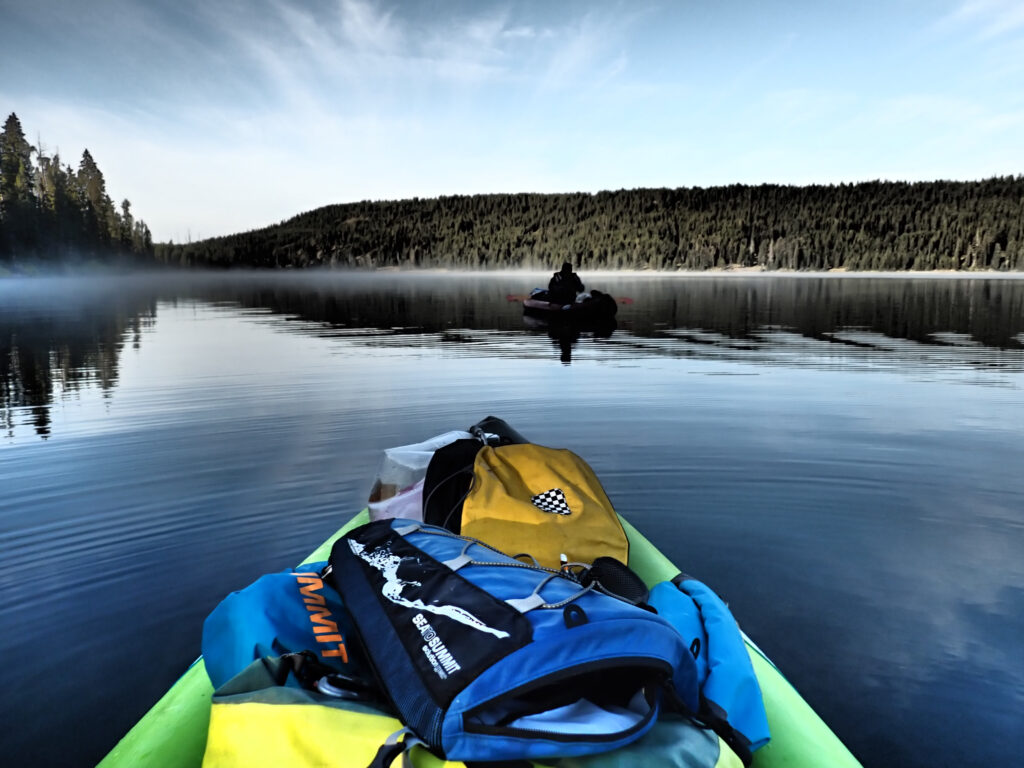
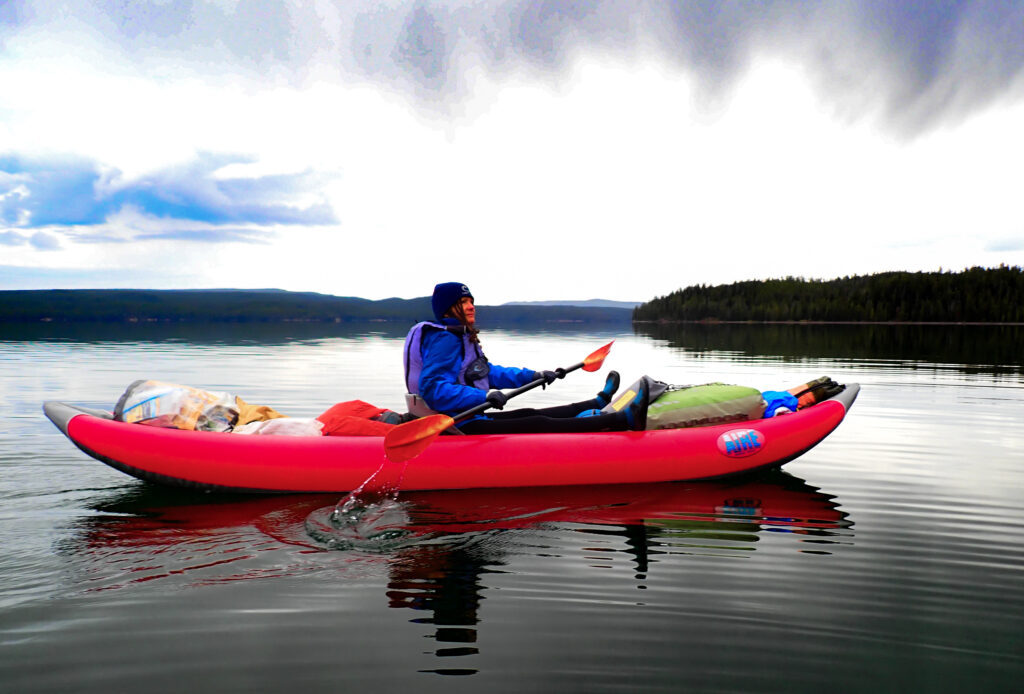
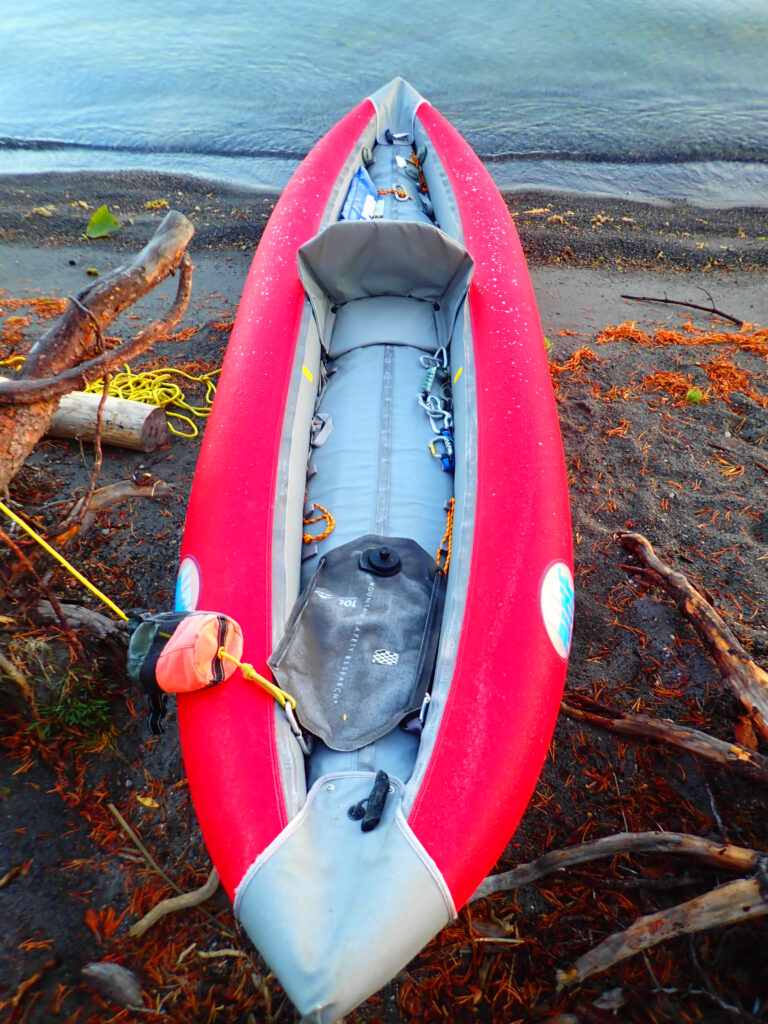
The biggest danger that ranger-folk warn you about on Shoshone Lake is the weather, mainly fast-developing storms popping up and roiling the lake, wind-generated waves that can easily capsize canoes. We read about three deaths and took the recommendations seriously. (We had also already spent a week kayaking Yellowstone Lake the year before, so we knew how strong the wind could be.) That affected our daily paddles: Our kayaks were two Aire Lynx II tandem inflatables, self-bailing, packed tightly. With the weight of enough food and gear for a week we were definitely slower in the water.
Each day we wanted to launch as early as possible—for us that meant 9:30-10—and arrive at camp before 1 p.m., when the storms would start popping up. They did, too. Almost every day there was a storm with wind and rain, often short-lived, often developing quickly. So we usually paddled 5-6 miles a day. When we reached the far western side of the lake, near the Shoshone Lake Geyser Basin, we made camp and had lunch, then paddled our empty kayaks over to the banks near the Geyser Basin.
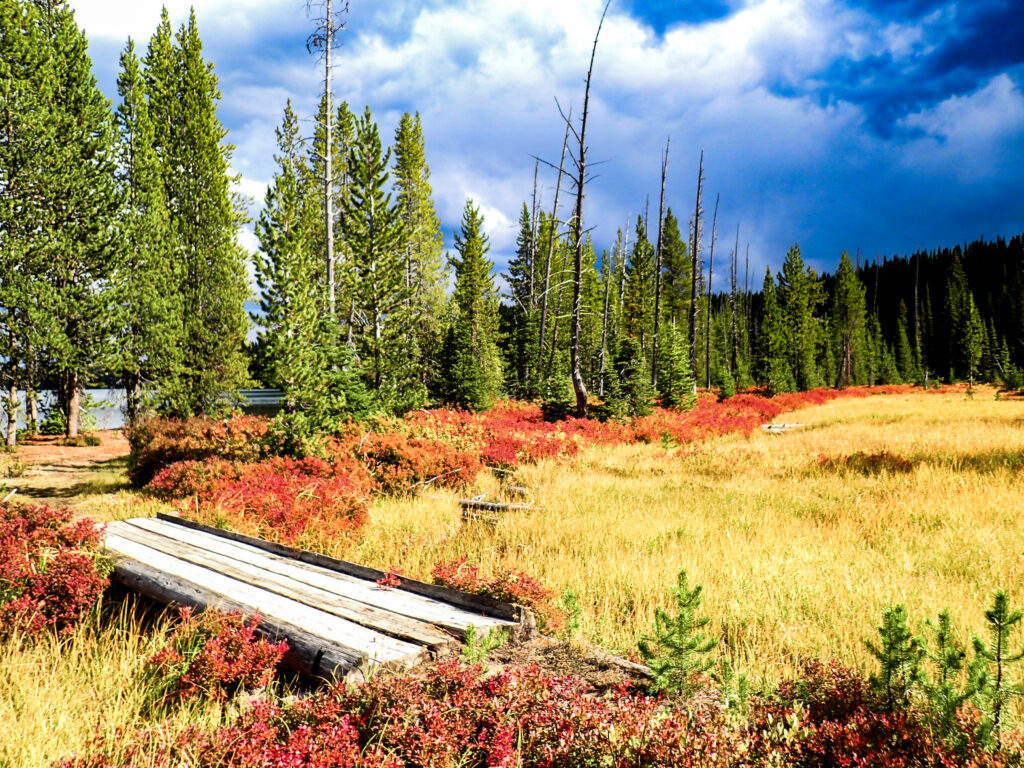
The Last Day: Woke up to freezing temps, ice on the kayaks.
All week long we had dodged the weather successfully, launching early to beat the wind and waves and hunkering in camp when the afternoon storms arrived.
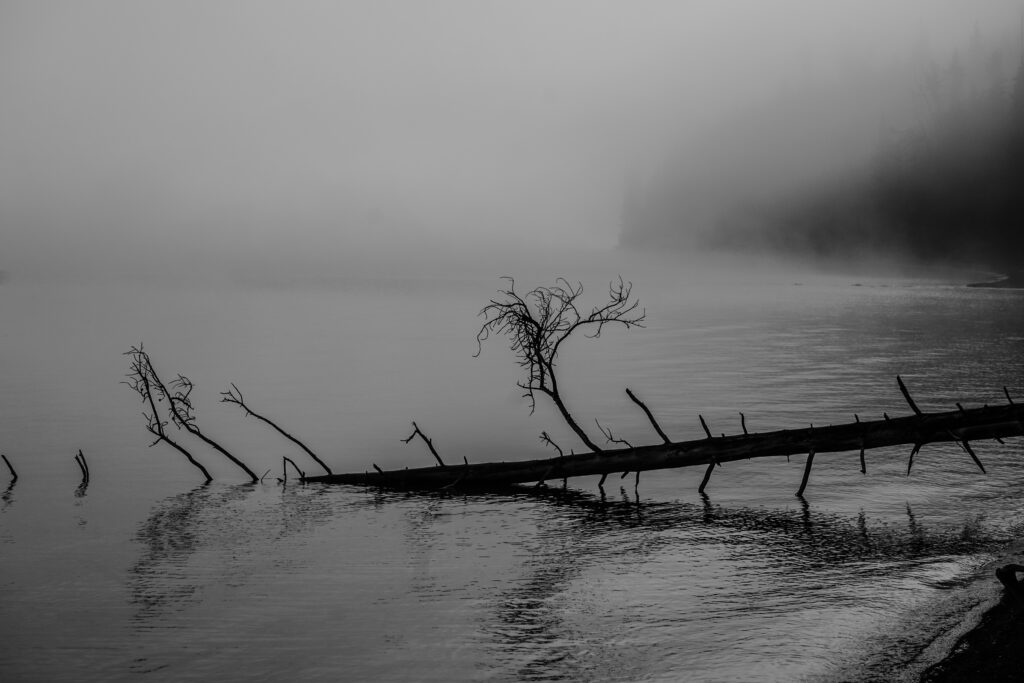
But the last day we paddled from Moose Creek (8Q7) to the Channel, then down the Channel to Lewis Lake, and the 4 miles across Lewis back to the boat dock. By the time we reached Lewis Lake we had to fight a stiff headwind all the way back to the dock. It was hard paddling, adding maybe an extra hour to the paddle-time. We reached the boat dock and were quickly surrounded by friendly people there to enjoy the view, asking questions about our trip. I went to move our Outback into position to load the gear and the battery was dead. No sooner did I mention that than the folks curious about our trip came to the rescue with a portable charger and we were up and running.
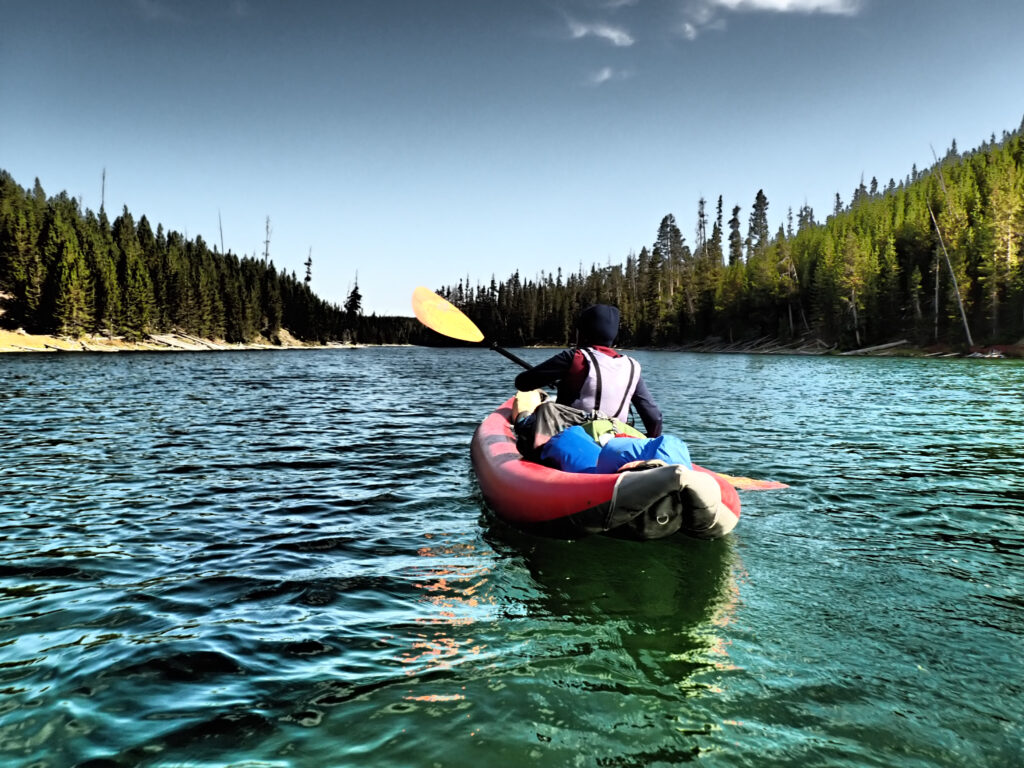
My favorite moments: Having coffee and breakfast at our cliff camps, watching Mergansers and Eagles on the lake, listening to wolf howls from our cozy tent, watching a storm rise on the north side of the lake and come down on our Moose Creek camp with the whitecap waves crashing against shoreline not far from our tent. We loved our Lewis Lake kayak trip. Would gladly do it again. Although this year we have our sights set on the Boundary Waters in Minnesota.