Guns & Bunkers: Or How to Enjoy "Doomsday Preppers" and the Truth About That Asteroid Crashing Into a Crater Near You

So the quirkiest angle of the success of Cormac McCarthy’s The Road (2006) was that we could all recognize what Discovery Channel shows Cormac had been watching, once you realize that the mysterious cataclysm that has befallen the world is some kind of “impact event,” to use the scientific (or quasi-scientific) term for a big asteroid/comet hitting the earth and causing mass destruction. One of the most intense (happy, almost) moments of the novel occurs when the father and son stumble upon a doomsday bunker of sorts in a back yard, one that is stocked with Canned Goods for the Apocalypse, one that saves their lives. After the grimness of the novel leading up to that moment, it’s a ray of light in a bleak world.
Enter the Discovery Channel’s and the National Geographic Channel’s new programs about just the kind of people who would build such bunkers, “Doomsday Preppers” and “Doomsday Bunkers”—as opposed to Doomsday Debunkers, which would be a different program altogether. “Doomsday Preppers” is amusing in a queasy, gruesome, black-humor mode: Most of these people look like they need a diet and some yoga to chill out, and perhaps some visits with a therapist, as well (not that it would help). One woman expects the government to declare martial law and “take over” in the next year or two: Take over what? Doing my laundry? I hope so. Answering my email? Go for it. Somehow, I’m guessing that’s not what she means by the things they would “take over.” It frankly seems part of the nutty Obama-is-after-our-guns myth that has been promoting gun sales to record levels, even though Obama is doing no such thing.
A TV critic in the NY Times has some funny (and some serious) observations about these programs, here:
http://www.nytimes.com/2012/03/12/arts/television/doomsday-preppers-and-doomsday-bunkers-tv-reality-shows.html?scp=1&sq=dooms%20day%20preppers&st=cse
But I think the reality behind these preppers is: They actually want the Apocalypse to come. Not in a rational way, but in an irrational, religious-extremist kind of way. If you spend much of your time & energy (& money) preparing for such an event, won’t you be somewhat chagrined if/when it doesn’t happen? That’s what fuels the phrase, “It’s not If, but When.” If the phrase is edited to be “Probably Never or in a Long Time or When We Least Expect It Is More Accurate,” it’s not much of a selling point.
We all want something big to happen in our lives. But some more than others.

Posted in Bad TV, books/film, Climate Change, Good TV, The West, Weird Science | Leave a comment

On the Documentary "Gasland": a Real-Life Horror Film

So I see plenty of movies that I don’t say a word about, either because they’re too familiar to bother commenting about (Bridesmaids maybe) or because they’re not worth a comment (The A-Team, anyone?), but for a while I’ve heard about the documentary Gasland and just recently bothered to watch it. I think my reluctance has to do with the AQ or Anger Quotient: If it makes me so pissed off that I want to scream, is it worth watching? I say Yes. And it did exactly that. (Well, maybe not scream. Growl?) Part of it focuses on the despicable practices of the natural gas companies who are fracking up the countryside of Colorado and Wyoming, two states/areas I know fairly well. It’s shocking. Although I understand the argument that we need natural gas for energy, there must be a better way than this: One more respectful of both the environment and the people. All I can say for sympathetic souls is Watch the film. You’ll think differently about fracking.
Here’s the film’s website: http://www.gaslandthemovie.com/

Posted in Climate Change, Film, Politics, The West | Leave a comment

Mitt Romney as The Feckless Male

So one thing fascinating about being a professor is that you notice over a span of years the changes in student behavior and trends. While I’m of the mind that human behavior doesn’t change all that much across the ages, now and then you notice the recent quirks and spikes. What I’ve noticed in the last five years or so is an offshoot of the Boy Crisis: The Rise of the Feckless Male. Often it’s upper-middle-class males in their twenties who seem rather weak and spongy, as if they’ve never had to work a miserable job, whose seem to put an inordinate amount of decision-making effort into their ipod playlists and moony efforts to land an attractive female (or male) companion—kind of an emo thing, I suppose: Music + Girls/Boys = Happiness. And I’ll hardly argue with that, and remember back to my own undergraduate days when these things seemed of paramount importance. But what’s changed seems to be a kind of whiny weakness, a sense of entitlement that surfaces in what seems a lack of gumption. Which brings me to Mitt Romney . . . .
. . . who will become the next Republican presidential candidate, most likely, and therefore have a good shot at becoming President, in our wacky electoral landscape. And although he is certainly of a much different generation than the college males born around 1990ish—as most students are right now—he also fits the bill as a Feckless Male, though in a different way. The latest idiocy spewed by Rush Limbaugh is a good example of how Romney fails to show much gumption: He won’t even criticize Rush for calling Sandra Fluke a “slut,” and his pervy suggestion that women who want their birth control paid for by health insurance should make sex videos (which is just too weird for most media to address, I’ve noticed). That’s how Romney is a Feckless Male. He’ll talk tough about (someone else going to war and dying) attacking Iran, but won’t even condemn Rush Limbaugh, a fat gasbag, for fear of losing some votes. Here’s a piece that includes Romney’s actual response, or weaseling:
http://thinkprogress.org/politics/2012/03/07/439483/romney-limbaugh-fail/
Romney is the kind of guy Charles Murray writes about in Coming Apart: The rich fool who has so little interaction with the common man that he can’t relate. Remember Romney’s quote about hunting “varmints, if you will”? Tim Egan in the NY Times does a great riff on that, here:

Posted in books, Education, Politics, writing | Leave a comment

On Mainstream Media's Head-in-Sand Approach to Climate Change, or The Atlantic Fiddling While Rome Burns

So the good people over at the Think Progress blog do an admirable job of fighting the good fight on the absolute idiocy unfolding before our very eyes otherwise known as mainstream media’s response to climate change. They’d rather write about those Kardashian embarrassments or maybe play “objective journalism” and give credence to the nutcase pronouncements of Rick Santorum. But here’s a real stunner, how an editor at The Atlantic explains away her stupidity on climate change science by citing her reliance on outside sources, who are in turn reliant upon the nefarious Koch Brothers for their funding:
http://thinkprogress.org/romm/2012/03/06/434410/atlantic-editor-megan-mcardleoutsourced-her-thinking-to-cato-pat-michaels/

Posted in Climate Change, Politics, The West, Weird Science | Leave a comment

The Effect of Reading Nicholas Carr's "The Shallows" on E-Reading: Just Say No to Distractions

So here’s a little (naive) gem in the NY Times this morning, an article about the lure of online distractions while e-reading titled “Finding Your Book Interrupted … By the Tablet You Read It On,” which contains this quote: “Can you concentrate on Flaubert when Facebook is only a swipe away, or give your true devotion to Mr. Darcy while Twitter beckons?” Here’s a ground-shaking idea: Get off Facebook/Twitter for a minute, you twit! Concentrate. Focus. Have some discipline, maybe? Now part of me acknowledges that’s easier said than done—not the ignoring Facebook part, as I have yet to drink the Kool-Aid of Facebook userdom, though the plastic cup is beckoning. No, the bigger picture, of having discipline and ignoring other more tempting aspects of the Internet—such as all the cool stuff—that’s what I know is easier said than done. But not impossible. Self-discipline seems to be out of vogue of late.
Which leads me to another mention of Nicholas Carr’s The Shallows: What the Internet Is Doing to Our Brains (2010), still my favorite book of 2012 (finished at the very start of the year). It’s technical in a good way, explaining various science about the way memory works and how web surfing can affect that process in a negative way. It also contains some convincing defenses of the effects of e-reading and internet data availability by various scientists, which is to say it’s not a lopsided, anti-Internet rant.
What do I find most important about it? After reading it I’m more than ever aware of the temptation to surf away from what I’m reading, and to be distracted. I find it easier to resist that allure, being aware of it. Most of my reading right now is either in e-books or online, though I did just read two new print books in the last month—and two new e-books, too. Plus I dabbled in a number of others, including Jonathan Franzen’s Freedom, supposed to be a Great Novel, which I found to be a Great Bore. I’m going to try to finish it, but the beginning is trite and tedious, all about yuppie families, hohum.
Here’s the url to that NY times article, and a picture of Nicholas Carr:
http://www.nytimes.com/2012/03/05/business/media/e-books-on-tablets-fight-digital-distractions.html?_r=1&hp

Posted in books, Uncategorized, Weird Science, writing | Leave a comment

Did William Gay Really Write His Books? Meddlesome Neighbors Want to Know

So there’s an obituary of Southern Gothic master Wiliam Gay in last week’s daily NY Times (Feb 29th) that I almost missed, which has a few illuminating details and quotes, such as describing his novel Twilight (2006) as “textbook Southern Gothic” (which I think is accurate: It’s not one of his best books but it certainly is true to Southern Gothic genre) and his own feeling of never fitting in, either as construction worker or intellectual writer: “I’ve always felt sort of like in between things,” he said after he had given up his life as a laborer. “Like I fit in when I was working construction. I more or less could do my job. I didn’t get fired. I got paid. I could do it. But it was always sort of like working under cover. Now when I’m meeting academic people and going to these things they have, basically it’s still the same thing. I’m still under cover. Then, I was sort of a closet intellectual passing as a construction worker. Now, I’m a construction worker passing as an academic.”
But it ends with the best quote:
“At his death he was about to turn in a new novel, tentatively titled “The Lost Country.” Aware of the oddity of his late-blooming writing career, he was often reminded of it by the people he lived among. When he began to be published, a woman he knew asked him if anyone was helping him to write his books. “I said, ‘What do you mean by that?’ ” he recalled. “And she said, ‘Well, I knew your family a long time, and they’re not that smart. I knew you when you were younger, and you’re not that smart. I was wondering if you had somebody who took out the little words and put in the big words.’ ”—http://www.nytimes.com/2012/03/01/arts/william-gay-novelist-rooted-in-tennessee-dies-at-70.html?pagewanted=2&ref=books
That’s a sign of quality fiction, when you reach Shakespeare Conspiracy Theory territory, in which someone considers the writing so good that they don’t think such an uneducated, unwashed lout such as you could have written it. I also love that idea of a writer’s job (or perhaps an editor’s) as being one of “taking out the little words and putting in the big words,” though I rather think Ernest Hemingway would differ, such as his famous quote about Faulkner’s writing (and Gay is most definitely a literary son of Faulkner):

“Poor Faulkner. Does he really think big emotions come from big words? He thinks I don’t know the ten-dollar words. I know them all right. But there are older and simpler and better words, and those are the ones I use.”

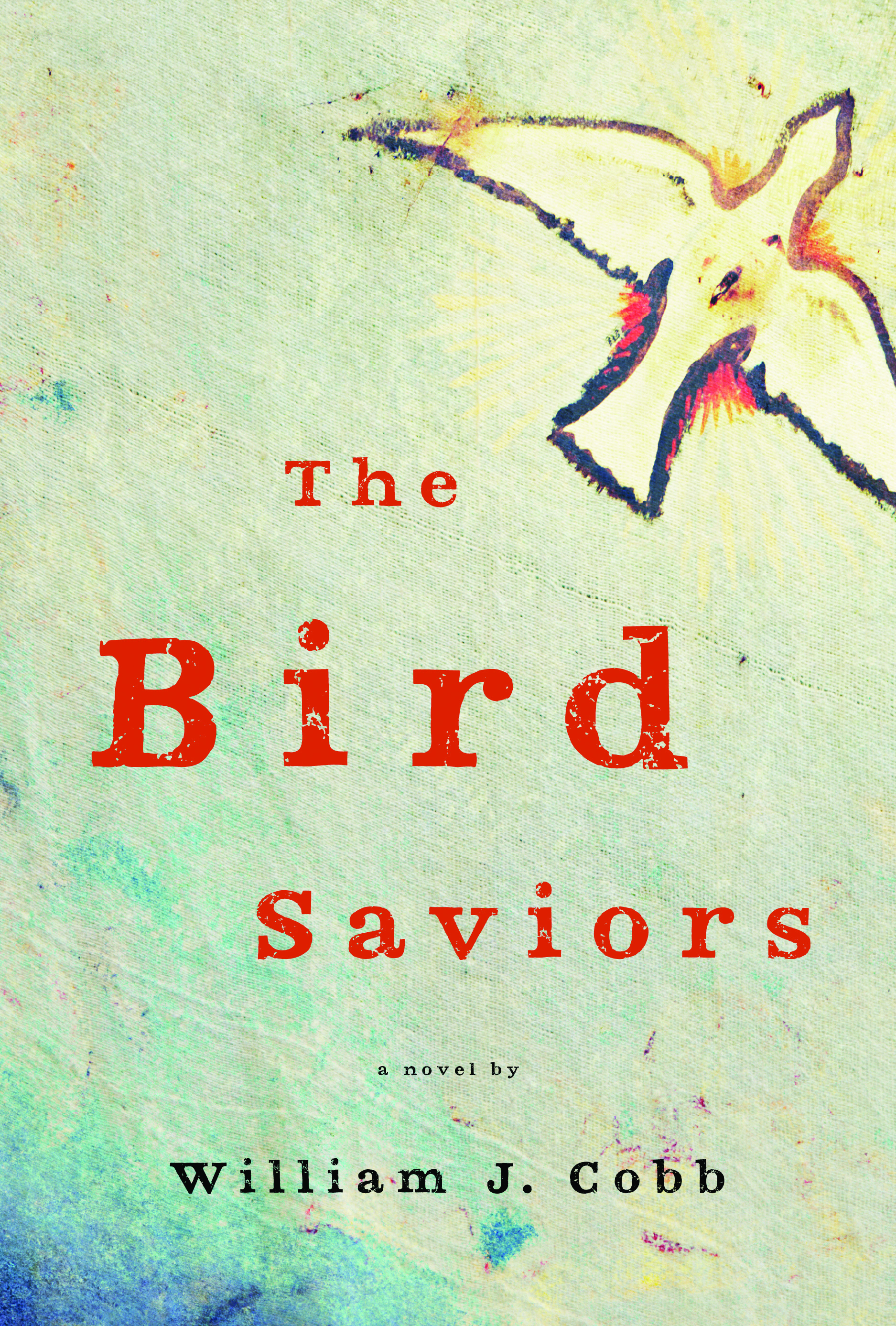
The obit doesn’t mention that The Lost Country was due to be published for a long, long time. I heard through the grapevine that he had been working on this novel for many years, that it was rumored to be his masterpiece, until the manuscript mysteriously disappeared from his home. It was believed to be stolen. I don’t know if it’s true or not: One of the details to back that up is that he wrote in longhand on yellow legal pads, and the novel was a great stack of those. It’s a cool story—How many writers have had their novels stolen? Many of us are lucky to get the books read, much less stolen before they are edited and set in print. Gay must have been doing something right. And I’ve theorized that he simply rewrote it from memory (as I recently did with my novel The Bird Saviors, after I lost the entire first draft to a harddrive crash, with no backup!), and that’s what caused the years-long delay in the publication for The Lost Country. If we’re lucky, maybe a complete manuscript exists, and will be published posthumously by his estate.
A friend (Yo, Morris!) and I did a postmortem on William Gay, especially in relation to Cormac McCarthy, after my comment about his being a “Poor man’s Cormac McCarthy, which is a good thing to be.” He pointed out Gay had moments where he surpassed McCarthy, and I agree, in one particular form of fiction: Gay wrote a handful of short story Classics, without a doubt: “The Paperhanger” is the most obvious there. McCarthy is our great novelist, and he left the short story arena open for Gay.
In honor of his passing, I think we should all reread his best fiction, and watch his two films, like this one:

Posted in Art, books, books/film, writing | Leave a comment

Reading Noah Hawley's "The Good Father": Or What To Do When Your Son Assassinates a "Good" Presidential Candidate

So right now I’m reading (and reviewing for the Dallas Morning News) Noah Hawley’s new novel, The Good Father (appearing this month in bookstores) which is about a father whose son has assassinated a presidential candidate: The story so far is quite good, but you know this is FictionWorld because the candidate is one the ENTIRE COUNTRY believes is good, and instills in them an idea of Hope. He’s not the Obama kind of hope, obviously, because one of the miracles of Obama’s election (and, I hope, reelection) is that he was able to commandeer so much support from our famously factious nation in which hope seems at best to affect 51% of the electorate at any given time. Only two weeks ago it seemed some important amount (no way 51% I “hope”!) of the population thought nutcase Rick Santorum a viable candidate for president. It seems his recent opinions—anti-sex, anti-education, anti-thought, but pro-God!—have taken the wind out of his sails, but still . . . . That he has won primaries is enough of an embarrassment for our nation, even the fact that we (well, not me, but someone out there, many millions in fact) are taking him seriously. On that note, if you’re curious, check out Tim Egan’s fascinating breakdown of some of the minuscule numbers of votes cast in some of these Republican primaries, here, titled “The Electoral Wasteland,” in the NY Times recently:

Noah Hawley’s novel The Good Father is a bit of a page-turner, with the son’s (alleged) assassination occurring at the outset of the story, which then sets in motion his father’s search for the Truth. That the presidential candidate seems to fit the mode of many presidents in FictionWorld, such as Morgan Freeman in Deep Impact or Bill Pullman in Independence Day, is, I think, a minor quibble. After all, Hawley is also a screenwriter, which entails much broadstroke wishful thinking. In the more realistic mode, Hawley is doing a good job of portraying a parent in those difficult, horrendous circumstances, and leaving his behavior—past and present—up to the reader to judge, whether we think he’s a “good father” or not. Hint: I’m glad I don’t fit his profile of a Dad.

Posted in books/film, Politics, The West | Leave a comment

R.I.P. for William Gay, Contemporary Southern Gothic Fiction Master: the Day the Banjo Music Died

So a friend sent me this notice this morning, and I’m sorry to hear it: William Gay, author of The Long Home (1999), which my editor, Greg Michalson, edited and published; I Hate To See That Evening Sun Go Down (2002), which includes the masterpiece creepy story, “The Paper Hanger”; and Provinces of Night (2000), his best book, in my opinion. He was a great Southern Gothic writer, and although he may be viewed as a poor-man’s Cormac McCarthy, that’s a pretty good thing to be. McCarthy casts a titanic shadow over that literary genre, and the best of William Gay gives him some good competition. For years now I’ve been waiting for his last novel, which has been slated to be published since 2005, it seems, titled The Lost Country. I guess we’ll have to keep waiting. He had two good films made from his fiction, Bloodworth and I Hate To See That Evening Sun Go Down. Here’s a notice about his death:
http://www.nashvillescene.com/countrylife/archives/2012/02/24/william-gay-acclaimed-tennessee-author-dead-at-68

Posted in books, books/film | Leave a comment

On Charles Murray's "Coming Apart": It Comes Apart at the End

So I have to say this about Charles Murray’s just-published, semi-controversial look at the state of White America, Coming Apart: The State of White America1960-2010: I read it all the way through to the end, rather quickly, too—in a few days. The book succeeds in its collection and collation of some fascinating demographic info, such as about the decline of marriage, how many white males are out of work, and the dangers of “cohabitation”  (I thought that was one was almost humorous). But I’d have to say it falls apart at the end. Murray (like Santorum) dismisses any idea of changing the tax code structure to increase the (sometimes minimal, outrageous) taxes paid by the top 1%, in part arguing it is “politically unfeasible,” while at the same time he announces himself as a Libertarian—which the last time I looked, meant “politically unfeasible.” At times he seems to gloat about the “virtues” of the Upper Middle Class and the New Elite, while only paying minimal lip-service to the rampant greed that caused the Great Recession and many financial debacles of the last decade. He implies that the Upper Classes (a narrow definition in his framework) don’t divorce, that we would all have richer lives if we just went to church, and that the problem with the New Elite is that they don’t preach their virtues to the slovenly working classes, which seems a bit laughable. He also relies on surveys about Happiness at one point. I don’t know what I’d say in a survey about my own happiness level, but I can’t say that it would matter one way or the other.

Posted in books, Education, Politics, Uncategorized | Leave a comment

Review of Thomas Mallon's "Watergate" in the Dallas Morning News

So I’ve reviewed Thomas Mallon’s new novel Watergate in the Dallas Morning News today, and it can be found here:
http://www.dallasnews.com/entertainment/books/20120217-book-review-watergate-by-thomas-mallon.ece
Janet Maslin reviewed the same book this week in the daily NY Times book reviews, and I thought her gushy, over-the-top paean to it was embarrassing and suspect: There were some lively moments in the novel, but she made it sound like the next best thing since flush toilets. Of course, we all know the adage about opinions, and that’s what book reviews essentially are. But still. I tend to flinch when seeing gushy book reviews. One I remember a couple years back: Jonathan Lethem raved about Lorrie Moore’s novel A Gate at the Stairs (2009) in the Sunday edition of the NY Times. So I read it, and felt cheated by Lethem. Then again, every industry probably has its share of brown-nosing. I’ve known other reviewers who have confessed to me they’ve raved about this or that book because the writer is a friend of theirs or a friend-of-a-friend, or some such reason. The lesson is? It pays to suck up.

Posted in books, Politics, writing | Leave a comment