Review of Kent Wascom's "The Blood of Heaven," Plus a Mission Debrief

So my review of Kent Wascom’s impressive debut novel, The Blood of Heaven, appears today in the Dallas Morning News, here. It’s a rollicking book, and I have to say I keep thinking of that Hatfields & McCoys miniseries whenever I think of the novel. As I mentioned in an earlier blog post, the PR materials compare Wascom to Cormac McCarthy, and stylistically I can see why, but it’s also not a fair comparison. Let The Blood of Heaven stand on its own right. McCarthy will not be outdone, but every new writer can strike his or her own chord, remake the world anew.
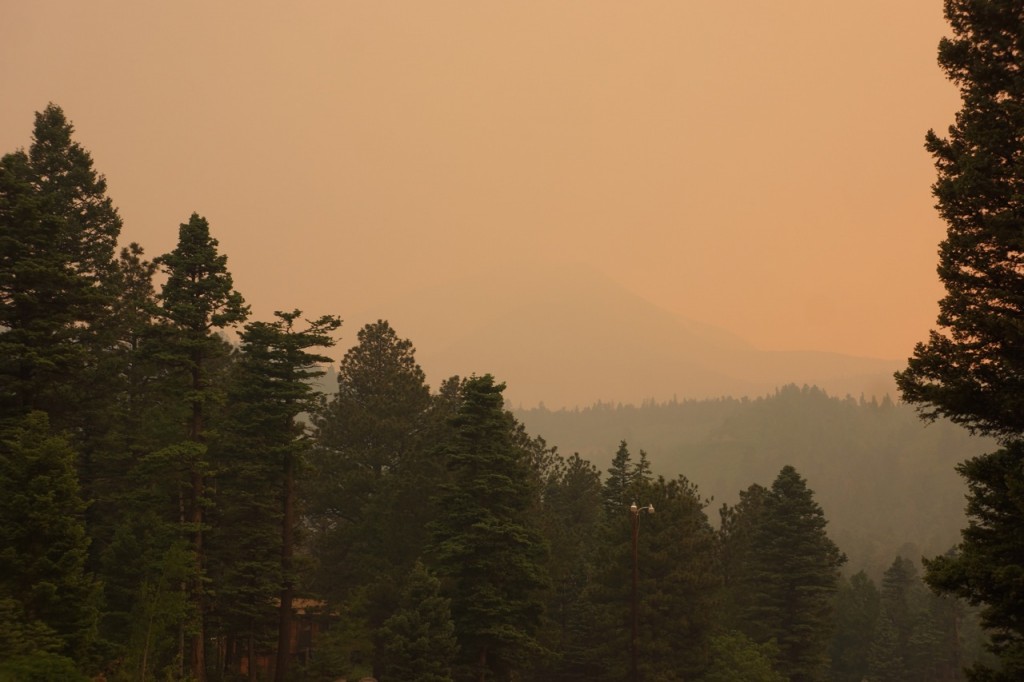
This morning I’m sore from hiking in the dark last night for five hours straight, in steep and rugged mountain terrain west of Pueblo, Colorado. We probably hiked about 10 miles. I was out on a mission as part of the Custer County (Colorado) Search & Rescue team, of which I’m a member. We were looking for a lost fourteen-year-old boy, and we (there were several teams, including Pueblo County groups, maybe 20 people or so) covered a lot of trail, but didn’t find him: This morning he wandered into the campsite, and all is well. We hiked in the fog of wildfire smoke, and saw the super moon rise blood red in the sky. The picture below shows the smoky landscape, though it’s really hard to capture that burnt haze.

Posted in books, Climate Change, Cormac McCarthy, Photography, The West, Weird Weather | Tagged , , , , , , , , | Leave a comment

On "The Road," Choking on Smoke

So I’ve owned a house in southern Colorado for ten years, and during that time have seen our summer weather go up and down, some years wet and some years dry, only it always seems to be trending toward hotter and dryer. The locals all remark on that, how things have changed in the last two decades. Traditionally summers have been generally wet, marked by afternoon rains that occur during the monsoon season, which is about to start. But during this decade the amount and frequency of fires has changed enormously.
In the past, fires were common enough, but also rare enough that large ones were strange and unusual events. Now they’re common and, at least on the national scene, taken for granted. Each year we seem to set a new record for number of homes burned. Over 500 homes just burned in the Black Forest fire in Colorado Springs, and last year nearly 400 burned in the Waldo Canyon fire. If 900 homes burned in any city in the U.S., but especially New York, it would be talked about as a great disaster, akin to the Hurricane Sandy hoopla.
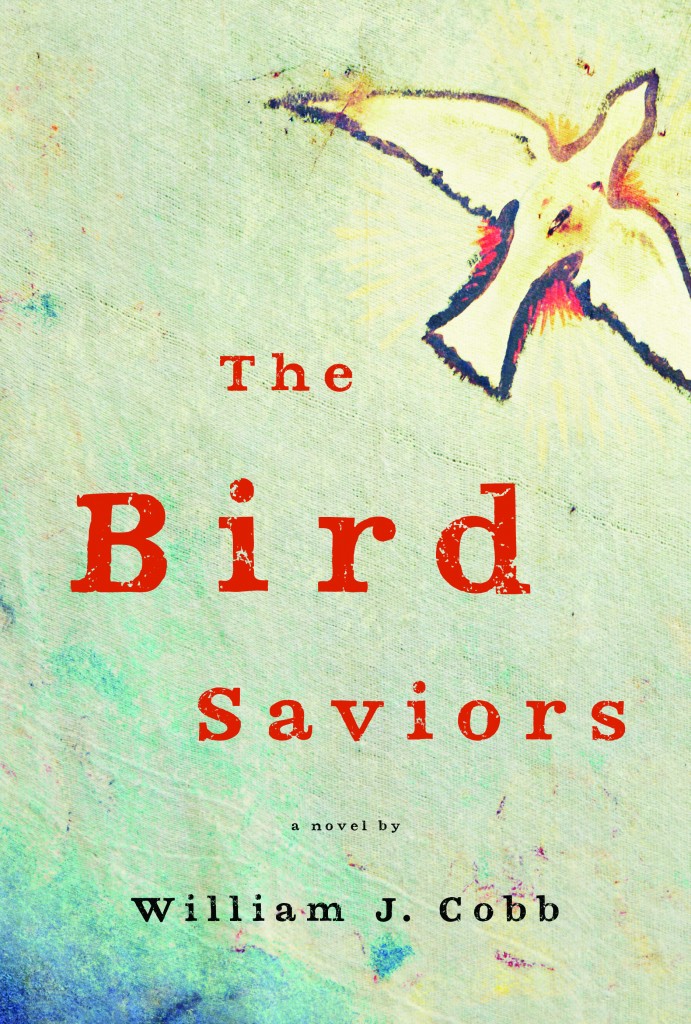
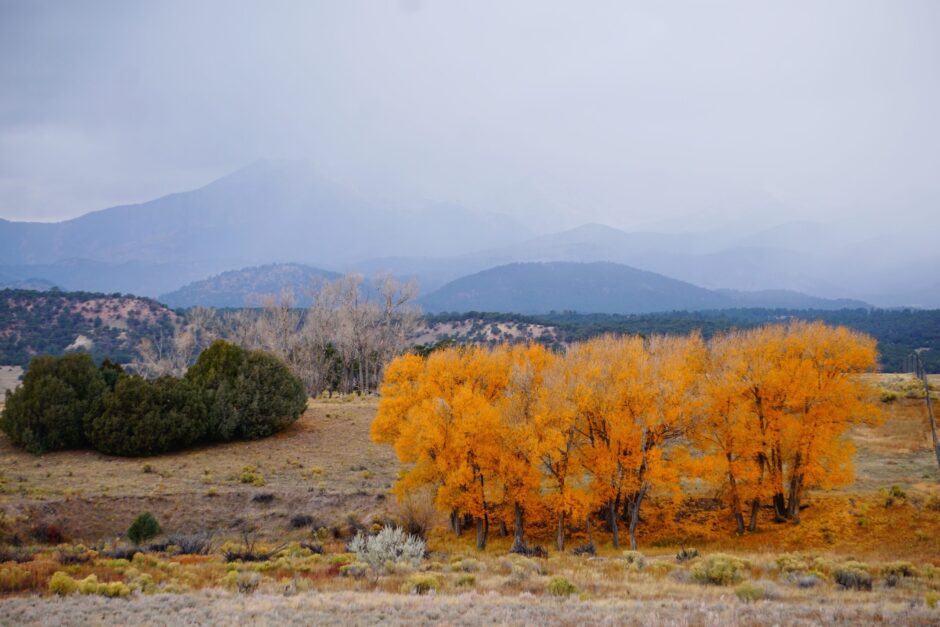
People have described Climate Change as a slow motion disaster, and I think that’s apt. But for the people living out in the West, the motion is not so slow. Right now we have four fires (or more) burning in our area. Yesterday we woke to blue skies and by days end our whole valley was choked with smoke from a fire over a hundred miles away. (We just happened to be in the wind drift.) Last September I drove a hundred miles across Montana in a haze of smoke. This is getting to be the “new normal.” And that’s bad news. It’s like waking up and suddenly you’re in Cormac McCarthy’s The Road, only without all the cannibals, and where the supermarkets are still open (thank goodness). My novel The Bird Saviors, which is out in paperback right now, features a refrain of fires in the hillsides, the townspeople choking on smoke. That’s a reality now. Here’s a picture of the road to my house, which is on a beautiful hillside, below a former ski resort (abandoned due to lack of snow, among other things).

Posted in books, Climate Change, Cormac McCarthy, The West, Water Crisis, Weird Weather | Tagged , , , , , , | Leave a comment

On Kent Haruf's "Benediction," Fyodor Dostoyevsky's "The Brothers Karamazov" and the Colorado Fires, Again

So this post should be a candidate for some kind of parlor game like “Try to pinpoint the logical connection (though there may not be one)”: I finished Kent Haruf’s Benediction, which includes a scare at the end (I won’t give it away), and my final judgement is that it’s a touching, somber novel, and I wanted it to be longer. That’s rare with me. Especially when I review books, I usually favor short ones. But there’s a trend in publishing (and the world) that I everything has to be short and punchy. “Tight” is the word editors usually use. And sometimes that’s good. But sometimes it steals part of the show. It can take away some charm. Which is all on my mind because . . . .
I’m now reading the puzzling, insufferable, and magnificent The Brothers Karamazov (1880), the last novel by that moody genius Fyodor Dostoyevsky (I love that name). Reading Karamazov, you never think about an editor. I’m sure he had one. I know enough about his life that he sometimes wrote for money, in a hurry, and would dash off a book to pay off gambling debts. But Karamazov has the feel of a man who is telling a story and not trying to make it “tight” or “luminous.” It’s a book with its own moods, at once brilliant, long-winded, sloppy, and transcendant.
Meanwhile I’m working on a new novel, which puts me in a mood. Let’s call it Untitled Writing Project #9. If I can follow in the footsteps of Haruf and Dostoyevsky, I’ll be tickled pink. It features a boy who disappears during a raging wildfire. And wouldn’t you know it, we have them again in my home turf of southern Colorado.  There’s one only about 20-30 miles from my home, but the most worrisome one is in Colorado Springs, about an hour and a half away. (For the news story, see here.) At the moment over 350 homes have burned down, and this is after the horrible fires there last summer. It’s hot and dry, and locals in these here parts know that the weather is hotter and dryer than ever. So of course Climate Change is exacerbating the fires. We can expect it to continue every summer indefinitely into the future. Yes, the West has always had fires, blah blah blah. But they are worse than ever, and it seems each new summer sets some new record of devastation. So I write about it, natch. I bet Fyodor would, too. Here’s a page of his notes for The Brothers Karamazov. I think it’s cool, and illustrates his sloppy brilliance.

Posted in books, Climate Change, The West, Weird Weather | Tagged , , , , , , , , , , | Leave a comment

On Kent Haruf's new novel, "Benediction," and Anticipation for the Upcoming New Coen Brothers' Film, "Inside Llewyn Davis"

So Kent Haruf’s new novel, Benediction, came out last February, but I waited until I came to Colorado to buy it, because I know Kent. He lives near Salida, about fifty miles from where my summer (writing) home is, and in support of the independently owned, brick-and-mortar bookstores, I bought my hardback at The Book Haven in Salida, a great mountain bookstore with a nice owner. Benediction is the continuation of a trilogy of sorts, one that started with Haruf’s best-seller Plainsong (1999), continued with Eventide (2004), and now has a final installment. All three novels are set in the fictional Holt, Colorado, which is in the northeastern plains area, the less-glamorous part of the state, but one that Haruf makes memorable and important. He makes it matter, which is one thing the best writing does.
I’m about two-thirds through Benediction and don’t want to finish it, don’t want it to end, which is praise of the highest degree. Haruf sometimes gets dissed for being “too good hearted,” but I find his worldview to be in sync with mine, acknowledging that most people in the world have much goodness in them, and they often contend or deal with the sinister and destructive. He doesn’t moralize or point fingers, even though it’s obvious his fiction very much has a moral center. Remember John Gardner’s On Moral Fiction (1978)? You never hear of that idea anymore, that fiction should have a moral center, and not be just entertainment. I agree with that idea, even if I don’t use that as a qualification for any art, but an aesthetic quality that I think the best art usually has.
For instance, in Benediction there’s a preacher who gets in trouble in this small town for suggesting we should forgive terrorists and show them kindness instead of revenge and hatred. When he’s abused for stating his opinions, for insisting the teachings of Jesus should not be given only lip service, we the readers sympathize with both the preacher and the townspeople who are angered by his sermon. I remember the days after 9/11/2001 when many of my friends were hellbent on revenge and punishment, and though I could sympathize with their anger, I also knew nothing good would come of that, either—and it didn’t. It’s a beautifully written novel, with an ensemble cast of characters, and demonstrates Haruf’s position as one of the great Rocky Mountain writers, which I’m glad to be a part of.
And although we have to wait (until the fall!) for it, I’m psyched to hear that the Coen Brothers’s Inside Llewyn Davis got rave reviews at the Cannes Film Festival. They are my favorite film-makers, without a doubt, and a new film by them is a cause for rejoicing. I hate to have to wait that long, but at least Richard Linklater’s Before Midnight—another conclusion to a trilogy (Before Sunrise and Before Sunset being the first two, both fantastic films)—is due out this week. I’m seeing that next.

Posted in books, books/film, The West, Uncategorized | Tagged , , , , , | Leave a comment

Life Over Tech in Santa Fe and Beyond

So it seems I haven’t had a minute to blog in the last couple weeks, mainly from being too busy with “real” life—as opposed to the virtual world we often live in these days—in a visit to Santa Fe, New Mexico, one of the oldest and coolest cities in the Southwest. We stayed at the El Rey Inn (here), our fourth time in a year, and it’s one of the truly hippest hotels: a renovated and well-kept old-fashioned motor court on the legendary Route 66, with beautiful landscaping, two hot tubs and a pool, great breakfast, and just a short drive from downtown. What we do in Santa Fe is eat killer Mexican food, too, with our favorite places being The Shed, right in the heart of old town, and El Farrolitos, which has to be one of the greatest odd spot restaurants in the country, in the tiny town of El Rito, north of Santa Fe, which vies for best food honors with the famous Rancho Chamayo. I’m hardly any foodist, but after eating at these places, you know what they mean by “Jesus wept.”
And I do have two books I’m reading right now, both good, that I’ll comment about shortly: Kent Haruf’s new novel, Benediction (2013), and Timothy Egan’s Short Nights of the Shadow Catcher: The Epic Life and Immortal Photographs of Edward Curtis (2012). But in the meantime, we also camped at the Great Sand Dunes National Park, north of Alamosa, Colorado, where my six-year-old climbed to the top of the highest dune (650′, at about 8,000 feet in elevation), on the windiest day, like an intrepid explorer. Here she is, caught with a Sony Nex-7 camera set on ‘poster’ mode:

Posted in Art, books, Photography, The West | Tagged , | Leave a comment

James Franco Does William Faulkner's "As I Lay Dying," Plus Cormac McCarthy & the Kiss of Death

So it’s buzz-building time for James Franco’s film version of William Faulkner’s As I Lay Dying, which has to be one of the goofiest Southern Gothic classics of all, published in 1930, early in Faulkner’s career. Famous for its image of the son sawing wood to make the coffin (maybe it should be labeled Sothern Gothic DIY) for the dying mother, Addie Bundren, the rest of the novel unfolds as the hillbilly Bundren clan hauls her stinky body through the countryside to bury her in the town of Jefferson, suffering a series of mishaps, which includes some seriously homespun medicine. The trailer for the film is here, and apparently is debuting at the Cannes Film Festival soon. I’ll be eager to see it. I’m a big-time Faulkner fan, and As I Lay Dying is one of his quirkiest, even a bit kooky. I admire that.
And I can’t think of William Faulkner now without thinking of Cormac McCarthy, who began his career with the same editor as Faulkner. I don’t actually know if, early in his career at least, McCarthy was compared much to Faulkner, even though they have many similarities, and differences. Both are great writers, and although I favor McCarthy now, it might be because I’ve read Faulkner for many decades, so he seems a bit old hat. A great old hat, but one that’s been worn.
Of course these comparisons are often inherently unfair to the new writer coming along. It used to be any time a young writer published a coming-of-age novel with a winsome, engaging narrator, he was compared to J.D. Salinger’s Holden Caulfield of Catcher in the Rye, which I always thought was the kiss of death. Catcher is so quirky, with such a charming, idiosyncratic voice, that comparing another writer to him was almost to slap a big Derivative label on the book. Now that honor has come to comparisons of young (or even not so young) writers to Cormac McCarthy. I recently reviewed The Blood of Heaven, a debut novel by a young writer named Kent Wascom, and the publisher’s promo material compared him to Cormac McCarthy. I purposely avoided that trap in my review, which should appear in the Dallas Morning News soon. It seems unfair to me. We all want to imitate the greats, and we shouldn’t be dropped into a box labeled Derivative so easily.
And I have to say, this movie poster for Franco’s film (he directed and stars in it, as the “other brother” Darl) is way cool.

Posted in books/film, Cormac McCarthy, Uncategorized | Tagged , , | Leave a comment

"The Place Beyond the Pines": True Grit or Truly Gritty, With a Nod to Edward Albee's "Who's Afraid of Virginia Woolf?"

So last night I caught the new Derek Cianfrance film The Place Beyond the Pines in St. Louis, once-great Gateway to the West, though the film should more fittingly be seen at a small cinema in New Paltz, New York, or some such Back East (or Hudson River Valley) locale with lush forests and rundown towns. I’ll refrain from any plot spoilers in what I say here, in part because it’s a knockout. I was impressed. And I’m a hard person to please, have seen dozens of films in the last few months and judged most of them as not worth the time to write a word about. Not this one. This was like a bracing splash of cold water on a face wearied by too many sloppy scenes of bad dialogue and nonsensical or hackneyed plots.
So instead of summing up the film and giving away all the (weird) viewing fun, I’ll offer this: Years ago I had the great fortune to take a graduate course with none other than the luminary playwright Edward Albee. Looking back, it was one of my favorite college courses. Albee told colorful anecdotes, brought in actors to stage scenes for us, and drilled into our young minds the idea that a play (or film, for that matter) should frequently try to surprise the audience, but that the surprise should be earned, should make sense. His quote for that was, “It must be inevitable.” The “it” of that quote is the surprise plot twist, the revelation of the character’s past, the unforeseen event that suddenly changes everything. He does this often in his own plays, and that semester directed a terrific cast in a performance of Who’s Afraid of Virginia Woolf? For those who know the play, one example of the surprise that must be “inevitable” concerns the story of George and Martha’s fictional son. When the secret is revealed, it upends some of the story that has unfolded to that moment, but makes perfect sense.
So too do several surprises in The Place Beyond the Pines. Ryan Gosling is like a young Marlon Brando in the early motorcycle scenes, but he’s just the early foundation of the film. The opening scene shows one of the those motorcycle stunts in which three different dirt bikes ride at top speed in a spherical steel cage. It’s a mesmerizing scene, and a metaphor for the complexity that follows. Then things shift. You come to think Bradley Cooper is the star of the film, until the story shifts again.
Only once was I able to guess or foresee a surprise plot twist before it occurred, and that particular event was perhaps the biggest reach of the plot (a union of two sons), but can also be defended as fulfilling the film maker’s vision of Fate. The cinematography tends toward the truly gritty, showing most of the actors with “warts and all”—lingering close-ups of their spotty faces (especially the older male actors playing cops or judges, like Ray Liotta), resisting the too-common trait in Hollywood films of making everyone look pretty, and thereby unconvincing. The tangled forests of New York State (which looks just like my sometimes-home-state of Pennsylvania) offer a lush backdrop to the somewhat decrepit feel of the small towns. In a nutshell, I say, Watch it.

Posted in books/film, Film, Uncategorized | Tagged , | Leave a comment

On Reading Dan Brown's "The Da Vinci Code": Is It Really as Bad as They Say?

So in The Writer’s World (imagine an alternate universe of eggheads, wannabes, dreamers, drinkers, and too-often-self-obsessed thinkers) Dan Brown’s blockbuster novel The Da Vinci Code (2003) has a reputation about on par with Ed Wood movies or, for a more literary comparison, that hugely popular The Bridges of Madison County (1992)—a stinker that made a ton of dough. But apparently Dan Brown has a new novel coming out, and the other day his publisher was offering a free ebook of TDVC . . . . And being the literary sleuth that I am (plus naturally curious) I decided to give it a go. Part of me wanted to find an answer for that basic question: Is it really as bad as they say? So I read it. And . . .
In a nutshell: Yes, and No. Is it “badly” written? Well, yes. Some of the sentences are true howlers. Brown has a knack for flat-footed prose, the inelegant sentence, the clumsy phrase, the awkward italicized thought (My God, this book couldn’t really be that bad, could it?!!), dialogue that only serves the function of explaining awkward plot twists, sloppy action description, and . . . the list goes on and on. Yet I still like the book. Which is interesting, isn’t it? It begs the question: Does a book have to be well written to be “good”? I’ll go out on a limb and say, I don’t think so. Are there books that are well written but “bad”? Yep. I’ve know some of those well.
What complicates The Da Vinci Code‘s case about being either a good/bad book (depends on the lighting, like certain dates) is that it is also a (rather awful) film, starring a good actor, Tom Hanks. I saw the film version first and thought it was laughably bad, muddled to the point of being absurdly nonsensical. The book does not have that flaw. In fact perhaps the book over-explains it’s “controversial” ideas. I grew up in a Catholic family, knew many priests (none of whom were pedophiles, by the way) who talked about doubt in an intelligent way, and so the notion of someone questioning the divinity of Christ seems rather run-of-the-mill. The novel actually does make that part of the plot interesting, and if not ground-shaking, at least fascinating from a historical viewpoint. All this leads me to lean toward the nuanced conclusion that a book can be badly written, and much fun. That would be my summary judgement on The Da Vinci Code. It’s like The Old Man and the Sea, only different. (p.s. I’m a huge Hemingway fan, and think him one of the great American writers, but TOMATS (fun to acronym that title) is a bit of a howler itself.

Posted in books/film, writing | Tagged , , , | Leave a comment

On What We Learn from Birds, as "The Bird Saviors" Appears in Paperback Next Month

So in yesterday’s New York Times there’s a good piece about what birds can tell us about climate, here. I’m definitely a birder, though I prefer the term “birdist,” and have my own style in BirdWorld: I don’t join herds of other bird nerds to go to the same places and gawk at the same feathered friends. And I’m not big on lists. Why? To me it seems to turn the watching and admiring of bird life into a competitive sport, or another consumer-culture task to be checked off a list, as was captured in the hokey-but-likable comedy The Big Year (2011), starring Owen Wilson, Jack Black, and Steve Martin.
Me? I’m a devotee of The Jeff Lebowski School of Birding. We like the Zen moments. Like the time I camped beneath the woven-ball nests of showy Bullock’s Orioles on a riverbank beside the Gunnison River in central Colorado. The time I listened to various Great Horned Owls calling to each other in Two Medicine Lake campground in Glacier National Park last September. Or digging the birdlife in my Custer County, Colorado backyard, where I’ve watched Red-naped Sapsuckers feeding their chicks in nests hollowed in living aspens above Taylor Creek, or chased/followed Great Horned Owls hooting in the same meadows, calling back-and-forth to each other—all that as opposed to rushing around, trying to catch a quick glimpse of another bird and check it off my list. I guess it could be compared to a long-term love vs. those speed-dating services. I do have a rough sense of numbers, though. Realistically, if you can see two hundred or more species in a year, you’re probably spending some time as a birdist. If you can get a good photo of a Western Tanager in a scrub oak near your house, you’re probably humming a Zen koan in your sleep. Perhaps while listening to some Credence.

Posted in Birding, books, Climate Change, The West, Uncategorized, Water Crisis | Tagged , , , , , , , , | Leave a comment

"The Bird Saviors" as an Example of "Cli-Fi": The Hot, New Literary Subgenre—Climate Fiction

So I’m amused to see this piece on NPR books, which defines a new literary subgenre called Cli-Fi, for Climate Fiction, via a good friend (Thanks, Elizabeth!), here. I’ve noticed a number of novels that have elements of Climate Change in them lately. Last fall a friend pointed out similarities between The Bird Saviors and Barbara Kingsolver’s Flight Behavior. It’s not like this is just now happening: Cormac McCarthy’s The Road (2006) is a literary masterpiece about Climate Change, which leaves the “why” of it mysterious, and uses the cataclysm of a dying planet to wax philosophical about the nature of humanity, the love between a father and son, why a bomb shelter might be a good idea . . . plus the hazards of road-tripping across a post-apocalyptic landscape populated by ravenous cannibals. And while the fun-but-hokey film The Day After Tomorrow (2004) is more exaggerated and preachy, you have to love the absurdity of Dennis Quaid jumping that ice-sheet crevasse (clutching a jumble of ice-core samples) in the first scene, or snowshoeing from D.C. to New York in, oh, less than a day. But maybe we’ve reached a “Tipping Point”—a term often used by Climate Change scientists—in the number of references to climate chaos in fiction.
I know I’m among the many in our fracking United States of America who are embarrassed at our politicians cowardice and greed at continuing to deny or give lip service to Climate Change. These stooges are no doubt bought off by Big Oil/Coal (not to mention plain, old-fashioned Stupidity), even though the scare tactics about the cost of mitigating Climate Change are completely exaggerated. What’s the better choice—short-term profits for companies like Exxon (regularly posting “record profits” as storms swamp our cities, fires burn our forests?), or a sane, innovative approach to promoting green technologies and sustainable energy sources? It’s not one or the other. The oil people are going to make their billions (oh, but don’t forget the tax breaks!) for the foreseeable future. Still we could do the Right Thing. Burn less. Moderate. Drive more fuel-efficient cars, walk or ride a bike when you can. Build smaller homes with solar-panels installed from the get-go. Try to decelerate the alarming numbers of Climate Change. Am I optimistic, at the moment, this will happen? No. But you have to hope. And if we write about the problem, imagine its next results, maybe that will get more people thinking about it.

Posted in Birding, books, Climate Change, Cormac McCarthy, Economics, The West, Weird Weather | Tagged , , , , , , , | Leave a comment