The Raptors of Custer County

So living in a high-desert mountain valley, I see a ton of raptors on the telephone poles and fence posts as I drive to and from town. Most of the time they’re easily identified (or guessed) as Red-Tailed Hawks, since Red-Tails are essentially the most common. Such as this one:

But many, many other species liven up the skies: Golden Eagles, Bald Eagles, Northern Goshawks (my favorite: one flew through my yard the other day), American Kestrels, Rough-Legged Hawks, Cooper’s Hawks, Prairie Falcons, and many more. Yesterday I snapped the photo below, and it’s either a Peregrine Falcon or a Swainson’s Hawk. The breast bib looks like a Swainson’s, but its size was more like a Peregrine Falcon, and the face looked close to a Peregrine.

Posted in Birding, The West | Tagged | Leave a comment

"Dust-Bowlification" and Climate Change in the NY Times

So Paul Krugman has a good piece in today’s NY Times, here. ThinkProgress.org has blasted the Times for its recent blather about climate change, so it’s nice to see at least Krugman seems to get it. I like his ending quote: “For large-scale damage from climate change is no longer a disaster waiting to happen. It’s happening now.”

Posted in Climate Change, The West | Tagged , | Leave a comment

On Simon Winchester's "Atlantic: Great Sea Battles, Heroic Discoveries, Titanic Storms, and a Vast Ocean of a Million Stories," Plus That Crazy "Mermaid" Show Last Night

So today is a High Brow/Low Brow blue plate special: Right now I’m reading Simon Winchester’s Atlantic: Great Sea Battles, Heroic Discoveries, Titanic Storms, and a Vast Ocean of a Million Stories (2010), part of my summer reading slate of big nonfiction tomes (such as Alex d’Prudhomme’s The Ripple Effect) sandwiched between good (shorter) fiction, such as Stephen Graham Jones’s Growing Up Dead in Texas. Winchester is one of our best nonfiction writers, I think, a Brit, known for Krakatoa: The Day the World Exploded (2003) but also The Professor and the Madman (1998), and many others. It’s old-fashioned, eloquent nonfiction, almost in the vein of Vladimir Nabokov’s Speak, Memory (1951). It’s elegant, which is a rarity.
On the total opposite end of the spectrum, comes last night’s (lowbrow) TV weirdness, Mermaids: A Body Found. I watched most of it and couldn’t quite tell if it was a joke or not. (Or perhaps if the producers meant it to be a joke, like those great Monster Quest programs, the ones where they never really find the monster.) I don’t want to give anything away, for those who are interested, because I’m sure it will be rebroadcast multiple times. I mean, I like a mermaid as much as the next person—the pretty ones, you know, with seashell bikini tops and long red hair (that never needs shampooing!). But the idea of real mermaids is a trifle, how should we say, kooky? Nutcase? And the show does its best to be legit, complete with two (suspiciously camera-friendly) “experts” on the story, who formerly (really?) worked for NOAA. I think it fits on a DVD shelf next to those alien autopsy videos. It was definitely amusing, I’ll say that. But part of the show is about the (evil) Navy program of sonar sounds that kill or force to beach thousands of whales, and there’s an article in today’s NY Times that contradicts some of what the show claims—or at least it suggests that whales are adapting to the sonar blasts and are figuring out how to block the noise; see the article here.
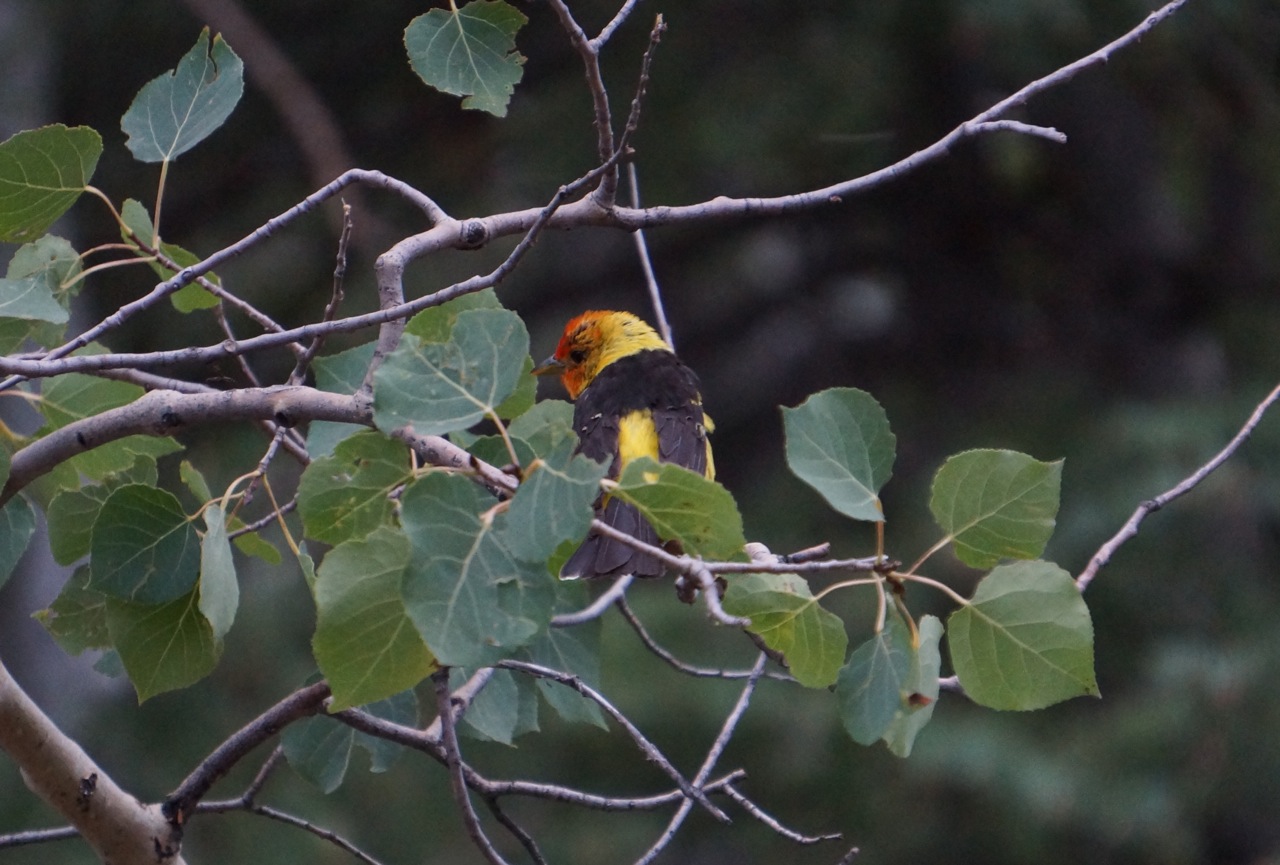
Lastly, I’ve been trying to get a photo of a Western Tanager, one of the prettiest birds in the West, all summer. Triumph below!

Posted in Bad TV, Birding, books, Photography, The West | Tagged , , | Leave a comment

A Tom Cruise Story That You Won't See on Entertainment Tonight

So what I find irritating about our celebrity-obsessed culture is that we adore our movie stars, then want to tear them down and make them out to be monsters, as if from some elaborate (and national) You Think You’re Better Than Me? impulse. But perhaps I should identify that “we” as being the celebrity-whore media, shows like Entertainment Tonight, which always freaks me out if I’ve watched the news and suddenly ET comes on. Lately I’ve seen headlines about Tom Cruise and his divorce saga, how he ditches all his wives at age 33—though apparently some of the wives ditch him when they reach 33. So here’s a Celebrity Brush With Greatness story that I just heard from the husband of an old friend of mine:
First you should know that the man recounting the story is a dignified gentleman who seems to have little interest in celebrities. He was climbing Mount Wilson, a 14,000+ peak in western Colorado, and Tom Cruise and his “entourage” were on the trail near them. The weather was turning bad and my friend wondered if he should abandon the climb and turn back. Tom Cruise’s group included Tom and his children, plus a guide who was leading things. The clouds were dark and they heard thunder, so my friend was glad to see that the guided group was turning around as well. Tom Cruise and company passed them on the trail somehow, and he said they were quite nice, and stopped to chat a few minutes about having to try to climb that peak on another day. A couple things I like about the story: a) Tom Cruise was climbing a 14er, which is a common enough thing in Colorado, but still, it shows he’s a person who digs the outdoors; b) he was with his kids, doing something healthy (as opposed to being interviewed on ET); and c) he was a friendly, polite human being to my friend, which should not be surprising, but is not the way celebrities are usually portrayed—the ranting diva is a popular pinata to swat.
And I don’t believe Scientologists tried to interfere with anyone.

Posted in Film, The West | Tagged | Leave a comment

"The Bird Saviors" Imagines Another Dust Bowl: Could This Happen Again?

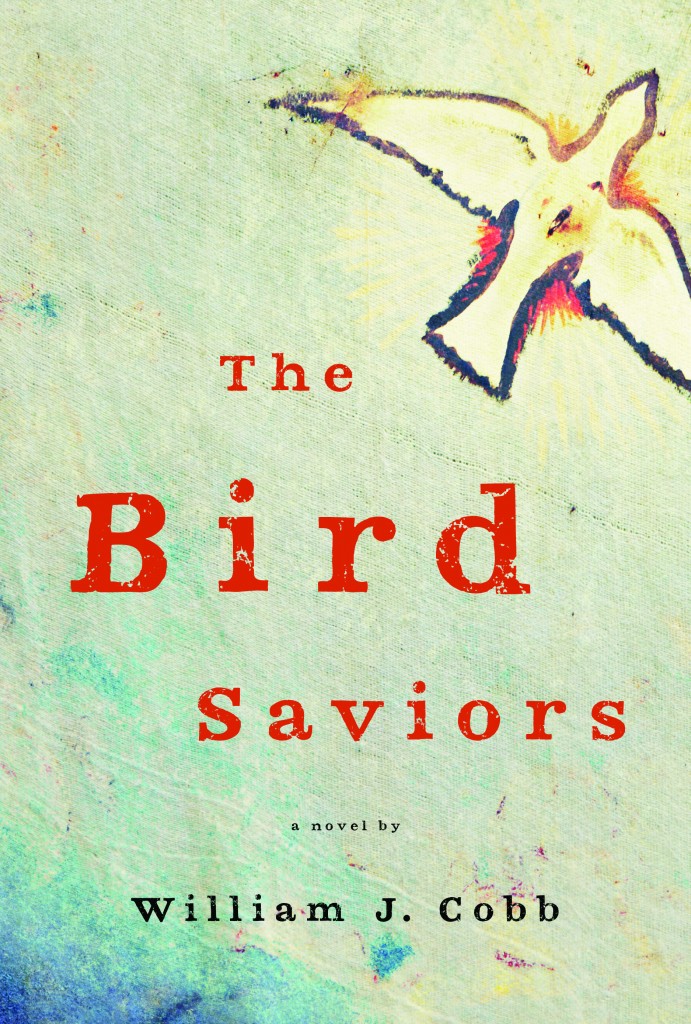
So one of the tricks of writing a novel set in the “near future” is that whatever reality you come up with should be relevant, conceivable, and interesting, and of course I hope I’ve pulled that off in my new novel The Bird Saviors. It opens with a pink snowstorm, a strange weather phenomenon that happens now and then (albeit rarely), when a snowstorm and dust storm collide. The recent heat and drought in the Midwest has several headlines about another Dust Bowl on various news sites, and one of the better ones appears here, on ThinkProgress.org. I totally agree with Joe Romm (head writer/organizer of ThinkProgress) that drought is much more of a threat with Global Warming than some of the other effects, such as rising sea levels. If you want a taste of just how bad drought can be, read Tim Egan’s The Worst Hard Time (2006). It’s a great read about the Dust Bowl Years, or drought of the 1930s, and will make anyone think twice about the possibility of another serious drought in the middle of the country.
And any time you mention the Dust Bowl, you have to add the obligatory Dorothea Lange photo. Here’s one of her on a car, driving around the country, taking pictures of Oaters and such.

Posted in books, Climate Change, The West, Weird Weather, writing | Tagged , , , , | Leave a comment

Fireworks for Summer People: A Tale of Summer Mayhem

So seeing as we’re living through the worst wildfire season in Colorado history, our annual fireworks show in the town of Westcliffe was canceled due to a Stage 2 fire ban. I missed it. As a kid, fireworks were a big deal on July 4th weekend, our own little rocket launchers and mortar rounds with which to shell the Summer People. (Now I am a Summer Person.) Here’s a story of that world gone by.
FIREWORKS FOR THE SUMMER PEOPLE
“We never meant to hurt anybody.” When push came to shove, that’s what we said. And sure, that’s what they all say: facing an indictment, pleading for bail, for leniency from Judge Judy or a fleshy, gruff honorable presiding justice o’ the peace in Goliad or Victoria, Texas. It’s what you say, too, when you’re simply trying to wriggle off the noose of “disciplinary action.” It was July 4th years ago and we could have hurt someone, badly. That we didn’t mean to seemed crucial to us and a likely story to the others, the Summer People.
The trouble began with bottle rockets. We never thought them particularly dangerous. We’d affect a casual sangfroid as we’d hold the stick and light the fuse on the firecracker-sized tip, wait for it to burn close, then toss it in the air and watch the fizzing golden sparks as they shot into the sky to explode in a dramatic but hardly life-threatening pop. We bought them at a gaudily painted plywood stand off Highway 35 that always appeared around that time of year, decorated with a snarling Black Cat image, manned by a jowly old cuss who seemed indifferent about selling us enough gunpowder to launch an airstrike on Aransas Pass. That particular year we bought them by the gross, which, if my memory serves me, is a dozen dozen. 144. And we had several gross.
Why so many? Pure foolishness. The thrill of watching a fiery explosion. We were local kids in a resort community full of part-time people, families who owned weekend homes, families who came now and then to fish and ski and sail, sunburn their shoulders and noses and define their tan lines, make a nuisance with their outboard motors and drink too much from Friday to Sunday, then had back to their “real lives” in Houston or San Antonio come Sunday evening or late Monday on a three-day weekend. To them our town was a weekend getaway. To us it was mundane, humdrum home. We local teens tended to say, “This town is so dead,” or “There’s nothing to do in this dump.” We longed to split that burg. Meanwhile the Summer People rushed down every weekend to do nothing and revel in it, chatting up the convenience store aisles with three-martini gusto.
Their children, our coevals, were the objects of slight derision coupled with much envy and curiosity. They tended to be moneyed city kids who we always suspected were disdainful of our small-town, local-yokel status. Still they admired our dark tans and sailing prowess, as we envied the automatic glamour of their department-store, name-brand lives in big cities. Somehow ours only seemed an imitation of life, of their glamorous existence, like a cheap imitation perfume that doesn’t have an aroma, it just stinks.
So we were rivals. On the 4th of July, during the heady festivities of barbecuing pork or beef or mackeral even, a gang of them clustered on the pier parallel to ours, some fifty yards away, and we thought for a prank of sorts we’d aim our bottle rockets their way and try to arc them to explode with a dramatic pop and hopefully unlethal spray of sparks right above their heads. Some of the kids on the opposite pier were girls and this caught our attention: We actually believed this would display our potential affection or dateworthiness via a kind of brutal caveman charm. Grog like girl. See? Grog explode fire. Girl come run to seek protection from fire god.
Only the plan backfired. The evening was lovely, with fireworks blooming and exploding throughout the neighborhood: no sissy laws against it where we lived, outside any city limits. Red and green roman candle bursts against the black, velvet Elvis, star-spangled sky, reflected along with a tremulous line of moon spangles on the surface of Copano Bay. The night was alive with oohs and ahhs and good cheer. That is until a too-well-aimed bottle rocket zizzed from our pier in a fizzing rainbow arc and exploded right above our big city rivals heads, the explosive pop echoed by frightened teenage screams.
First there was a hush. A saltier version of “Oh, dang,” escaped our lips. Then our neighbors loosed an angry shout of What the hell did we think we were doing? Martini-holding parents emerged from the house next door and glowered our way from their balconies. A few minutes later my best friend’s mother came stomping down the pier toward her son and his hoodlum friends (myself included), threatening either grounding him for life or taking away his car keys, a double-kiss of death.
We went to apologize. What else could we do? We weren’t bad kids. Really. We were just thoughtless. We walked over to the  neighbors with our tails between our legs, heads bowed, our whimpered postures befitting the beta-wolf status of the local yokels that we were. We didn’t mean to do it. Honest.
I limped along at the back of the pack, my ankle sprained and swollen enormous from another Jackass-type stunt gone wrong. That was pretty much standard operating procedure for our small-town life. Pranks were how we killed time. And for hick-town kids who envied life in the big cities of Houston or San Antonio, there always seemed to be too much time to kill. So earlier in the day I had jumped aboard a moving skiboat from my parents’ pier, and landed awkwardly. My best friend, Ralph, just shook his head, adding, “Bill? You know, you have the coordination of a hard boiled egg.”
The sprained ankle got me off the hook for the bottle rocket semi-assault, blame-wise. My friends at the front of the pack got more dirty looks and what-kind-of-crazy-stunt-was-thats than Marlon Brando and Lee Marvin in “The Wild Ones.” It took me a few minutes to catch up with them and reach the end of the pier. I hobbled up like a puny Tiny Tim Cratchett, poor little crippled boy, shuffling into the awkward silence in the interval between apologies offered before acceptance received. The attention turned on my Elephant Man ankle and obvious portable agony.
One of the girls asked, “What happened to you?”
I told them, wincing as I tried to keep weight off the foot. Then I added one more apology to the mix. It did the trick. A gang of hoodlum teenagers shooting bottle rockets at your head is something to be feared; a limping, apologetic kid with a bum ankle on July 4th is something to be pitied.
Another girl urged me to sit down in one of their folding chairs. What? Was I  a crazy person or something? “You’re just going to make it worse if you keep walking around on it like that.” I nodded, took a seat, and thanked her. Everyone stared at me and the mood lightened. One of the guys said, “You jumped from your pier into the boat? While it was moving? Good shot, Oswald.”
Ralph laughed. “You should have seen him. It was like Hawaii Five-O gone wrong.”
Another kid asked where we were from. “Here,” we said.
That must be fantastic, they said.
We shrugged. “I guess you could look at it that way.”
We ended the night by promising to take them sailing the next day (a ploy we aimed at the girls), and sharing with them our huge bundle of bottle rockets. We took turns lobbing them into the bay, doing our annual homage to Francis Scott Key and his rockets red glare. It was Independence Day, after all, and we were celebrating. Safely. Which was a bit dull for us, but we weren’t asking for any more trouble. We didn’t want to be grounded. Or have our car keys taken away. That would be the worst. We’d be stuck there for life.
_____________________________________
Lastly, here’s a cloud shaped like a woodpecker over my house.

Posted in Climate Change, Photography, The West, writing | Tagged , , , | Leave a comment

Reading "The Southwestern Journals of Zebulon Pike: 1806-7": A Vision of Colorado Springs Before It Was Afire, Plus "The Bird Saviors" Appears on KRCC, Colorado Springs Radio

So after returning from another trip to Santa Fe, I’m now reading “The Southwestern Journals of Zebulon Pike: 1806-7,” which recounts an expedition to explore the Arkansas River boundary of the Louisiana Purchase—otherwise known as a Poor Man’s Lewis & Clark, although the introduction to the book insists (rather defensively) that Pike was actually much more important than L&C. That may be—though I can’t say that I found the argument convincing. (I have a fondness for good ole Meriwether Lewis and William Clark, myself.) But after reading about Pike’s passage across the Kansas plains and into Colorado, I can tell you that he was definitely more foolish. He tried to climb Pike’s Peak in November, and didn’t make it. He and his men suffered through 17 degrees below zero temperatures, and he admits they didn’t even have good wool winter coats. (From his description it sounds like they had windbreakers, egads.) He describes the Sangre de Cristo mountains (and the Wet Mountains, the first foothills of the Rockies after the Great Plains) as being solid white with snow in early November, which is quite different from their present lack of snow cover in all but the heart of the winter months. (I can vouch for this, since these are the mountains I live in. Blame global warming. We definitely don’t get as much snow now as we did in the 1980s. And I have a picture from 1911, which shows the mountains white with snow in July!)
It’s a fascinating glimpse back in time, 206 years ago: The eastern plains of Colorado were packed with buffalo, in one place as far as he could see. Not to mention elk and deer as well. He travels with only 16 men, which causes some dicey moments when they get surrounded by natives in much greater numbers, who don’t appreciate them wandering through their territory. And they do meet (wrangle with, get harassed by) many Indians, mainly of the Pawnee and Comanche tribes. At one point some Pawnees steal some odds and ends from their party (canteens and whatnot), and Pike (who was a young man at the time, only 26) gets so enraged he goes back to try to kill a couple of them, but doesn’t get a chance. It probably would have ended badly for him and his men, if he had.
Plus it turns out an interview with me and description of The Bird Saviors appeared on KRCC yesterday, the best radio station in Southern Colorado, here. I have to thank Kathryn Eastburn for doing a great job on it! I think she gave a good sense of the atmosphere of the novel, as well as insight into what I intended, with a graceful touch. The landscape of the novel is the same landscape through which Zebulon Pike traveled, though The Bird Saviors is set in the near future, and Pike’s is a glimpse of the distant past.
And here’s a female Western Tanager I found in my yard yesterday. I saved it! (Well, not really. But I did take its picture.) The males are the glamour pusses of their species, being one of the prettiest birds in the West, but I think the females are pretty too, with a lovely yellow hue to their plumage.

Posted in Birding, books, Climate Change, Photography, The West, Uncategorized, Weird Weather | Tagged , , , , , , , | Comments Off on Reading "The Southwestern Journals of Zebulon Pike: 1806-7": A Vision of Colorado Springs Before It Was Afire, Plus "The Bird Saviors" Appears on KRCC, Colorado Springs Radio

Fires, Plagues of Locusts, and Chiggers: Signs of the Apocalypse in Colorado, Or Is That Global Warming in Your Pocket?

So I believe in the biblical apocalypse as much as I do the Tooth Fairy, but replace the word “apocalypse” with “global warming” and we’re onto something real. The back roads of Custer County, Colorado are now covered with swarms of grasshoppers (okay, maybe not locusts, but we’re splitting hairs there), which I have never seen before. My home is at about 9,000 feet in elevation and we have chiggers in our grass now, nasty little biting bugs that I knew from Texas, which I thought favored low and hot landscapes. And although I mentioned the Colorado Springs Waldo Canyon fire yesterday, and had heard that it had improved, it turns out I was wrong: It’s now worse than ever and causing evacuations in the city, including the Air Force Academy, which is reported here.
Meanwhile Republican dogma still denies the reality of Global Warming, or specifically that it’s influenced by our use of fossil fuels, and if you pay any attention to what our Congress is up to lately, doing their despicable best to cut all alternate energy funding, to quash all climate-change mitigation, and to plunge their fat heads in the sand—it’s a national embarrassment, and a tragedy of epic proportions, as the Colorado Springs fire is of epic proportions. The fires are a sign of the times, no doubt.

Posted in Birding, books, Climate Change, Economics, Politics, The West, Water Crisis, writing | Tagged , , , | Leave a comment

Fires in the West a Sign of Things To Come: Prophecies in "The Bird Saviors" Coming True, Unfortunately

So my novel The Bird Saviors is set in the “near future,” which I always thought to be something like five to ten years from now, but some of the calamities forecast in the story are unfolding right now—particularly an ongoing threat of serious wildfires. The Waldo Canyon fire near Manitou Springs, which is a nice suburb of Colorado Springs, was particularly scary, in that at one point they ordered an evacuation for the entire town, though now I think they’ve got that fire under control. There are various fires still raging, the High Park fire in particular, and it seems daily we hear of new fires: While I was in town today I heard of a new fire near the small town of Wetmore, which is only 25 miles away. In The Bird Saviors there are several big fires raging, and the air is often choked with smoky fog, as it is here. Last night I woke at three o’clock in the morning to a strong smell of smoke, and it was just the wind shifting and bringing the smoke into our area from west of us. The other big prophecy in the novel is a return to Dust Bowl conditions, due to drought, and that also seems to be happening: Our roads are choked right now with grasshoppers, which thrive in drought conditions, as we’re having right now. Economic meltdown and chaos is in the background of the story, and that’s certainly ongoing, and until the Europeans solve their problems, it will continue, no doubt. Now I’ll just hope the part about the bird flu pandemic is simply an exaggeration . . . .
Here’s a picture of a fire last June that was about 10 miles north of my home.

Posted in Birding, books, The West, Uncategorized, Water Crisis | Tagged , , , , , | Leave a comment

Reading Stephen Graham Jones's "Growing Up Dead in Texas," While Colorado Burns, Plus an Interview on ShelfLife@Texas

So I’m reading Stephen Graham Jones’s new novel, Growing Up Dead in Texas, which has a wicked description of a cotton-bale fire in West Texas. It’s a bit eerie to read right now, as I’m in Colorado, which seems to be on fire from one part of the state to another. The day before yesterday started out sunny and clear, then the wind shifted to the west, and brought in a pall of smoke from a fire near Pagosa Springs, which is probably 150 miles away, at least. Jones’s novel reminds me of two great songs about tough childhoods, Jim Carroll’s “People Who Died” (1980) and Bruce Springsteen’s “Lost in the Flood” (1973), which has been stuck in my head for days. It conjures up a haunting mood of hardbitten Texans in a flinty world, full of doomed high school roustabouts watching the world go up in flames around them.
And the website ShelfLife@Texas has posted an interview with me, that’s in part about The Bird Saviors, here. I like that they called me an Activist, which is something good to be.

Posted in books, The West, Weird Weather, writing | Tagged , , , | Leave a comment