HBO's Film of "Too Big to Fail" a Great Cast

So last year I was trying to read Andrew Ross Sorkin’s Too Big to Fail, which I admire much, although I did find it ‘too long to read,’ essentially because my schedule is too busy. It’s all about the financial meltdown in 2008, a behind-the-scenes look at the power brokers (and sleazeballs) in the major investment houses and financial regulatory agencies, such as Hank Paulson, Ben Bernanke, Warren Buffet, and Tim Geithner—at least those are the ‘good’ guys, though I think ‘slightly better’ might be more accurate term. A number of these figures come across as more interesting than you might think, and a number come across as smug capitalist pigs, too. The HBO film of the book recently premiered and is now in numerous timeslots, and it’s a much smaller time commitment to get the same story, though without a lot of the backstory that makes the book worthwhile (and too long). The actors in the film really carry the day: William Hurt, Ed Asner, Paul Giamatti, etc. It’s in the tradition of HBO’s good series of contemporary politico films, like the excellent Recount, about the 2004 election.

Posted in books/film, Politics | Leave a comment

S.C. Gwynne’s "Empire of the Summer Moon"—Great Comanche History

So if you’re interested in Native American history, S.C. Gwynne’s Empire of the Summer Moon (Scribner 2010) is a great read. Most of it concerns the Comanches, who essentially ruled and terrorized the Great Plains of Texas/Oklahoma areas during the 18th/19th centuries, which all essentially came to a close around 1874. It’s certainly a gruesome story, considering the attacks on white settlers that occurred during this period, and the Comanches dominance of other Plains tribes. But once it reaches the story of Quanah Parker, sometimes considered the last great chief of the Comanches, it provides a useful overview of Native American history at the end of the Indian Wars. There’s a triumvirate of excellent histories that give a good overview of the demise of Plains Indian culture: The Journals of Lewis & Clark, Evan S. Connell’s Son of the Morning Star (about Custer and the Battle of the Little Bighorn), and Gwyne’s Empire of the Summer Moon. One major contrast: On Lewis & Clark’s 1804-5 journey the only violence between L&S’s party and the Indians occurred very late in the trip, when some Blackfeet tried to steal some weapons, and one of the party killed an Indian. The violence then heats up as the Plains Indians realize what is happening, that they’re being driven off the land, and strike back. Ultimately it seems a clash of technology, probably inevitable, although Connell’s book makes the most persuasive argument for how it could have happened another way.

Posted in books, The West | Leave a comment

The End of the World, Yawn—Or a Stupidity Gauge

So last night I’m watching ABC News (which I do just to keep an eye on what idiocy is in the mainstream media—answer: plenty) and they actually interviewed some craggy old nutcase who is apparently the “prophet” behind today’s Rapture event, and I’m thinking, How stupid can we get? Pretty stupid, that’s for certain. It makes me think of the old drunk in the diner in Hitchcock’s The Birds, croaking, “It’s the end of the world!”
An even stronger gauge of stupidity, probably embraced by the same crowd, is the new book out about the Birther controversy. It’s embarrassing, is what it is. But at least Trump seems to be fading fast. And on the Republican side, that windbag Gingrich is actually in trouble for voicing some moderate opinions, good God.

Posted in Politics | Leave a comment

Christo's "Over the River" Project, Art in My Back Yard

So there’s a piece in the NY Times today about Christo’s latest art installation project, Over the River, which is (figuratively speaking) in my Colorado back yard: It will be located, if it happens, in the Bighorn Canyon between Salida and Canyon City, which is about 30 miles north of my house in Custer County. I’m all for it, and if you read the piece, I think the arguments against it are iffy. I agree with the fellow who points out the canyon, which has a number of bighorn sheep, also has much traffic on the highway and a railroad line, and the sheep seem to do just fine with those distractions. (Plus the note that they allow hunting makes the argument seem a bit absurd to me.) Support Christo’s Over the River! I think it would be way cool. Here’s the link to the Times piece:

Posted in The West | Leave a comment

Neros Fiddling While the World Burns, Sooner Than You Think: the National Research Council's Report on Climate Change

So I’ve been (mildly) obsessed with Climate Change for a decade or more now, and am thoroughly disgusted at the anti-science, anti-education, pro-stupidity behavior of most of the Republican Party (i.e. Texas hick rep Joe Barton), or more accurately known as the Know-Nothing Party, even in the face of unified agreement of scientists and experts. So last week arrived the report titled “America’s Climate Choices” via the National Research Council, and I’ll note that even some Republicans advocated its stark and alarming findings. The whole report can be found here:
http://dels.nas.edu/resources/static-assets/materials-based-on-reports/reports-in-brief/ACC-final-brief.pdf
We’ve reached the point that only a combination of stupidity and greed can be offered as motivation for some of the anti-mitigation efforts that basically rule Congress: Big Oil has bought off the chumps, and our children will suffer. We don’t need to argue about the grandchildren. Children. It’s all happening faster than predicted and will likely have long-term consequences. Obama’s administration hasn’t been able to get anything done, in part because of the myth that these mitigation efforts will be expensive and ‘hurt business.’ (And I blame the Democratic-controlled Congress of his first two years for that, too.) They’re all short sighted and bought off by business. It’s hard not to shake one’s head and growl, “We’re doomed, man. We’re doomed.”
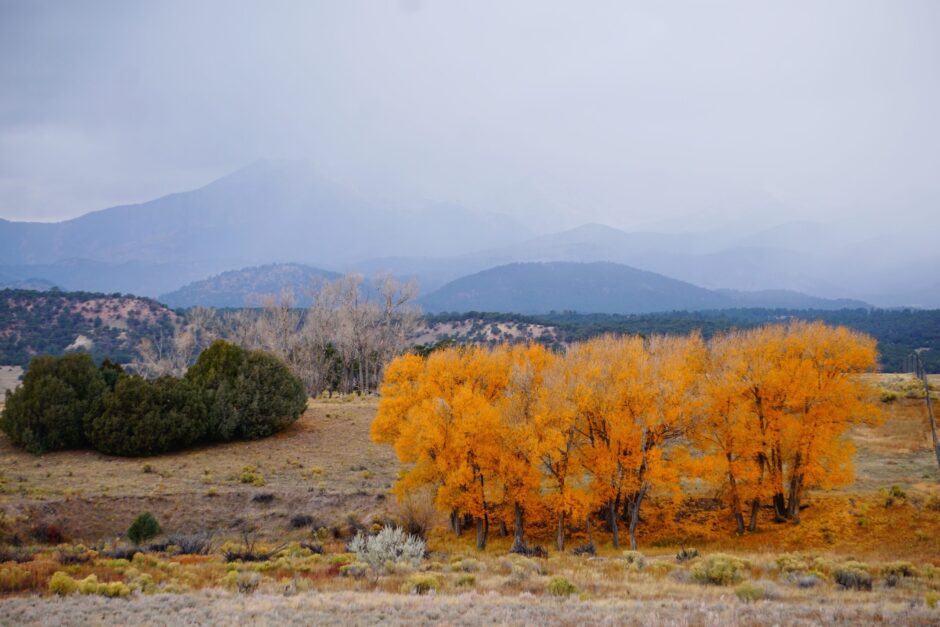
Here’s a picture of my Sangre de Cristo mountains this week, which have suffered a snow drought this year, even though most of Colorado has had a good snow season, due to La Niña.

Posted in Climate Change | Leave a comment

Sony CyberShot, Guilty Gadget Pleasures

So much as I deplore how we’ve devolved in this Gadget Age, I’m as bad as anyone with a new toy. For my birthday my wife gave me a Sony Cybershot—small and light, 16 megapixel pics, easy and quick to use. But the best wrinkle: you can take pictures underwater. No special case, no nothing. I’ve used it in the pool a few times already and it’s fun. Surprisingly hard to stay put to take a picture under water (basically, you don’t, but take it while swimming).

Posted in Uncategorized | Leave a comment

Review of Lori Roy's "Bent Road," Text Version

Now that the Dallas Morning News is charging to view their content I realize when I post a book review here you can’t read it unless you pay, so since it’s a few days old, I’ll post the text here. I liked the book and think it’s a gutsy novel.
BENT ROAD/By Lori Roy/Dutton; 368 pages, $25.95
Pain & Suffering on the Great Plains
Thomas Wolfe famously proclaimed “You can’t go home again,” and with her first novel, “Bent Road,” Lori Roy proves that if you try, you’ll regret it. The story begins in 1965, when race riots in Detroit force the urbanized Scott family to return to their Midwestern roots in Kansas, to a small town that seems to have one thoroughfare, Bent Road. It’s a world of church-going farmers with closets so full of skeletons you couldn’t find a shoebox without a few bones in it. An example of Kansas Gothic, “Bent Road” has enough turmoil to make Truman Capote’s “In Cold Blood” appear rather genteel. In Capote’s hands, strangers were the menace. Here it’s family.
As a mystery novel, “Bent Road” delivers: the story telling is taut, suspenseful, and compelling. From the moment the Scott family drives up to their new home in the dead of night, only to be spooked by a shadowy figure running across the road, you know there’s trouble ahead. The point of view shifts between Celia, the wife and anchor, and (mainly) her two children, Daniel and Eve-ee. Celia does a great deal of dish-washing and cooking, and provides the outsider’s perspective of what it’s like to return to a Kansas farm where a shed in which the darling daughter and sister died some twenty years ago still stands.
Mystery surrounds Eve’s death, and the family doesn’t discuss it. Was she murdered by Jack Mayer, escaped lunatic? By the alcoholic Uncle Ray? To complicate matters, only a few days after the Scotts return to Kansas, another young girl goes missing, Julianne Robison, who happens to look much like the lost Eve. Plus Eve-ee also happens to look like the lost Eve. Descriptions are rather minimal here—small, blonde, cute—so perhaps half the daughters in Sixties-era Kansas looked like Eve.
Celia’s husband, Arthur, is the father figure who moves them back to Kansas, and who knows what happened to Eve. His sister Ruth also knows what happened, it seems, but she keeps the truth from her husband, Ray, who famously loved Eve. Townsfolk believe Ray murdered Eve years ago, and that perhaps now he’s responsible for Julianne Robison’s disappearance. Ray assaults Ruth not long into the story, and she then moves in with the Scott family. Smart mystery readers will smell a rat, though, as Ray’s in the suspect file labeled Too Obvious.
In its best moments, “Bent Road” portrays the loneliness and claustrophobia of life in a small Great Plains town, in the tradition of Kent Haruf’s “Plainsong.” It’s much gorier and melodramatic than Haruf’s fiction, however, and by the novel’s end, the body count is high, placing it in the Gothic tradition. But if you like a gutsy, gritty read, you’ll love “Bent Road.” Spoiler alert: The shadowy figure crossing the road in the first scene is probably Orville Robison. (Or Bigfoot.) Roy never actually reveals who it’s supposed to be. Robison is a good guess. But I’m giving nothing away. You’ll have to read the book.

Posted in books | Leave a comment

Review of Lori Roy's debut novel, "Bent Road"

My review of Lori Roy’s debut novel, Bent Road, appears in today’s Dallas Morning News here:
http://www.dallasnews.com/entertainment/books/20110506-book-review-bent-road-by-lori-roy.ece
I call it Kansas Gothic, which I think is kind of a fun/gruesome idea. There’s a braided pattern of badness and the ramifications of it that comes to a fantastic, bloody climax at the end. It was definitely in the lively, page-turner category. I liked it.

Posted in books | Leave a comment

Werner Herzog Goes Caveman: "Cave of Forgotten Dreams"


So I caught Werner Herzog’s new documentary, Cave of Forgotten Dreams, at a theater in St. Louis today, and it’s one of the best docs I’ve seen in a while. It’s all about his visit to the Chauvet cave in southern France, with Paleolithic art dating to 32,000 B.P.E., in 3D to boot. (I’m not a great fan of 3D, find it mildly annoying at times, impressive now and then.) The cave art isamazing, lots of charcoal rhinos, lions, horses, bison, mammoth, and cave bears. Cave bear skulls covered in stalactites/stalagmites, cave bear footprints alongside human footprints, and even torch fragments dating to 28,000 B.P.E. Herzog always does a great voiceover. He’s like the voice of a bemused god. The horse figures are fantastic. One of the coolest images—among too many to mention, you have to see the film—is a Great Horned Owl figure scraped into the side of the cave wall. I love owls and in our mountain home we’ve identified seven different species, including one day when we watched a Goshawk and a Great Horned Owl eat and fight over a Snowshoe Hare.

Posted in Film | Comments Off on Werner Herzog Goes Caveman: "Cave of Forgotten Dreams"

"Cinema Verite" Worth Watching

So last night was the premiere of HBO’s Cinema Verité, the film about the film of the Loud family, billed as the first reality TV show, which is both a ground-breaking achievement, and considering our times and the Kardashian family alone, a dubious accomplishment. Tim Robbins and Dianne Lane are great in their roles, as overly suntanned upper middle-class Californians, although the kids in the film tend to blur together, save for the gay son in NYC. James Galdolfini has a bad hair day throughout the film, which is the result of making him look much like the actual film director. I liked the film, but think I would have appreciated it more if I’d actually seen the ten-hour PBS series about the Loud family when it aired. I was a kid myself then, younger than most of the Loud family siblings, and only heard about it obliquely. My family did watch Archie Bunker and Meathead in “All in the Family,” which was great, timely fun back then. And my favorite show was “Kung Fu,” which every time I’ve seen it as an adult strikes me as Awful. But the Loud family perhaps gets some web redemption (a la Tosh.0), in that they seem more human and resilient by the end of the film.

Posted in Film, The West | Leave a comment