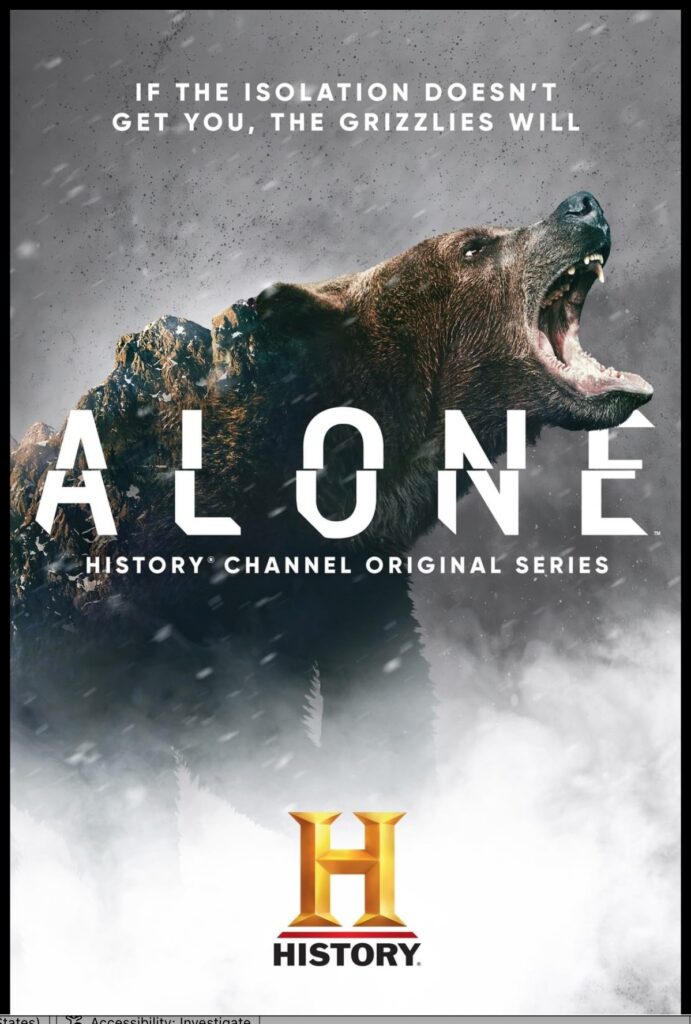
So I usually avoid reality TV, mainly for just being too tacky and stupid, although I did watch the very first season of Survivor, way back when, and am a bit amazed that it’s still going. It’s hokey and superficial and filled with influencer-types, ugh. But there exists another show in the same vein of outdoorsy challenges that for my money is the best reality TV ever: The History channel’s Alone. Just last week Season 13 debuted, billed as the first international challenge, World Championship. That billing seems kind of cheesy in ways that the show does not.
The setup: Each season 10 contestants get dropped off in some remote wilderness location. They’re alone, can bring only 10 additional items (besides 65 lbs of camera gear to film themselves), and must fend for themselves. They have a satellite phone and can “tap out” whenever they want. In this season two have already tapped out in the first few days. The last one standing wins $500,000. (Personally I’d say give them a cool million but I don’t run the show.)
Their being alone is perhaps the main reason it’s not cheesy in the way other reality shows are: It’s not a matter of personality conflicts and “conspirators” or alliances. It’s just a person alone, having to make a shelter, find food, and survive in wilderness conditions for up to three months at a time. There are no “immunities” and perks like special food if they win a challenge. There are no “challenges”: The whole setup is a challenge. (Some seasons end in less than two months, and other seasons last beyond three, but not by much.)
For outdoorsy people part of the fun of watching is imagining yourself in their shoes and their predicaments. It’s easy to get caught up in their personalities, have your favorites. Could I make that fire? Could I catch that fish? This season I’m rooting for Poldi and Will, who seem sharp. I like the competent, savvy outdoors people the most. I’m impressed with those who do much better than I can imagine I would. Often a few exit quickly: There’s a psychological condition called Drop Shock, which entails being freaked out soon after they get dropped off, alone in the wilderness, and the isolation sets in.
Fundamentals can be quite challenging: They aren’t allowed to bring tents. Each has only a tarp to use as temporary shelter. They all need to construct shelters to keep them warm and safe from the likes of grizzly bears, cougars, and wolverines. (Many of the seasons have been set in the far northern Canada.) This season is inside the Arctic Circle. (One season was in Africa, and the baboons were spookier than grizzly bears.) The shelters often seem a trap or a mistake: Some contestants have planned and begun elaborate log cabins but don’t spend enough time fishing, foraging, and hunting to feed themselves, so they tap out before the cabin is complete. Others have constructed clever shelters, complete with stone fireplaces inside.
For the typical contestant, nothing seems easy. They have to start their own fires, to boil their water to purify it, for one thing. The first season was set in the very wet forests of Vancouver Island in British Columbia. Many of the contestants struggled mightily to get fires going. Black bears were everywhere and one guy tapped out for bear-fear. In this season one contestant tapped out after only a couple days because he burned up his ferro rod—a relatively easy fire-starting device.
They hunt and fish, and if you don’t like seeing squirrels and rabbits get caught in snares and eaten, look away. Mostly they snag small game, but now and then one of the contestants gets something big, like a moose or a musk-ox. They lose a lot of weight. They get stomach problems from not eating enough and/or eating sketchy stuff they find foraging or hunting. (The one who thought eating cactus was a good idea made a mistake.)
The winners almost always seem to deserve it. (One exception: One fellow won the season by basically starving himself effectively. He just sat around his shelter and didn’t eat much, and after a while he was the last one standing. I thought that was unfair: It’s not a show about starving!) And while most or many of the contestants struggle, a few of them seem natural at it. One winner in a season in Canada was a Canadian who seemed completely at ease in the far northern wilderness. It was cold by the end of the season and he was sitting around a fire outside his shelter, acting like it was no big deal.
When they start talking about how much they miss their families, you know they’re soon to tap out.
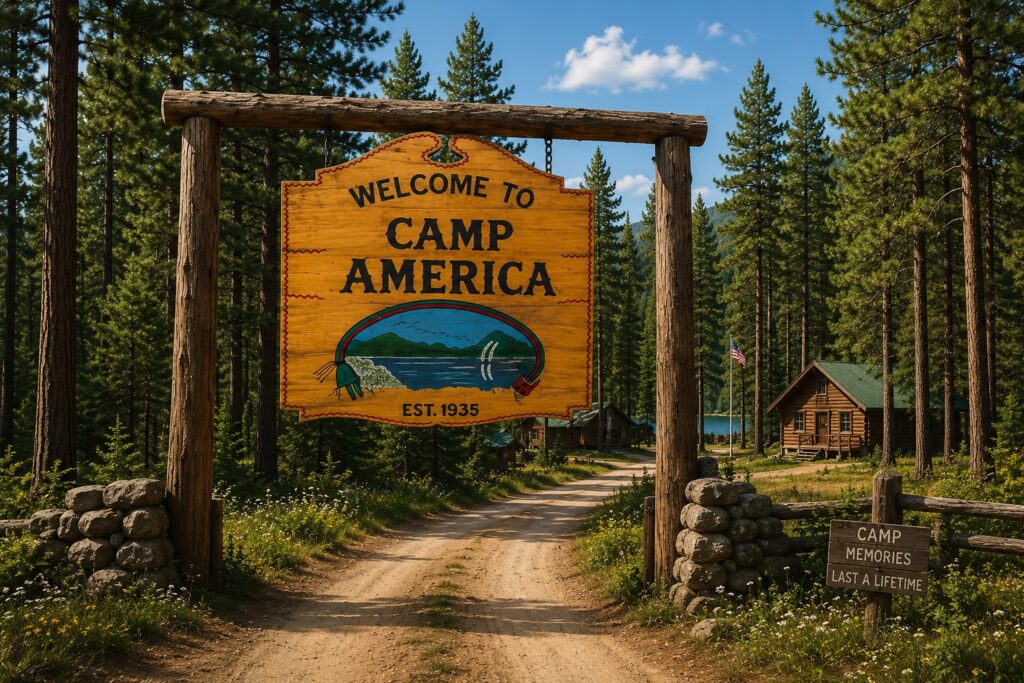
At the Camp America for Repatriated Adults none of the clocks actually work. All the detained are required to turn in their cellphones, laptops, Smart Watches and the like. The many clocks in the guest quarters, conference rooms, and rec centers all show different times. It keeps people guessing. “We don’t want you to become complacent,” says Helga, the first-day emcee and introducer-in-chief. She looks like an ex-alcoholic schoolmarm/Karen complete with frizzy beige hair and worry lines. “We don’t want you to know things. Or to act like you do. What time is it?” She makes a show of peering at her thin spotted wrist. Comical curious face. “I don’t know! I’m just living. In the moment. Like right now.” She spreads her arms wide as if to embrace us all in a loving one-ness, her gray shaven underarms visible for a moment, her spidery hands uplifted, the turquoise bracelets on her arm sliding back. “Doesn’t this feel good? Transcendent, maybe?”
Camp A seems part small-town jail, part rehab center, part detention camp. It looks like a repurposed Camp Crystal Lake from the horror classic Friday the 13th.
How I came to be here: Months ago I hung out at a bar called The Library. I’d tell my Mom, “I’m going to the library.” Twenty-six years old and I still live at home, in the basement.
Mom would squint at me from above her laptop and frown. “The library, again?”
She wondered why I was reading so much.
The girl I was in love with, Ripley, often met me at The Library. She asked if I’d take a pic of her lifting her dress and showing off her tat. The catch was: In a supermarket. It was for a contest called “Supermarket Surprise.” She could win $1,000 and would throw some my way, maybe.
There aren’t any real jobs to be had anyway.
Times have changed. Fatcats have everything while us proles loiter. Regular people have nothing to do. It’s getting weird. Now they’re inventing things to do, desperate and unsavory. It wasn’t always like this. For a while I had short-lived show on YouTube called “Burning With Bob.” Every week I’d do a new recipe. My shtick was I always, always burned something.
I’m easily distracted. Sometimes it would be a phone call and I’d chat away as the pots on the stove crackled and started to smoke. Sometimes it would be Guest Stars like Ripley in a ponytail running outfit all sweaty and flirty. At the end of each episode the kitchen filled with smoke and I’d search for a fire extinguisher. Sometimes I didn’t find it. Sometimes I did and it was out of foam. The last ep featured my Mom’s kitchen engulfed in CGI flames and me, calling out of the smoky gloom, “See you next week on Burning With Bob!”
I never made any money. It was fun for a few episodes and then it died out. Nobody watched. I spent six grand on equipment and advertising and by the end I was in credit card debt with no place to hide and no job no nothing.
After the death of “Burning With Bob” I drove an Uber but now it’s all self-driving cars. McDonald’s has gotten rid of people in the Drive-Thru. There’s nothing left to do. So me and Ripley went to the produce section of a Safeway and I took video of her bending over near the bananas, flashing a dragonfly tat on her white rump. She thanked me and said it looked nice. I thought it did too—at least for a photo of someone exposing herself in a supermarket.
A manager approached us and pointed at the entrance. “Get that filth out of here or I’ll call the cops.” We were already scurrying that direction, giggling. “You jealous,” I called out as the electronic door swooshed. We got to my ancient Subaru and she was still holding a bunch of bananas. She lofted them. “Now I’m a shoplifter, too.”
A week later I got pinched for porn charges. The law-enforcement apprehension was all online. I got an alert on my phone and then scanned a QR code and then read the Agreements page, which was threatening. I was scared. Next thing I know I’m getting texts to Uber my ass over here for a stay of six months, plus a valuable coupon book when I “graduate.” Weird thing is I’m on Staff. As an NVO (Non-Violent Offender, as opposed to the Vios, Violent Offenders) I’m eligible for perks, like being made an Enforcer. As far as I can tell they worry the Vios will get carried away and hurt somebody. Non-vios rule. We run things. At first. Until the Vios take over and put their jackboots on our necks.
I knew that Ripley had also been pinched. People at the Library wondered until they showed her arrest video on TV under the headline “Cleaning Up the Streets.” In the vid she gets into it with a chubby troll-agent wearing a face mask and this wannabe-SWAT-team military outfit. He yells at her to cease and desist. She starts to say something about free speech and the next thing you know they’re spraying her with mace and pulling her sweater up to cover her face, exposing her bra and skinny ribs. Then she’s being dragged into a van.
And I’m in love with her.
As Helga spreads her arms and her shaven dusky armpits with us, we the crowd of about a dozen newcomers nod and fidget. Arranged in a semi-circle, we stare forward at a wall of pine and fir tree forest behind her—some of the trees brown and deadlooking, victims of beetle kill—above which looms a view of the Rockies, below a bright expanse of blinding blue sky. I have to pee and wonder when this is all going to be over. Maybe I could just wander off and find a bathroom somewhere? A tree? We’re sleeping in cabins with Native American names like Chinook and Nez Perce. It’s a former Boy Scouts of America facility they bought cheap. Now that the government has outlawed gender-bending the Boy Scouts are dead in the water.
Someone behind me mutters that be-here-now is all fine and dandy, but in the real world people know what time it is, don’t they?
Helga asks if there are any sinners in the crowd. Someone snickers. “I’m a sinner,” she announces.
“Aren’t we all?” asks a woman.
“I’m a practicing Mennonite yet I once had sex in a Target dressing room,” adds Helga. “In the middle of the day.”
Another retail-worker-looking woman grins. “Like who hasn’t done that before?”
Someone else mutters, “What does a Mennonite practice? Baking bread? Being homely?”
A blonde to my right notes the middle of the day is the best time to have sex in a Target dressing room, actually, because the robots are programmed to nab shoplifters and aren’t really paying attention to how many feet show below the dressing-room door.
At the end of the Meet & Greet, we’re all required to sign NDAs.
“It’s standard procedure,” Helga calls out. We grumble. She looks around in a who-said-that way, gives me a look like she senses I’m a troublemaker and she does NOT like troublemakers. “Remember, people. You’re starting over. The next week or two we’ll be wiping your slates clean. For now it’s like what happens in Vegas, right? After that, you’ll be shiny and new.”
I admit that’s all fine and dandy, but can we get some real creamer for our coffee tomorrow? Not just the powdered kind? And maybe a digital clock?
“No talking!” she barks.
Day Two
At Camp America there are no calendars, either. It’s before my normal wakeup time on a Tuesday—I know because I got here on a Monday, ergo—morning when Donna Fargo’s “The Happiest Girl in the Whole U.S.A.” plays on loudspeakers as reveille in the blue light after dawn. We shuffle out like zombies to the Jason Voorhees Dining Hall. By the time I stand in front of the stainless-steel coffee urn, pulling the spigot marked Dark Roast, the sun is up. The dead are listening in and placing bets. The creamer is powdered blech.
After breakfast a plump white woman informs me she’s a Racial-Blindness Counselor and will be my sponsor throughout my stay at Camp A. Her name is Bea, pronounced Bay-uh. She sports curly black hair and looks like Betty Boop gone wrong. A weird chin wrinkle, like a frowny emoji. Dressed like a real-estate hooker with a low-cut maroon silk blouse she makes me fill out a questionnaire full of questions like, “A Latina woman rear-ends your sedan in stalled traffic, and when you get out to exchange information, explains she has no insurance. In response you . . .”
“Ask her for a date?” I write. Report her to ICE is the correct response.
She frowns at my responses. “Do we have an attitude here?” she asks.
“I’m confused,” I admit. “I thought I was here for, like, sex stuff?”
Bea nods. “That too.” She sits there looking at me, twirling a black pen in her fingers. A slight smile on her glossed lips. She says she likes me. She has a cousin I remind her of, Peter. “Peter’s the rebel without a pause. No one has seen him for over two years now. He’s an outcast.” She leans forward, whispers in a husky, Brenda-Vaccaro voice, “Is that what you want to be, the Outcast?”
I can’t tell if she’s flirting with me or what. The smile is unnerving. “Not really?”
“Too late, handsome. The die is cast. Out.” She marches me to the Camp A rec center and takes me to a backroom full of sports gear—a red plastic tub of softball bats and balls, gloves; rack of croquet mallets and colorfully striped balls, fishing poles hanging in the rafters. Smell of dust and old sweaty stuff. She asks that I remove my belt and put my hands behind me, waist level. “Close your eyes,” she commands.
She zipties me. I start to ask if that’s really necessary and she slips a black hood over my face, then fastens a dog collar to my neck. Hooks it to a leash. My breath is warm beneath the hood and all I see is the black fabric.
“You want to be an outcast?” asks Bea. “Voila. Wish come true.”
She leads me through camp, yanking the leash whenever I pause. I insist I did nothing wrong. She smacks the back of my head. I smell pine and hay and her Jungle Gardenia as I stumble through the darkness, hot breath trapped against my face. We pass a group of people talking and all go silent as we get close, except for some sniggers. “This is a violation of my rights!” I call out. Someone laughs.
She jerks my leash. “You have no rights, Worm. All you have is lefts. Like left behind.”
A fifteen-minute walk into the woods. I’m stumbling over roots and rocks and she keeps moving. After a while we stop. I feel her fumbling at my wrists and think that’s it, but then I feel her tugging at my pants button and zipper and she yanks them down, lets go, steps back, and jerks the hood from my face.
I squint in the glaring sun. I’m handcuffed to a pole at the center of an outdoor amphitheater. A clearing in the woods. My pants fallen to my ankles.
She eyes me up and down, whistles. “Commando, huh?” She shakes her head. “The choices we make.”
I tell her she can’t do this to me. I’ll report her.
She takes a photo of me with her iPhone. “You do that.” Looks at her screen and smirks. “Looks like we have some shrinkage today don’t we?”
I’m left there all day, standing. I can’t sit down. The zipties are hooked too high into the pole behind me. Soon my legs and back burn. Flies buzz about my face and crotch. I call out for help and no one comes. At one point a hawk lands atop the high branches of a fir and watches me. At dusk I get cold and shiver and yell until my throat burns and finally Bea arrives carrying a flashlight, shining it in my eyes. “Look who’s here,” she says. “The Outcast in all his glory.”
I tell her what I think of her and this aversion-therapy bullshit and she says, “Really? Well that’s another week on your sentence, Dr. Freud.”
I start begging. She asks if I’m going to behave. I promise I will if she cuts the zips.
The cabins are quiet when we return. Amber glow in windows. Smell of pine needles and campfire smoke. In the camp kitchen hut, people washing dishes. For dinner the only thing left is stale hot dog buns and individually wrapped slices of American cheese. The faint smell of popcorn. A crowd of people sit around a campfire in the plaza between the cabins. I take a seat on the outside and eat my dog, tail between my legs.
Helga sits on a stool in front of the dining tables and points at people. “Anderson? Katy Anderson?” she calls out.
A young dark-haired woman raises her hand half-heartedly. Helga asks, “What’s your mother’s maiden name?”
The young woman lowers her hand. After a moment she says, “Witherspoon.”
“Good,” says Helga. “Good. You’ve got fine Anglo-Saxon genes.” She smiles and explains that the whole idea of Repatriation is to encourage people to find their homes. “Marry within your tribe, say the Jews. They’re right.” She’s walking in front of the group now, her face darkened by shadows, the campfire light flickering behind her. “We need to cleanse our country. Each to his own. It’s been this way for thousands of years and it works.”
I listen and nod, grin when appropriate. We sign NDAs so we won’t blab about all the shit going down. One of the new ideas of the Repatriation Counsel is “voluntary” repatriation of black people to Africa. They’re offered $100K in cryptocurrency to immigrate to Nigeria, Zambia or Lagos, no questions asked. It’s called The Final Solution, irony not acknowledged. We all just nod. We keep our heads down.
But it’s Ripley who haunts me. I took the photo. She had crooked teeth and squinting eyes like blue coin slots. Cupid bow lips and wild wavy auburn hair. She didn’t smile a lot but when she did it would break your heart. Sad and alluring with a twist of wallflower. She’d been kicked out of high school for starting a fire in the gym. “It wasn’t like Carrie or anything,” she told me. “I just wanted to get out of P.E.” It was supposed to be a trashcan fire. But the flames leapt high enough to catch the Pep Rally banners to Tame the Cougars and next thing you know the whole school was evacuated.
Once when we were leaving The Library I asked if maybe she wanted to have dinner with me. She acted like she didn’t hear and just kept walking to her car. I was about to call out, “My treat!” but then I stopped. I didn’t really have any money. No use getting her hopes up.
Day Three
As a test of my newfound obedience, I’m assigned to watch the video monitors. Bea sets me up in a shed located behind the main camp headquarters. There’s a bank of video monitors, one in each of the cabins, and several in the communal meeting rooms. “This is wrong?” I say. “I mean, aren’t we invading their piracy or something?”
Bea scratches her neck. “It’s privacy, dumbshit.”
“That’s what I meant. It’s still wrong.”
“Wrong, schlong. It’s what we do.” She points at the screen. “Now watch. See monitor fourteen? What is that participant doing?”
He appears to be pleasuring himself, alone in his cabin. He’s really going at it, like a boy scout trying to win a badge. I tell her it’s none of our business, is it?
Helga laughs. “Where’re you from, Lake Inferior?” She asks me to go knock on his door and report back to me. “When he manages to extricate himself and demands to know why you’re there, say, ‘You’re being transferred to a group cabin.’ Then leave.”
“I can’t do that.”
“You can. You will. Or three additional weeks.” She shoos me along. Her weird chin wrinkle unnerves me. Her cleavage looks like JetPuff marshmallows. “Let’s get this party started!”
When I’m leaving, she adds, “Forgot to tell you. Don’t knock!” She grins. “That would give it all away, wouldn’t it?”
The video monitor station is in the Reinhard Heydrich cabin, and between the Voorhees Dining Hall and Heydrich, I must pass through the Game Courts. There’s a volleyball game in progress. I skitter along the sides and make my way to the Ed Kemper cabin cluster. I’m about to knock, hand poised in air, when I remember Bea’s admonishment: Don’t knock. Don’t knock. Don’t knock. I don’t.
I make a racket, opening the door. Clomp my boots on the wooden porch. Call out, “Hello?” By the time I open the door and don’t even look inside, all I hear is a meek voice saying, “Yeah? What is it?”
“Party on, Wayne!” I call out. Slam the door and promptly step in a mud puddle as I hustle away.
Bea is gone and Helga there when I report back. “If we discover, Mr. Dean, that you reveal anything you see today? Your stay will be increased by two weeks.”
Back in my cabin, I mark tiny black sharpie lines into the wood paneling in the gloom beside my lower bunk bed wall. I record my days, III. No sign of Ripley yet.
Day Four
On one wall of the Voorhees there’s a bulletin board about various events and opportunities at Camp A. In the center of it there’s a photo of me, ziptied to pole, wearing the black hood, with my pants around my ankles. Scrawled at the bottom is the legend, “Look! He’s proud of this little thing!” People gather around, laugh and point. I laugh along with them. I can take a joke.
Afternoon we’re divided into groups and put in vans, driven to the city to participate in a Smash & Grab ceremony.
Helga presents me with a pornographic video of a seriously pregnant woman having sex with two men. I try not to watch. It’s required. There are questions at the end and if you get them wrong, you have to watch again. I’ve already extended my stay by three weeks now.
I want out.
Day Six
I’m already losing track of time. I’m becoming another one of the Know Nothings. At breakfast Helga admonishes me, “It’s not Wednesday! It’s Saturday, silly.”
Later I’m recorded asking a volleyball player if they’ve ever seen a young woman who looks like Ripley. In the video I’m showing her the photo. Three more weeks are added to my sentence.
We’re asked to play games. Rip the Clothes Off the Loser! is a popular one. I play listlessly.
“Are you on something?” asks one of the facilitators.
By early evening we’re encouraged to take a walk around the grounds, to stimulate blood flow. At the end of the Trail of Tears Trail a waterfall splatters and crashes in frothy white foam into a blue pool, beside which the dark-haired woman with a broken arm is sitting, tossing rocks into the pool with her good hand. She’s facing away from me at first but then she turns and squints into the sunshine, my direction.
“Ripley?”
She blinks and doesn’t answer. “Oh, it’s you,” she says. “I thought you might be somewhere.”
I tell her I’ve been looking for her. She doesn’t react. I ask if I can sign her cast.
“That’s the sweetest thing anyone has said to me all day. I don’t have a pen or anything?”
From my pocket I produce a black Sharpie, brandishing it in the air. “Voila.”
“Aren’t you something?” she says. I sign my name with a big B and swirly-font letters for the rest. She watches in bemusement, whispers. “Looks like the credits on ‘Burning With Bob.’”
For an Important Announcement we meet in the Real-America Chalet, a wide room with black-and-white tile floor done in a checkerboard design, a row of folding tables off to one side, where the wet bar used to be. Giant moose head mounted above the fireplace. People standing around like chess pieces who don’t know their next move. The smell of cinnamon tea, ammonia mop cleanser, and people-stink. Above everything hangs a chandelier made of elk antlers—twisted and tangled, like giant’s crown of thorns. At one table you sign release forms and run your credit card through a white screen, sign your name with your finger. At another table you pick up your packet, a brochure about the facility, with happy smiling rehab people ready to get back on with their lives, ready to face the music. A smiling chubby woman gives me a black Sharpie and a name tag. Hello, My Name Is Bob, it reads, in blocky letters. The B is messy and has a tail, so it looked more like a P.
Ripley lurks in the corner, to the left of the massive fireplace, whose mantel is decorated with cattle brands, like the Circle Z, the Bar O, some that look like geometric shapes, petroglyphs. Sitting on the ground, curly hair held up on her head with a scrunchie, like the Bride of Frankenstein. She looks out of place there, on the floor. The center of the room is full of folding chairs.
She wears cream-colored pants that hike up when she sits, exposing her ankles and shins and lower calf. Thick ankles with pink socks drooping. Gold hoop earrings her only flash of color. A gray sweater decorated with white sheep figures, round puffy white forms, cartoonish, the kind counted by cartoon characters trying to sleep.
I’m the guilty one. It’s my fault she’s here. I walk to the end of the folding table upon which are arranged snacks and beverages. Cheeses on a cutting board, a half-circle of Ritz crackers, a white bowl of throat-cut strawberries. Loiter by the punch bowl, round glass tub of red-colored fruit punch in which floated wedges of oranges and limes. Pretend to be examining the various cattle brands on the mantle. She sits with her back against the wall. Knees folded in front of her. Body disguised by floppy slacks and sloppy gray sweater. Something tragically attractive about her face. She’s reading some kind of Repatriation Manual.
At the end of the table, next to the punch bowl, a stack of short clear-plastic cups. I fill one and stand there, beside the punch bowl, hovering. She glances up.
“I’m loitering,” I say. “Don’t mind me.”
She keeps reading.
I lean down a bit, crouching, looking at the brochure photo of a crowd of white teenagers, like a high school sports team from Utah. “Is it good?”
She sighs. “Listen. Whatever you want from me you’re not getting.” She gets to her feet.
“Jesus,” I say. “I was just being nice.”
She walks away. As she crosses the Great Moose Path, across the chessboard tiles, I watch, and see her reach her hand out behind her, my direction, middle finger raised.
Day Seven
The subject today is bubbles. How we all live in bubbles. Neocons live in neocon bubbles with photos of Donald Trump and Charlie Kirk on the walls, and liberals live in diversity bubbles with photos of healthy, fit twenty-somethings on the cover—a white woman, a black man, and an Asian woman paddling a canoe on a sapphire lake, with mountains in the background.
Here we nickname it Camp UnWoke. Or Camp Oopsy, according to the wags. At Camp Oopsy, like prison, you wondered what your fellow inmates did to get there.
A whole barracks full of Affirmative-Action Abusers.
The rules: No drugs, no alcohol. No fraternization with other Canceleds. “You’re here to learn,” exhorted Helga. “You’re here to be better people. If you keep doing the same things that got you in trouble?” She paused and looked around at all of us, everyone thinking no doubt that Yeah, Lady? That’s what we’re planning, first chance we get. “You’ll be out of here. Gone,” she added. “Gone gone. You understand?’
We nodded. Glumly.
That night the bonfire burst to flame with a kerosene-induced whoosh and a smattering of applause from the Canceleds gathered around like a Christian revivalist congregation. Fir branches stacked in a tent-shape, crackling and smoky. Soon the heat is enough to scorch your face while the cold air keeps your backside frosty. Without booze things are too well-behaved and only a few desperate losers try to dance halfheartedly. I wander off to find Ripley.
At Bronco Henry’s cabin, I get no answer when I knock. Doors aren’t locked there so I peek inside, stand in the doorway and call her name. Moonlight stripes the floor, spilling from the windows beside the bunk beds, leaving the rest of the room in shadows and darkness. I feel exposed, standing there, holding a gift-wrapped box. If any of her bunkmates arrive they’ll turn us in for violating protocol.
A paperback book falls to the floor. What she was reading. “Go away,” she said. “I’m asleep.”
The sound of laughter and clapping beyond the cabin. Volleyball game in progress. A thump and a chorus of cheers. I don’t move. “No, you’re not,” I said. “You answered me.”
After a moment of silence she said, “You’ve heard of sleepwalking?”
“I have.”
“I’m sleeptalking.”
I tell her I guess I’ll have to return it.
“Return what?”
Return whatever is in the gift-wrapped box I’m holding.
She scrunches up her legs. Tells me to sit down. Hers is the bottom bunk. Squeaks when I sit. Those wire grids that pass for box springs. I sit, hunching over a bit, tall enough my head bumps against the ceiling of the top bunk.
“This better be good,” she says, smiling meekly as she tears the gold wrapping paper. “Who are you?” she asks. “One of the Three Wise Men?”
“That would make you Mary I guess.”
“Hardly,” she quips.
She rips open the paper and finds a piece of cheesecake I smuggled out. Takes a bite and chews, goes “Mmm,” then opens her mouth wide to show me the masticated cake. Tells me if I’m going to sneak in here, I better hang this blanket from the top bunk, you think?
In the blue light of dawn I wake, curled against Ripley’s warmth. Outside, the sound of footsteps on the cinder path. I give her a squeeze, whisper that I had better get going. “Before the Gestapo show up,” I add.
She twists around and bestows on me a sweet kiss, whispers, “Now go before you get me in more trouble.”
My face smells of her and I can’t help but smile as I shimmy the window open, sit on the sill and flip my legs out, then drop down and proceed to do the crouch, the crawl of shame. I cut behind the Voorhees Dining Hall and am almost to my cabin when a German Shepherd starts barking and I take off on a run, make it to the door and dash in, waking up my bunkmates as I crawl into the bottom bunk.
“You know we’re not supposed to break curfew,” whispers Jules, the bunkmate above me.
Hush, I tell him. “What is this? Prison?” I whisper.
He waits a while, then whispers, “It’s your funeral.”
Day Ten
The Enforcers drag Ripley away. When I protest, Helga tells me to shut up. “You’re next, Bucko. All privileges are over.”
Chad marches me over to my cabin, forces me to gather all my things, and transfers me to another cabin, more like a dirty shed. He tells me to make myself uncomfortable. “No dinner tonight,” he adds. “No distractions, get it? We’re giving you time to learn the error of your ways.”
In the middle of the night I awake with Helga shaking my foot, pointing a flashlight in my eyes. She tells me to get dressed and put on shoes. That I have to see something. Some Enforcers stand behind her. I turn over and squirm into the corner of the bunk, telling them to go away. One of them yanks the covers off me and tells me to get the fuck up and do as she says or somebody’s going to get hurt.
While lacing my sneakers I say, “I’m going to report this shit.”
They laugh. “Oooh, loser here is going to report us!” The beefy one scratches his crotch. “I got your report hangin’.”
Helga stands there, holding her clipboard. She shakes her head. “Enough.” Once my shoes are tied I stand up and she turns heel. “Follow me.”
The camp is asleep and silent, but for the crunch of our shoes on the cinder paths, the god’s breath of wind in the pines. At one point we pass close to a cabin and hear the sounds of weeping. I try to joke, walking toward the woods, toward an orange glow. “This better be good,” I tell them. “What? You’re giving me a pony?”
Helga whacks me with a hiking stick. We head toward the flickering glow in the forest.
In the woods beyond Cabin Row, hidden by a dense stand of aspen, there’s a clearing, encircled by a ring of totem poles. Upon each pole is fixed a deer or elk skull with antlers, and beside each pole, a tiki torch. Eagle feathers affixed to the skulls flutter in the wind. On the poles themselves, carvings of horrible faces, grimacing, and a path leading into the open center. The torch light casts antler shadows on the audience of nearby aspens. Carved into the totems straddling the path is the legend The Vale of Unforgiveness. Beyond the last totems, a sandy circle with no grass or trees. In the center, a square hole in the ground. In the center of the square hole, a lid with a handle. Helga tells me to raise it.
“You’re kidding, right?” I look at all three, Helga, with her dishpan face, the Enforcers, with their Tweedledum/Tweedledee looks.
“Do it.”
I tell them I don’t know who they think they are and what they’re doing, but I’m nobody’s slave. “Raise it yourself, bitch.”
Something hits the back of my head and I go down. My ear explodes twice more. In a second I’m gasping to breathe, a boot on my neck. My hand flails in the dirt until hands yank me back to my feet and let go. “I told you to raise the lid,” says Helga. “Now raise it.”
The tiki torches throw a circle of flickering amber light and antler shadows over everything but with the lid raised, the square is a black pit. Helga fumbles for her flashlight and we hear whimpering. A gust of urine smell hits us. She gets the light going and points it into the void. “See this? That’s what your meddling caused.” She gives me a smirk. “We call it the Epstein Box.”
Into the pit stretches an aluminum ladder. Beyond it, a bare light bulb illuminates the inside of a doomsday bunker. Gray concrete floor and metal shelving. A few feet away sits Ripley, on a cot handcuffed to an iron ring in the wall, mouth covered with silver duct-tape, eyes wild and terrified, whimpering. She’s wearing an orange T-shirt and dirty gym shorts. Her white legs bruised with blue blotches. Her squeals and whimpering get louder, more intense, and she jerks against the handcuffs, scraping the metal legs of the cot across the concrete floor.
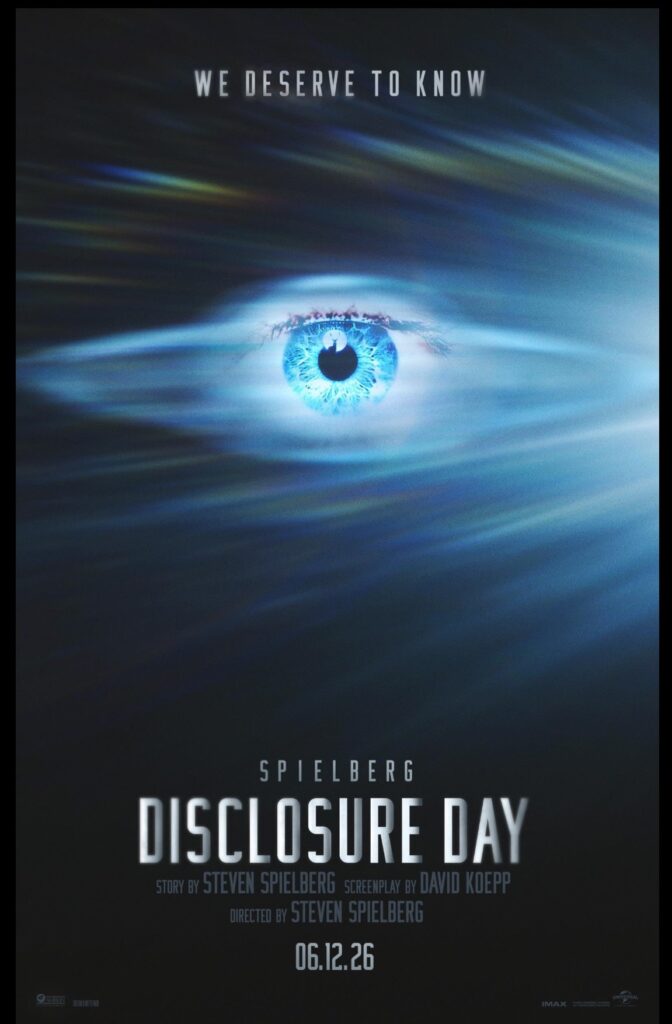
So I caught Steven Spielberg’s new movie Disclosure Day on Thursday, its opening day in my neck of the woods. With all the hype worthy of a Spielberg movie drop it begins with a wrestling match in which the camera is alternatively perched on the wrestler being pounded or thrown in the air and the crowd scenes, focusing on one morose fellow with a conspicuous backpack. I was thinking terrorist plot at that point. A trio of black-clad government operatives surround the guy and, as usual with movie magic, somehow he gets away. But he’s not a domestic (or international) terrorist in the conventional sense. He’s more of a whistleblower. Think Edward Snowden. Think government secrets of the profound variety.
From that wrestling-match opening sequence it barrels headlong into plots and subplots full of mystery, bad guys in black governmental SUVs hurtling down roads to catch or kill the good guys, and several amusing moments that involve what most people would call “super powers”: Emily Blunt suddenly breaks into Polish/Russian while speaking to her boyfriend, and when one government goon touches an interstellar object with a glove, he explodes. It’s fun and fast-paced. I don’t know if it’s particularly profound, although the ending implies a reckoning with cosmic reality. It ends with one verb that the UFO-naysayers generally refuse to do.
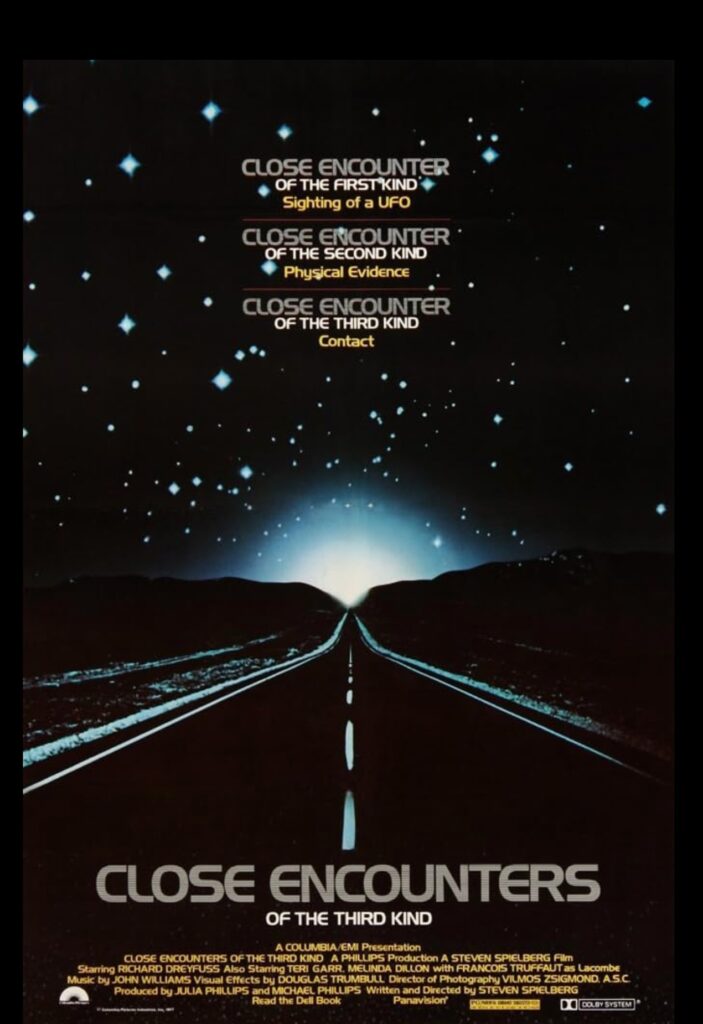
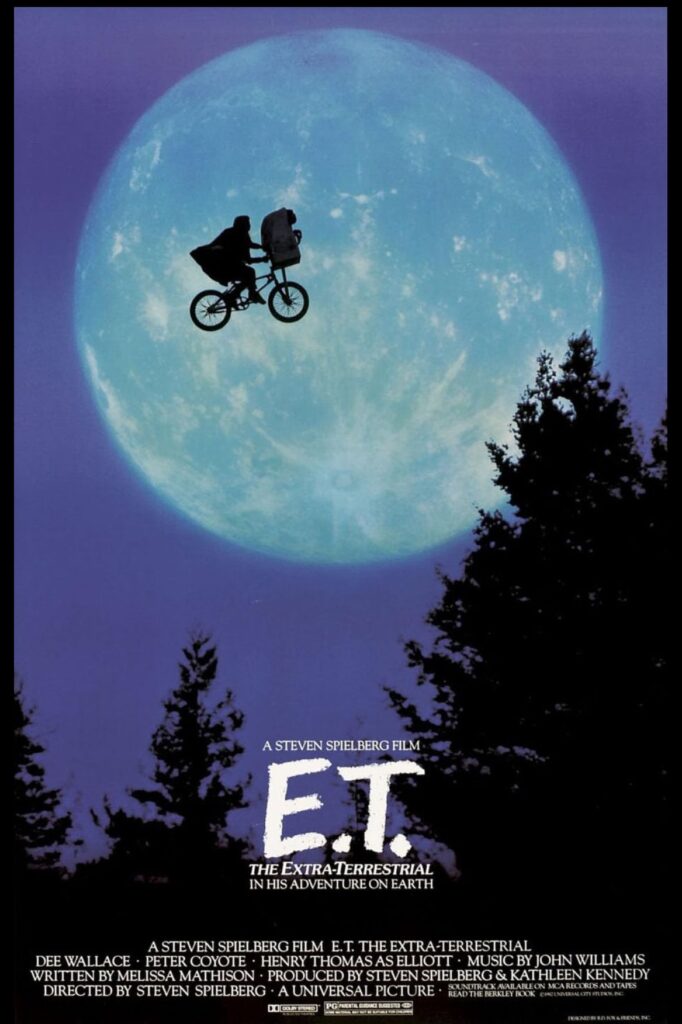
As Spielberg is 79 years old, he may be nearing the Swan Song part of his career, and Disclosure Day plays into that era nicely. It’s best appreciated as a kind of bookend to his classic Close Encounters of the Third Kind (1977), with touches of E.T. (1982) and War of the Worlds (2005). Personally I’d suggest less chase scenes and more aliens, but what do I know. Emily Blunt does a terrific job as a TV weatherwoman Margaret Fairchild, who is somehow linked to conspiracies and extraterrestrials in ways she doesn’t understand, while Josh O’Connor plays Dr. Daniel Kellner, a techie supergeek who mumbles and stumbles his way through the movie, a kind of Everyman for conspiracy theory buffs. Lastly the charming Brit Colin Firth plays the bad guy, Noah Scanlon, who is trying to keep secrets and will do anything to anyone who gets in his way.
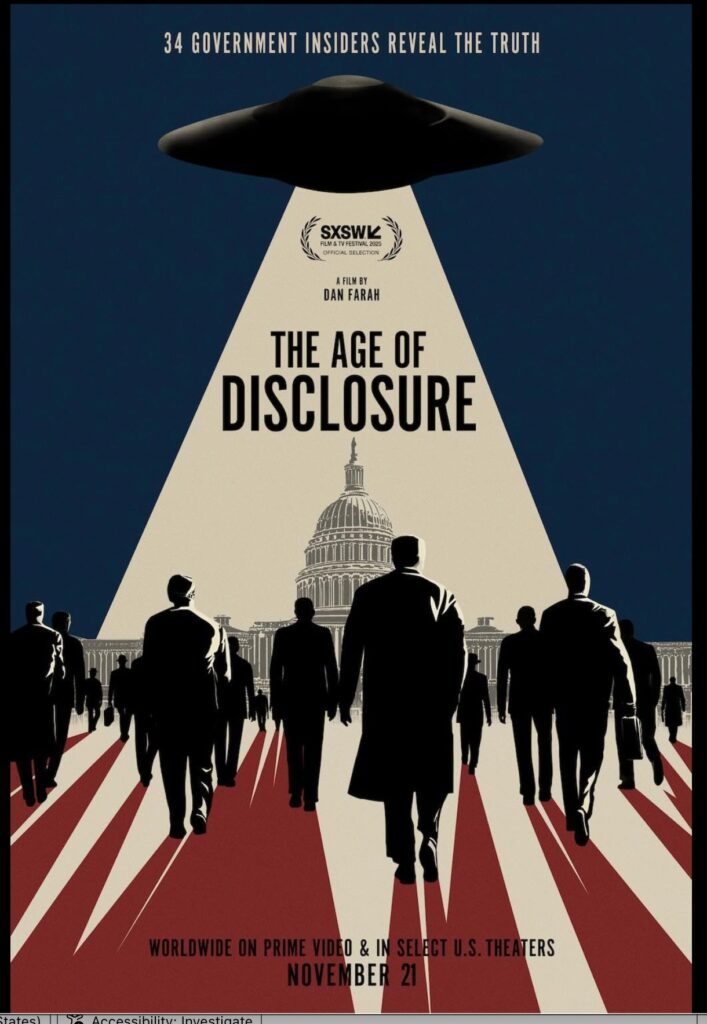
As a UFO enthusiast but reluctant skeptic, it’s all pretty fascinating to me. The recent documentary The Age of Disclosure (2025) provides plenty of fuel for ufologists who insist all the theories are real and should be believed, essentially that our government has proof of alien existence, including spacecraft and “biologics” (which, we assume, implies Dead Alien Bodies). That the government is now releasing UFO files makes it all the more timely and relevant. Will this fictional movie convince anyone that “The truth is out there”? Should it? Probably not. But many people believe we are on the cusp of a grand “disclosure,” from the government most likely, that will change our thinking about aliens and UFOs. Like many (if not most), I’ll believe when I see it, when reputable scientists can examine said alien spacecraft and/or bodies. Once we enter a realm where the hard evidence of alien encounters is indisputable, we’ll no doubt look back on Spielberg’s films as prescient and visionary. For now, it’s a lot of fun.
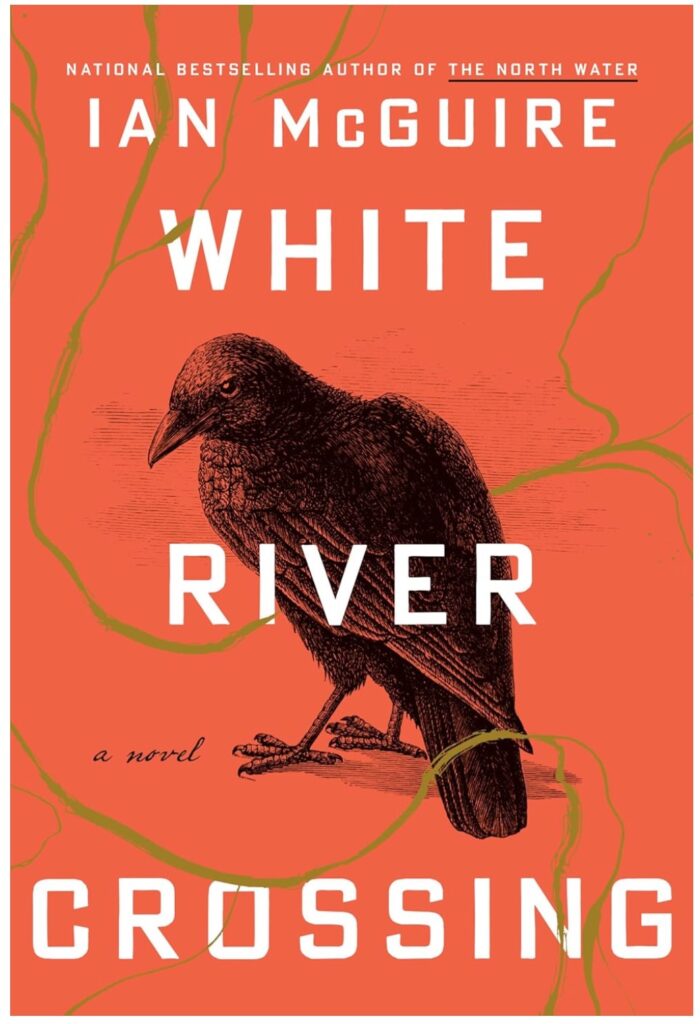
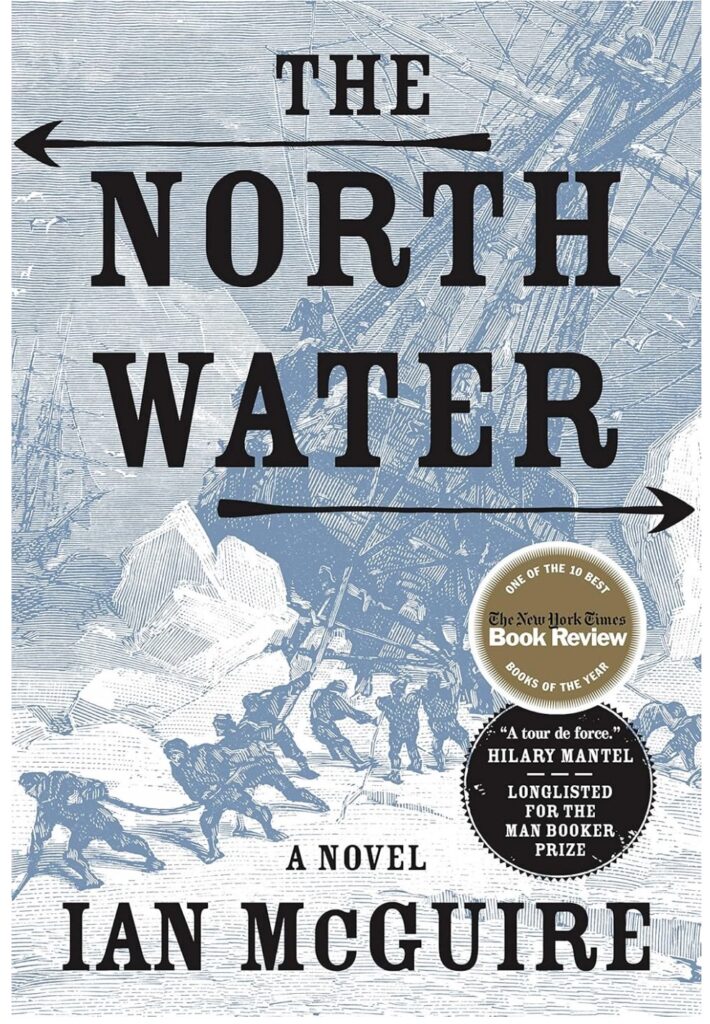
So I’ve been a fan of Ian McGuire’s fiction ever since the publication of his novel The North Water (2016). I haven’t followed his career closely or anything (I see there’s a novel published in 2020 titled The Abstainer, about which I know nothing), but just recently I discovered he has a new novel that debuted in February—White River Crossing. It’s a terrific read and a great follow-up to The North Water.
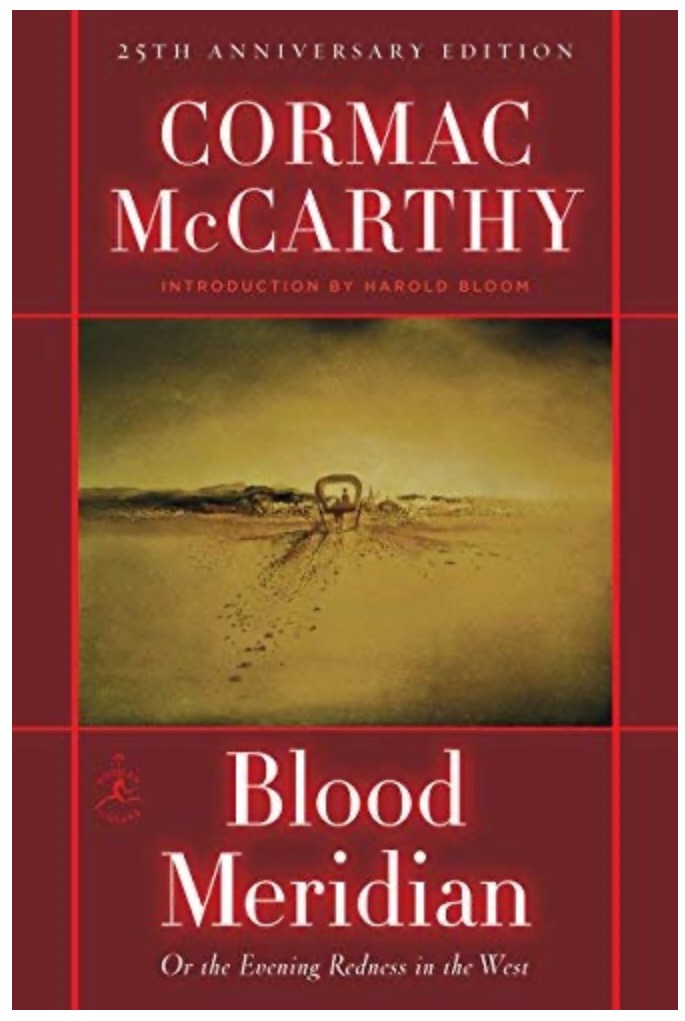
Set in the late 18th century (begins in 1766), White River Crossing is ostensibly a historical novel, but I find that genre category rather dismissive. Some of the world’s greatest novels, including Tolstoy’s monumental War and Peace (1869), would fit under that label, or Cormac McCarthy’s epic Blood Meridian (1985). No label does a work of artistic genius justice. In his preface McGuire mentions how he did considerable research for the novel, mainly concerning the Hudson’s Bay Company—which had a monopoly on the Canadian fur industry for a good two hundred years—and its interactions with the Native Americans who supplied them furs. Without giving much away (this is mentioned in the novel’s jacket description) I can report the impetus for the novel’s “quest” is the discovery of gold in a remote area northwest of Hudson’s Bay, in a bleak landscape known as the Barren Grounds. Three men working for the Hudson’s Bay Co set out to find the gold and . . . trouble ensues.
What impresses me most about McGuire’s fiction is not so much his subject matter (although I do love a good adventure story) but his style and diction. He has a knack for the odd, specific word, framed in lyrical, complex sentences. When I was teaching a graduate-level creative writing course at Penn State I had the class read The North Water, mainly for the stylistic pyrotechnics, and the class . . . hated it! I’m not kidding. I have to say they disappointed me greatly, and seemed to fall into the trap of gender-sensitivity and the cliches of “wokeness.” I tried to argue the novel’s strengths, to no avail. They weren’t having it. How could he write a novel with no exemplary female characters in it? That was their main beef. How could he write such despicable “toxic maleness”? Groan. Yes, there are despicable male characters in The North Water. We’re not supposed to “like” them. My easy summation of the novel? It’s a revisionist Moby Dick. The men are not noble and level-headed, such as Ishmael in Moby, and not austere and sexually disinterested, such as Ahab. It’s a 21st century vision of the past.
They’re men, some of them violent and dangerous, and sailors on ships in the Atlantic and “North Waters” with sexual urges and crimes. Some of the language echoes Cormac McCarthy’s Blood Meridian. At times it’s a mixture of obscure technical lingo (sailing terms, for instance) and archaic usage (historically accurate, we assume), with a zing of Anglo-Saxon spice. I’m digging the book: Best novel I’ve read since Richard Yates’s The Easter Parade (1976), which is a classic that I finally got around to reading a couple years ago.
As a diehard McCarthy fan (my Houston Chronicle review of No Country for Old Men, for instance, is quoted as a blurb on the paperback edition) know that my comparison of McGuire’s fiction to McCarthy’s is not taken lightly. I usually wince when a book comes out that is compared to any of McCarthy’s novels: It’s a literary Kiss of Death. He’s just too hard of an act to follow. But with The North Water, and now White River Crossing, he pulls it off.
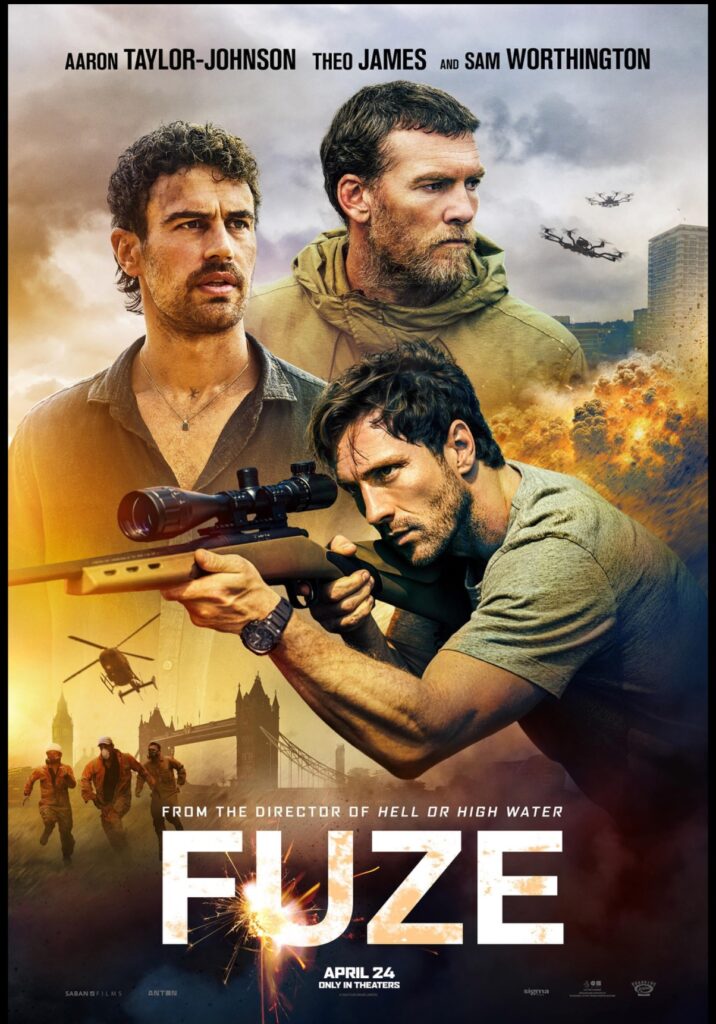
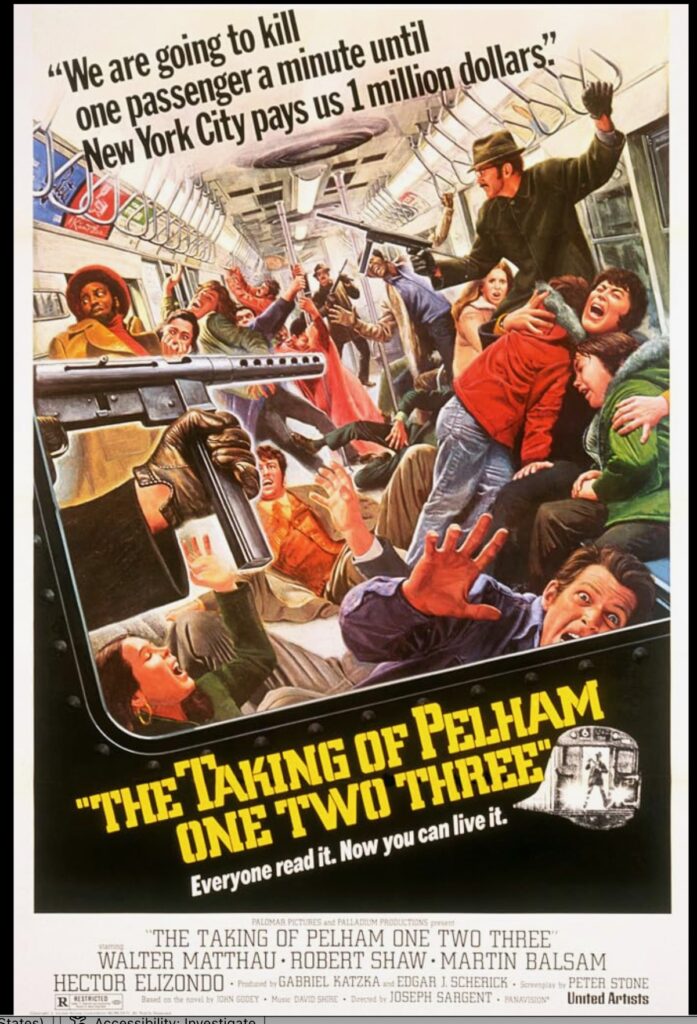
So there’s a new British heist movie titled Fuze—quite a thrill ride, complete with complicated plot, excellent cast, and a mess of techno-gadgets. Set in London, it showcases U.K.’s impressive (albeit fictional) city-services people, from police to military bomb-detonation experts to traffic coordinators and more. That city-services orientation reminded me of the classic crime thriller The Taking of Pelham One Two Three (1974), which starred Robert Shaw of Jaws (1975) fame. It’s one of the movies that defines the Seventies image of New York City, and Fuze does the same thing for London in the 2020s.
Fuze stars Theo James, the hunky Brit who made a splash as a philandering husband in Season Two of the HBO series White Lotus. He plays Karalis, a slippery eel criminal who always seems two steps ahead of everyone else, or just incredibly lucky. He’s good. Or good at being bad. There’s a backstory that arrives at the film’s end that suggests some motivation and redemption for his character, even if all the other bad dudes he betrayed still want him dead. The military bomb-detonation expert Will, played by Aaron Taylor-Johnson, is a key figure who turns the tables on the criminals more than once.
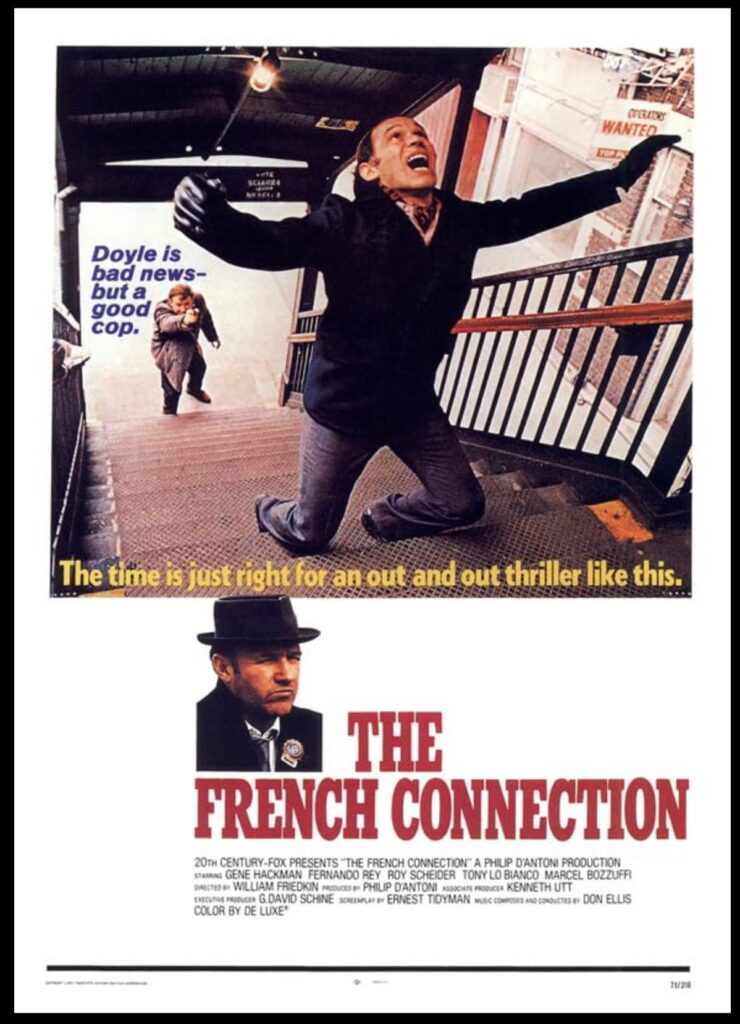
Like The Taking of Pelham One Two Three it’s a white-knuckled joy ride through danger and peril. An unexploded WWII era bomb is discovered at a construction site in the center of London. The area is evacuated and the bomb squad called in. Meanwhile a group of thieves hiding in a nearby apartment building drill through a basement wall into a bank vault and steal diamonds worth reportedly $30 million. But something goes wrong. A chase ensues, as in The Taking of Pelham One Two Three. The outcome, however, is different. The ending calls to mind that other classic of New York City cinema in the Seventies, The French Connection (1971)—which, oddly enough, stars Roy Scheider, also a star of Jaws.
So I stumbled upon the film Strange Darling (2023), which has become something of a cult classic. First: I’m not a fan of serial-killer movies. The best of them thrill you with gruesome fantasies such as the “brilliant” serial killer a la Hannibal Lecter, while the worst of them indulge in Rated R torture porn, like the Saw franchise. When I read the description for Strange Darling I was initially put off, thinking, “Oh, just another serial-killer slashfest.” It has a 96% Rotten Tomatoes rating, however. That’s good enough to make me wonder. Spoiler alert: It’s hard to describe/analyze this one without giving away some details.
First thing you as audience notice is its nonlinear structure. It’s divided into six chapters (a la Tarantino’s Pulp Fiction or The Hateful Eight). But it begins with Chapter Three, in an action-packed chase scene. From that moment on you begin making judgements about the characters and situations, based on what you’re seeing or being shown. Most of these are wrong, one way or the other. It’s a twist on gender roles: In the initial scenes there are only two characters: a flirtatious young woman (Willa Fitzgerald, terrific) who seems to be playing a dangerous game of Take a Walk on the Wild Side, and a stern-looking suspicious dude (Kyle Gallner, nicely understated) who has a gun in an ankle holster. They’re in his pickup, outside a motel, flirting. One thing leads to another and they end up in the motel room—frisky, handcuffs, the works. Foreplay, as it were. She produces some drugs—ostensibly cocaine—from her purse and announces it’s her birthday. (I didn’t believe that.) From that moment on the action gets ever more complicated. It becomes obvious Things are not what they seem.
As the nonlinear chapters unfold you come to understand that context is everything. It’s not a matter of seeing is believing. It’s a matter of what you see can’t be understood without the linearity of what came before. When there’s no context for the actions we insert our own reasons and logistical frameworks—which, in this story, are likely wrong. I liked how it subverted expectations. You think you know what’s going on and then realize you don’t. The acting and direction are first rate. (See the glowing blurbs on the poster image.) Ed Begly Jr. and Barbara Hershey play wonderful old hippies who don’t deserve their fate. The end is harrowing and poignant. I’ll leave it at that.
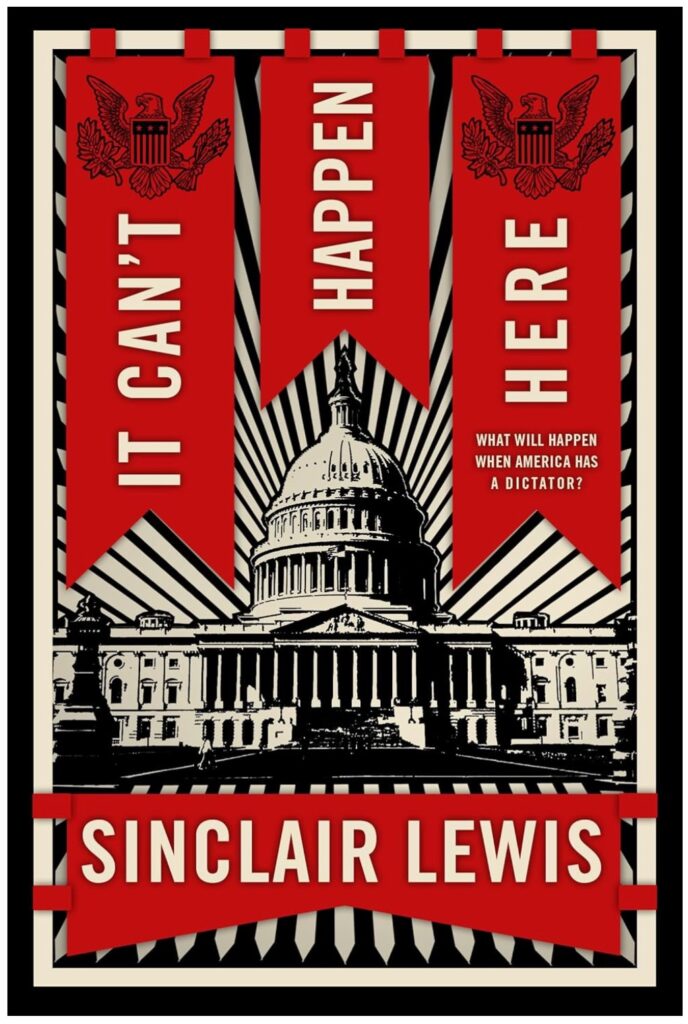
So for years I’ve come across mentions of Sinclair Lewis’s infamous novel It Can’t Happen Here, published in 1935, which depicts the Fascist takeover of the U.S. government by a duly elected conman, Buzz Windrip. Many have noted the similarities between Windrip’s rise to power and Trump’s. Both rode waves of populist support. Both parlayed a resentment of “elites” into a successful installation of corrupt, abusive government. I finally got around to reading it and agree that it’s a classic, warts and all. Some of the similarities are eerie and some of the differences are, well, somewhat hopeful.
Lewis notes how, like Trump, his fictional strong-man POTUS stocks his cabinet with lackeys and goons to do his bidding. But his use of the man manipulating Windrip is the eerie part: The sinister politico Lee Sarason is the idea-man behind Windrip’s agenda, and comparable to Hitler’s German cronies such as Hermann Goring. He seems a lot like Stephen Miller, Trump’s deputy chief of staff known for promoting White Nationalist policies. In the novel, Sarason eventually deposes the elected Windrip and installs himself in as new president (after exiling the legitimate Vice President). That’s one trick Miller probably can’t emulate. And as far as the differences go, perhaps the biggest noticeable difference is the popularity of Windrip’s newly elected regime, initially. In time his fascistic policies lead to Civil War, but at first he’s much more liked than Trump, at least at this stage of Trump’s corrupt regime.
I mentioned “warts and all”: For one thing, the names are silly (Berzelius Windrip, Hector Macgoblin, many others): They establish a comic tone that undercuts the seriousness of his subject. Much of the action is summarized, not dramatized. It helps Lewis cover a lot of ground in a short period of page-time. (The ebook is only some 180 pages long.) But at times it creates a static feel, of events being summarized rather than brought to life with good description, dramatic action, and characterization. The main character, Doremus (“Dormouse”) Jessup, is the local editor of a small-town newspaper in Vermont. He’s no Bernie Sanders, although the book does have lengthy discussions about Socialism and Communism. He’s an Everyman of sorts—a bit nebbishy, quiet, soft-spoken, and careful. He’s horrified by Windrip’s rise to power and its abuses, but feels powerless to stop it. Perhaps the most dramatic turning point in the novel is the killing of Jessup’s son-in-law, a doctor, which underscores the danger for Windrip’s family and friends. Doremus is ultimately thrown in a concentration camp for publishing anti-Fascist writings (against the “Corpo” regime of Windrip’s “Corporate” party), beaten and abused, from which he escapes and joins the Resistance movement.
I should note Sinclair Lewis was the first American writer to be awarded the Nobel Prize for Literature, in 1930. The timing of the novel’s creation makes it a fascinating historical document. Lewis wrote it five years later, in the summer of 1935, before the election of 1936, during the crucial years of Adolph Hitler’s rise to power. (It’s even before Kristallnacht, in 1938.) Fans of WWII-era history should read It Can’t Happen Here and William Shirer’s The Rise and Fall of the Third Reich (1960) as companion pieces. Both explain, in part, the allure of Fascist policies, and how the Great Depression created an atmosphere ripe for strongman politics. Contemporary history often credits FDR’s New Deal policies for helping to ease the Great Depression, but Lewis’s ground-level narrative portrays a populace fed-up with Roosevelt’s policies and frustrated at the lack of economic growth. One of Windrip’s campaign promises is a gift of $5,000 to every American, on which of course he never delivers.
Of these two books, The Rise and Fall is the better read, for my money, by far (and much longer). Shirer does a great job of bringing the atmosphere of Germany in the 1930s to life, and the sinister and effective ways Hitler seized power in the mid-decade. (For one thing, he was elected. Then rigged the system to prevent his party from losing future elections.) But Lewis’s It Can’t Happen Here is a good companion, showing how Americans were worried about the rise of Fascism in the U.S. At times it also echoes George Orwell’s 1984 (1949), with more lighthearted jokes and folksy characters. Imagine 1984 narrated by Andy Griffith.
I was working as a sandblaster on the coast of Texas, at an industrial park right off the Intracoastal Canal. A wasteland of bulldozers and cranes. Stacks of rusty metal pipes. A few scraggly palm trees, no grass, house or town within miles. That’s where I saw her. Odd to come upon any people in that zone: We were like twenty miles from the beach on Mustang Island but there weren’t any bikinis or daiquiris to be found. Just miles of flat sandy windswept Nowheresville. Everything smelled like beached fish cooked in diesel fuel. Seagulls wheeled and squealed in the sky. They perched in lines on the concrete seawall and the pier railings.
We worked on a rusty barge moored in the canal. Our job was to sandblast the rust off the metal then paint it with rust-coating. We walked a bouncy plank bridge to get on board every day. Stagnant water beside the barge littered with yellow rubber gloves like a school of severed-hand fish. Summertime, ninety-five degrees in the shade, wind blowing twenty to thirty mph every day, flags popping on the big cranes used to lift shit.
And then, through a curtain of gliding seagulls against the bright summer sky, we see this gal walking in the wasteland. Took one look to know whatever is going on, it’s not good.
We is me and my painter boss, Pete, a crusty old drill sergeant of a guy with a handlebar mustache and eyes perpetually squinting in the sun, deep wrinkles on his face. He looked like a shrunken Marlboro Man. I was near six feet and he was a good step down from that—maybe five eight, nine. Classic Short Man’s Complex. Not a bully but grouchy and hard-bitten.
I was a newbie on the sandblaster/painter crew, young and naïve, got the job after talking with one of the painters while getting gas at a convenience store, told him I was looking for a summer job. He said, “Come on, Cowboy,” and that was that. After a few weeks I had a reputation for being easy to get along with. Pete wasn’t.
The other painters considered Pete a dick but we got along just fine. He was stern and grouchy but never really snapped at me as long as I did my job without loafing. Learned that my first day. The barge so hot I was just kind of standing there in the glare and heat willies rising off the baking sand. I took off my shirt and could practically feel my skin burning and shriveling up. At one point I felt dizzy and was leaning against the generator, trying not to faint. Pete growled, “Well don’t just stand there with your finger up your butt.”
After a few weeks on the job I knew his quirks. He was never a pussycat but he could be alright. I called him Mr. Grumpus one time and he almost smiled. Grouchy he was, sure, but I was never afraid of him. Pete reminded me of an old movie I saw once, with the actor Robert Duvall, The Great Santini. About a former fighter pilot who was a tough father. Once when I was finished cleaning all the paint equipment I said, “Okay, Santini. Let’s roll.”
When I first got the job, I told my friends, “Yeah, I’m a Sandblaster, no big deal.” I said it like I was some kind of Superhero: The Sandblaster. He’ll strip the flesh off your bones. Most people didn’t even know what it was. I didn’t, before I got the job. Cleaning rust off metal crap, that’s what it is.
Another reason the other painters didn’t want to work with him: He wouldn’t take breaks and generally ran a tight ship. As his assistant mainly I mixed the paints and cleaned all the equipment when we were finished, ran the compressors, and tried to keep the hoses from coming loose and twisting around like a rattlesnake, smashing you in the head with their hard metal couplings.
But that day Pete saw me watching this tiny girl in blue jean cutoffs and a halter top slinking along the stacks of concrete pipe over by the crane. I was about to call out and ask if she needed any help, but she was still too far and wouldn’t hear me. So I kept watching and ignored Pete giving me the stink-eye. “Get back to work,” he finally said.
I said it was kinda strange, wasn’t it? A girl walking alone out here? Then as we watched a pickup truck with two Mexican guys came driving across the wasteland, heading in her direction. “None of our business,” said Pete. “You want to stay healthy, keep your head down and pay no mind to that bullshit.”
I didn’t say anything. Rinsed out the sprayer and decoupled the compressor, covered the cans so the paint wouldn’t get stiff and thick. Like I was paid to do. But the whole time I’m watching. Mexican guys headed across the sandy flats and cut the gal off before she could get far. She saw them coming and ran behind the stack of pipes. They got out and each went in the opposite direction around pipes, and after a little bit here they come, dragging the girl along. Pushed her into the pickup cab and took off. But instead of leaving out the main road in they circled around to another rusty barge a ways down the canal, far enough that you couldn’t tell shit. But a half hour later they were gone.
The next day lunch time I took my cheeseburger and root beer and walked the seawall along the canal, toward the barge. Pete saw what I was doing and didn’t say anything. He was my boss but not the boss of me. We’d had a few words about the ICE deportations. He thought the “wetbacks” were getting what they deserved. I didn’t. Keeping my opinions to myself was part of the job.
Seagulls scattered before me as I made my way down the concrete seawall covered with bird shit. A blue heron five feet tall perched on leg and watched until I got close enough then it flew off slow and big like a baby pterodactyl. I got close enough to see that people were living there. A square cabin and wheelhouse toward the bow and a porta-potty perched aft, near the stern. A clothesline strung between the cabin roof and the railing. Women’s clothes on the line. Like our barge, this one had a wobbly jerry-rigged bridge of two-by-twelve planks held together every few feet with braces. I was thinking maybe I should step on board, ask if they needed anything. Then I saw him.
Skinny teenage Mexican guy, maybe my age or a little older, sitting in the shade on one side of the cabin, under the awning of a blue tarp stretched above him with yellow cord. Holding a rifle by the barrel, stock on the barge floor. Watching me. His face in shadow so I couldn’t see his expression.
I acted like I didn’t see him, kept walking along the concrete seawall. Made a show of looking into the water, like I’d lost something and was searching for it. Felt that gun aimed at my neck when I turned around and headed back. At our barge Pete was waiting, finished with lunch. He just looked at me and shook his head. “No, you ain’t doing that. So just forget about it.”
Quitting time we went home, getting munchies on the way. Pete bought me a cold beer and I drank it. Truth is I don’t even like beer, but I know you don’t turn one down. On the way back to the office, where my car was parked, we passed several ICE trucks with people pulled over on the shoulder of the road. Trash blowing in the wind. Palm trees waving in the gusts, people arguing, pleading, people with their legs spread and hands on the hoods of white ICE pickups. We’re used to it by now.
The Texas coast is pretty much Mexico with better roads and less diesel exhaust. Shrimp boats in the Gulf sometimes pick up extra cash by smuggling drugs off-loaded from others. Corpus Christi used to be known as a popular stop for illegals getting jobs and apartments. Now the Border Patrol is chasing down people everywhere and they’re all hiding. As we’re getting our beer white ICE pickups with green stripes surround a local bus and hold it up, drag two guys off and arrest them. The ICE cops wear black masks and have their pistols in side holsters, like wannabe gunslingers. I called them assholes and Pete said they were just doing their jobs.
Pete wears a gray hardhat shaped like a cowboy hat. It’s kind of cool, actually. I wouldn’t wear one. I couldn’t pull it off. But with Pete’s grizzled face and that handlebar mustache, he rocks it. Doubles as a political statement.
“They might be just doing their jobs,” I say, “but they’re still assholes.”
I still live with my parents, summer before college starts. I can’t stand my stepfather and we hardly say anything. But my best friend lives right down the street and I don’t have to pay rent. Don’t buy the cow when the milks free. After work I mainly hang out with high school buddies and get high, watch the moon on the water. My best friend likes to water ski but I never really thought much about being dragged behind a boat. I’m a working-class rat and skiing always seemed a rich kid thing, like those assholes who go snow skiing in Colorado at Christmas break and come home with broken arms or legs.
My mom said I was too negative. That I should learn to ski, to mingle with “quality” peeps. She suggested I enlist in the army. “Mom?” I said. “That’s for losers.”
Nonsense, she said. “You need some discipline,” she added.
She was big on inspirational quotes. Liked to embroider little pillows with sayings and tuck them all over the house. One pillow on our sofa proclaimed, “To succeed in life, you need three things: a wishbone, a backbone, and a funny bone.” Success and sweetness on wooden plaques hung on nails around our house: “Live, Laugh, Love.” The wag in me wanted to rewrite it as “Die, Frown, Hate.” But I couldn’t do that. She pasted that shit on my bathroom walls and my bedroom door. Here’s one of my favorites, on my bedroom door: “Try to be a rainbow in someone’s cloud.”
The next couple days I tried to tow the company line: Heed Pete’s advice: Ignore the trouble. Let sleeping dogs lie. Don’t stick your neck out. We were almost done with the barge job. I was itching to get out of there. Warm wind stinking of dead jellyfish. I’d stare out the window on the drive to the site. Flat horizon, hard-baked sand, tidal marshes and ditches with alligators. At first there were power lines with sneakers tied at the shoestrings and thrown over the lines to dangle. Hundreds of them. It was a high school thing. Some people did it when they got out. Like I’m free. Others when they dropped out. Like fuck it. If you hooked your sneakers over the first throw you had good luck for life. After the sneaker lines, nothing but a few scraggly palm trees at the industrial park entrance. Oil spills on the dirt road. Brown pelicans in groups of three flying over the ditches, hovering in the wind.
Sometimes I’d turn around and notice Pete watching me. He’d be bleached by the bright sun, mopping his neck with a red bandanna, cowboy hardhat practically gleaming. Every day there the sun seemed to keep getting hotter. I stood baking in the heat, wearing a floppy hat like vets wore in Iraq, zinc oxide on my nose, my shoulders sunburned when I got too hot and stood around without a shirt. The other barge was a couple hundred yards away at least. Mainly just a dark structure down the canal. Now and then I could see movement but too far to tell who or what was going on.
At the end of day I was cleaning all the pain buckets and resealing the cans and putting all the gear into the bed of Pete’s pickup truck when I noticed something move under the ratty blue tarp back there. I lifted a corner. A pair of bare feet retracted and then something squirmed and I came to be looking into the brown eyes of a teenage girl, staring back at me, her head covered in shadow, only her eyes visible in the murk. “Please,” she whispered. “Let me just stay here, okay?”
I gave her a long look back. Rock and a hard place. Standing there with my hands on the tailgate, heat radiating off the metal. The pickup bed messy with paint cans and trays, tarps and crap. She was tucked into the back right corner, using a spare tire to make the tarp like a little blue tent. I said nothing. If Pete glanced over and saw me talking to someone he’d put a stop to it quick. Without trying to be obvious I wandered over to our water cooler sitting in the shadow of the compressor and filled up my one-liter bottle, then nonchalantly dropped it beside her blue tarp, where a hand darted out and grabbed it.
Come quitting time a trio of military choppers fly low over the canal and we stop and watch. You can feel the whump-whump-whump as they chop the air. The sky has turned violet by then and the air is cooling off. I ask Pete if they’re Chinooks just to distract him. He slams the tailgate of his pickup and doesn’t say anything, suddenly stops and lifts the corner of the blue tarp. Sighs and shakes his head. “You know,” he stares at me hard, “there’ll be hell to pay.”
I shrug.
Driving the dirt road to the gate of the industrial zone, we don’t say a word. I keep an eye on the distant barge to see if there’s any action. Nothing stirs. Expecting a lecture or worse from Pete but he keeps his yap shut. I’m bone tired and sunburned and sleepy and when I rub my eyes they sting from all the crusted salt. As usual we stop at 7-Eleven, passing an ICE van on the highway. The store is on the edge of Aransas Pass, a ratty town that’s the gateway to Mustang Island and Port Aransas, just this side of the ferry landing. I get a Big Gulp of root beer and take my place in line behind two giggling blondes in bikinis, barefoot and still soggy from the beach. One of them asks if she cut in line and I tell her No, she was there first. She thanks me and points out a sign near the door to her friend, one that says, “No shoes, no shirt, no service.” They make oopsy faces and smile back at me.
When we return to Pete’s pickup, the blue tarp is bunched up and pushed into the corner. Pete pulls it out of the bed and fold it up roughly, weighs it down with spray paint rig. On the way out, he drinks his beer and I suck down my root beer until my belly’s full. The only thing he says is, “Looks like you got lucky.”
After the girl disappeared I had the sense Pete wanted to get this job done asap. We still had a week of blasting and painting left but he told me to show up at five a.m. the next morning to get an early start. We worked till sunset. I was so tired and sweaty by quitting time I was standing at the compressor and yawning, my vision blurry, my lower back burning. By then it was almost dark in the wasteland, the western sky red as fire. We’re shutting down everything and cleaning up the equipment when we see headlights heading our way, against that blood-red backdrop. My heart started beating hard but I tried not to act worried. We never got visitors.
Pete stopped what he was doing and stood there, straight as a ramrod, almost glowing in the headlights. He disconnected the blaster hose from the sand tank and plopped the end of it in the space between his pickup and the compressor trailer. He lifted his cowboy hardhat and smoothed his hair, put it back in place, came over to where I was cleaning the paint sprayer. “Listen,” he said. “If this is about that girl, you don’t know nothin’, you understand.”
I nodded.
“Nothing,” he added. “Not a thing. And let me do the talking.”
“Got it,” I said.
A sandblaster is a pretty simple contraption: First you need a diesel-powered portable compressor, on wheels, with a trailer hitch. You park that somewhere close to what you’ll be blasting. Some old rusty thing. My main job was running the compressor: Fueling it, connecting all the hoses, turning it on, being ready to turn it off at the drop of a hat. If the compressor is on and the hoses aren’t all connected, the air shooting through the hose turns it into a dangerous snake whipping back and forth, with a heavy metal coupling at its tip. The compressor makes a racket. We’d already shut it off but Pete walked away from me and flipped it back on as the pickup pulled up close and the headlights blinded us. The only thing keeping the hose in place now was no air in the lines: There was another lever you turned to open the air feed to the hose. Pete gave me a look, turning his attention from the pickup to me, then pointed at the hose end, raising his eyebrows.
A skinny Mexican got out of the pickup slow-like and moved toward us. Pete paid him no mind. He was carrying the paint cylinder to the back of his pickup, and loudly told me to bring the tarps off the barge. The Mexican looked at us both. “Donde va?” he asked.
Pete was passing the compressor and the kid was just the other side of it. Pete almost ran into him, growling, “Coming this way,” as he got close. The kid stepped aside. Pete dropped the paint cylinder on the tailgate of his pickup with a loud clang, then scooted it back into the bed.
The Mexican stared at me. “Where’s the girl?” he asked me.
Before I could answer Pete moved between me and the guy. “What can I do ya for, amigo?” he asked. “We’re about to leave and this is a private job site, so you ain’t stayin’ either.”
The Mexican made a face, walked to his truck and opened the door. He told us to turn off the compressor, that he couldn’t hear anything. We kept packing but in a second he was back, holding the semi-automatic. “I asked you, Mr. Gringo, to kill that fucking noise.”
Pete nodded. He shouted, “Sorry gotta let it run to clear out the lines.”
The Mexican stared at the two of us. The whole time that compressor noise blasted over all three of us. He squinted. “Where’s the girl?” he shouted.
“What?” shouted Pete. “I didn’t catch that.”
The Mex said, “The girl.”
Pete shook his head. “It’s been a long day, amigo. You go ahead and look for your girl. Ain’t none of our business.” He came up beside me and clapped me on the shoulder, like we were best buddies. Something he’d never done before. “Us two are going for a beer.” Then he kind of pushed me toward his pickup. “Adios, muchacho.”
The Mexican pointed his gun at Pete. “Turn off that fucking noise, Gringo.”
Pete stopped and nodded, keeping his hand on me. “One sec,” he shouted. He turned to me and gave me a death stare. “Get ready to run,” he hissed. Then he reached toward the air release lever. The one you never flip if the compressor is running and the hoses not connected. He made sure I saw.
Then flipped it.
It always takes a couple seconds for the air to fill the hose. It’s a thick rubber hose about two, three inches in diameter, and starts to bulge and bend as the air fills it, then shoot sideways. We rush behind the compressor as the metal coupling bashes the Mex’s pickup grill with a hard smack. Like a giant rattlesnake it snapped and coiled and whipped, smashing into things until it hit something with a thud and the Mex let off a round of bullets. We’re huddling behind the compressor, where the hose can’t reach. The shooting stops. The compressor keeps roaring and the coupling smashing into things.
Pete edges forward and peeks around the compressor. “Jesus fucking Christ,” he says. He inches around till he can reach over and kill the compressor engine. Suddenly, silence. The sound of seagulls squawking. The Mex on the ground, head bloodied, crawling toward his gun. I’m on my feet by then and not sure what to do. Pete watches him for a minute, pulling on a pair of workgloves, and when it seems the Mex is getting close, Pete steps over and picks up the gun. He stares down at the kid and shakes his head. “Some people don’t know when to take a hint.”
He points the gun at the Mex and lets rip a burst of bullets. The blast echoes flat against the barge. Pete tosses the gun on the dead guy. “You keep that, amigo. Seeing as how it’s done you so much good now hasn’t it.”
I was shaking and had to pee something fierce.
In the movies when they shoot people it’s full of suspense and drama. You know it’s going to happen before it does. Usually. Not the way it was: Pete just pointed the gun and popped him. And people in movies always get shot between the eyes or in the middle of the forehead. Pete got him in the neck. He scrabbled in the sand as his throat gurgled and spurted. For a second it looked like he was trying to rise up. Then he head fell back and he went limp.
I saw it all and thought: Now what.
Pete told me to hang loose. He had some calls to make. I was trembling and dizzy, my legs wobbly. My mouth dry and goosebumps on my skin. Almost dark by then and the wind whipping off the canal cooled me to the bone. Pete dragged the tarp out of the pickup bed and covered up the dead Mexican with it. Same one that the girl had hid beneath.
I sat on the tailgate and watched the industrial park road we used to access the barge site. No action at first, then headlights bouncing along the dips, heading our way. Pete appeared at my side and told me to let him do the talking.
The county sheriff pulled up to us slow and careful like, got out and settled his official cowboy hat in place. We all shook hands and he asked my name, wrote it down. He obviously knew Pete. They walked over by the compressor and stood there talking for a while. I couldn’t hear what Pete was saying but I could guess. He was gesturing this way and that, and at one point lifted the compressor hose and acted like it was swinging around. The sheriff put on gloves and picked up the semi-automatic weapon, carried it to his car. Brushed his hands off after he put it in the back seat.
He shook hands with Pete, came over and patted me on the back. “I think we can have all this cleared up by Monday,” he said. Then he drove off.
That night, when I got home I found Mom had embroidered a new fancy-looking round pillow and placed it at the top of my bed. In big black-and-red letters, it read, “Act as if what you do makes a difference.”
We had a couple days left on the barge job. Other than being a little rainy, everything was mostly the same. The barge down the canal was dead calm. The clothesline gone. Never heard anything about the girl. Soon after I quit to go off to college. On my last day, Pete shook my hand and said, “Stay out of trouble.” That was it. Later I heard they practically gave him a fucking medal of valor. I’m cool with it. The path of the righteous man and all that crap. Plus, you know, the wicked.
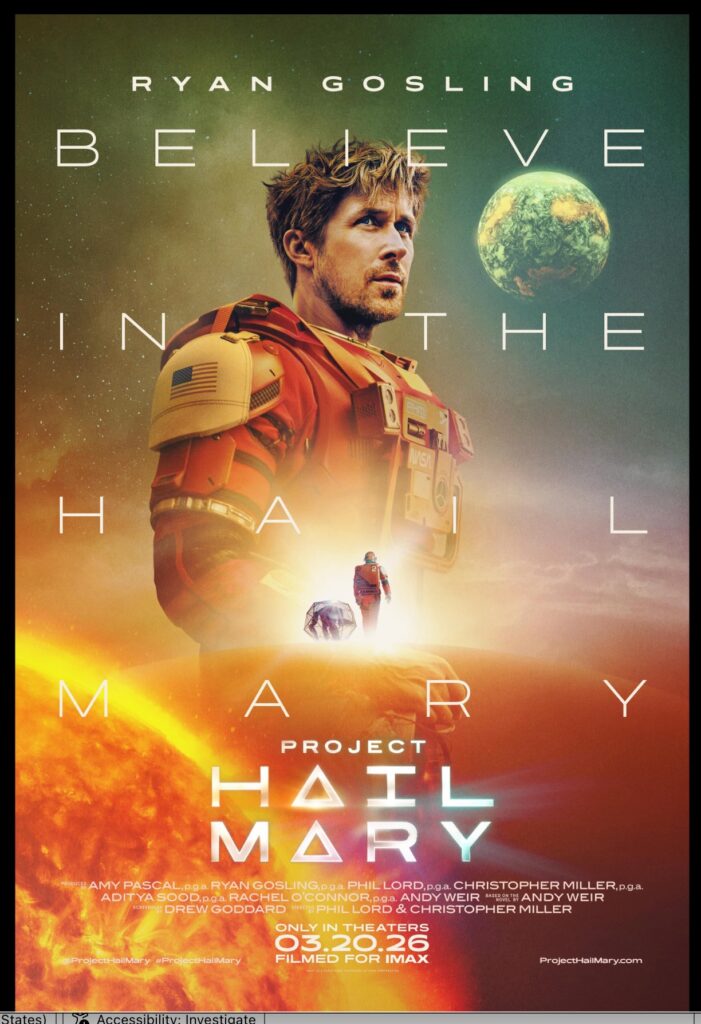
So to even begin a review of Project Hail Mary I have to first confront my ambivalence about its star, Ryan Gosling. He tends to get gushed over but for dubious reasons: Much as the world loved the Barbie movie (2023), I found it a big gob of pink bubblegum. It was fine, if you like that sort of thing—vacuous brand-name-based comedy. (Remember the Summer of 2023? The whole “Barbenheimer” thing? Was that only three years ago?) Ryan Gosling certainly had his comic moments as Ken. He’s great in The Place Beyond the Pines (2012) too. Maybe he should play bank robber/stunt-motorcyclists more often. Which leads us to Project Hail Mary, composed of, oh, approximately 95% Ryan Gosling on screen.
An easy description would be something like “It’s E.T. meets 2001 meets Contact meets Arrival meets Wall-E”—with a healthy dose of Steven Spielbergian moments, most in outer space. There are twists and turns that I won’t reveal, but I’ll note Gosling’s costar appears to be made of rather flexible rocks, hence the moniker “Rocky,” as in “Rocky phone home.”
Although comic, it’s not exactly funny. It’s sweet. My one-word review would be “Cutesy.” Hard not to quibble with the premise, from this Trumpian hellhole into which our nation has fallen: An intergalactic menace is threatening our sun, and to save it a great team of international scientists cook up a mission to travel beyond our solar system to find the fix. (Of course in our “real world” all the scientists would either be fired or under investigation for being “woke,” so forget the whole save-the-world mission altogether. For this review I consulted a team of scientists who confirmed we have a 99% chance of becoming the overweight humanoids of Wall-E by, say, 2035.)
Yet in the far-fetched fictional world of Project Hail Mary, they need a hero. For that they tap Ryan Gosling, who plays Ryland Grace, a high school science teacher who has a PhD and somehow manages not to yell at his students to put away their frickin’ phones. He’s reluctant to join this mission to deep space. I don’t blame him. What follows is heart-warming. Rather unlikely but heart-warming. Isn’t that what we all need at the moment?
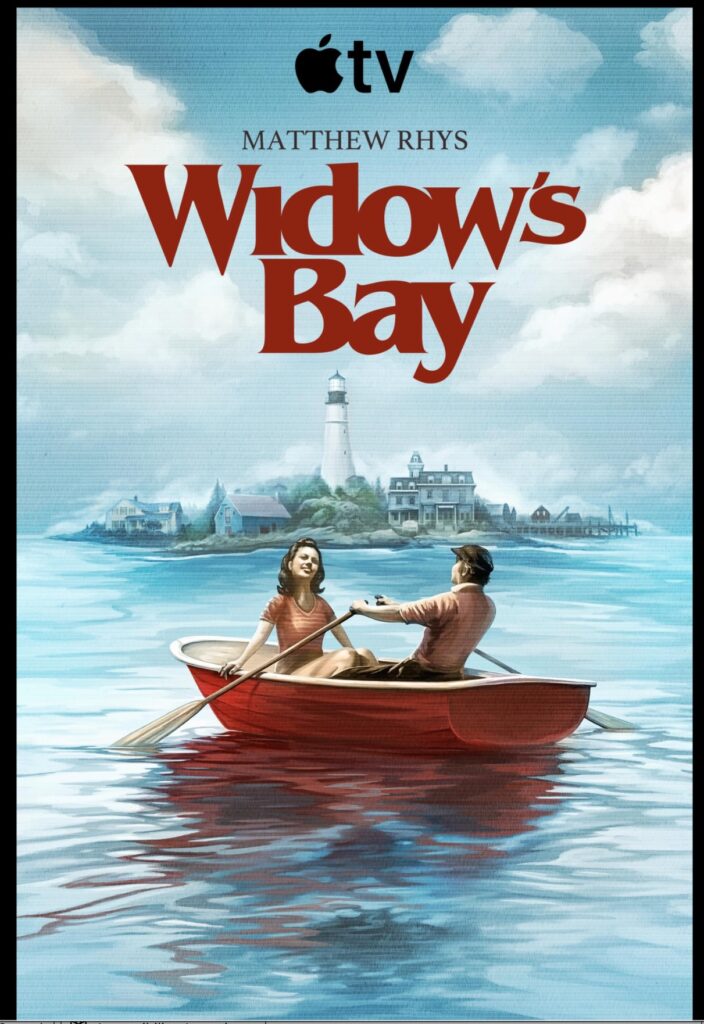
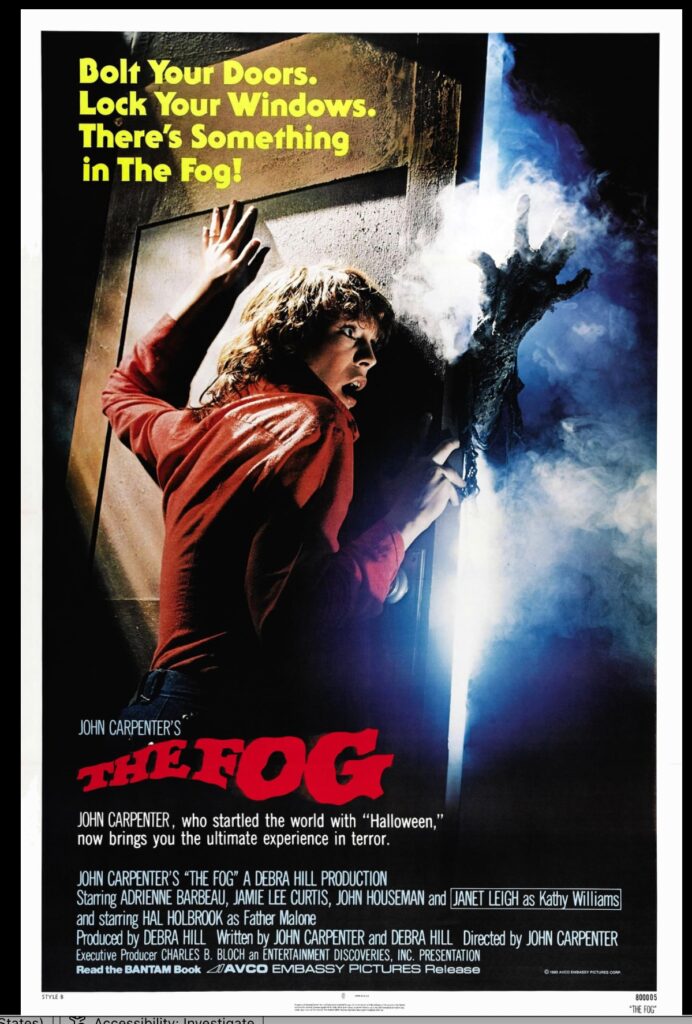
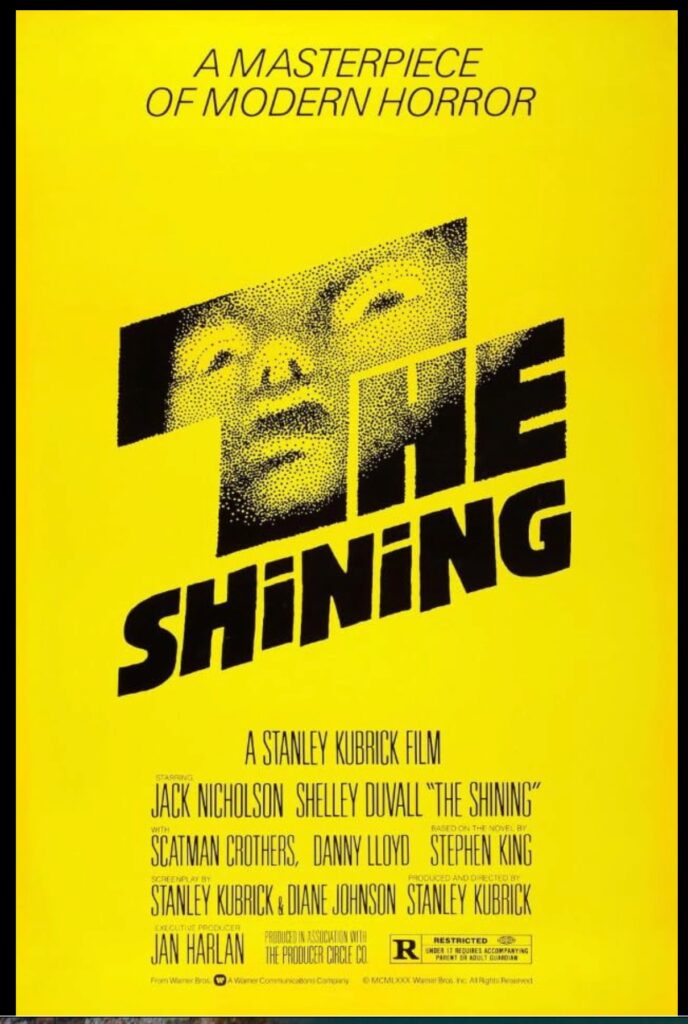
So a friend turned me on to this new Apple TV series Widow’s Bay. It’s something of a mashup satire of horror/disaster movies, with pointed references to such classics as Jaws, The Fog, and many others.
A “dramedy,” the most fun of the show involves the quirky citizens of the quaint New England island Widow’s Bay. The main character is local mayor Tom Loftis, played by Matthew Rhys, performing admirably a role reminiscent of Murray Hamilton’s classic money-obsessed mayor in Jaws. Only Tom is more nuanced and complicated: He’s not exactly likable but you end up pulling for him anyway. He often says or does the wrong thing. His assistant, Patricia, is the funniest character, who bickers with Tom and plays passive-aggressive head games.
At times the humor is tongue-in-cheek. For instance, Tom is single, raising a rebellious teenage son (is there another kind?), and explains that his wife died “in childbirth”: The way he says it makes it seem suspicious. It’s either a throwaway explanation for his being a widower or maybe he’s lying and there’s a “secret” that will be revealed later. In another scene mayor Tom makes a scene at a local bar when he yells out, “There’s something in the fog!” That’s a tagline from the famous John Carpenter film of 1980, The Fog. And there is something in the fog, but the scene is played for comic laughs. Everyone stares at him and the fog quickly dissipates.
Episode 2 has a subplot in which Tom agrees to spend the night at the spooky local Inn that has a history of unnatural deaths: He does it to quiet the locals who are scaring away the potential tourists. Many clues make the connection between this spooky Inn and Stephen King’s notorious Overlook Hotel of The Shining (1980) fame. He has to stay in the Captain’s Suite, which has a particularly bloody history, shades of Room 237 from The Shining. He also meets a lovely young woman who seems rather aggressive with her come-hither looks, who invites herself over to his house, and whom he comes to believe is an incarnation of the Sea Hag—a ghost-woman who lures sailors to their deaths by sitting on their face.
It’s on Apple TV and debuts a new ep every Wednesday. Next week is the fourth episode of ten, so we’re not even halfway into the series. It’s a winner.