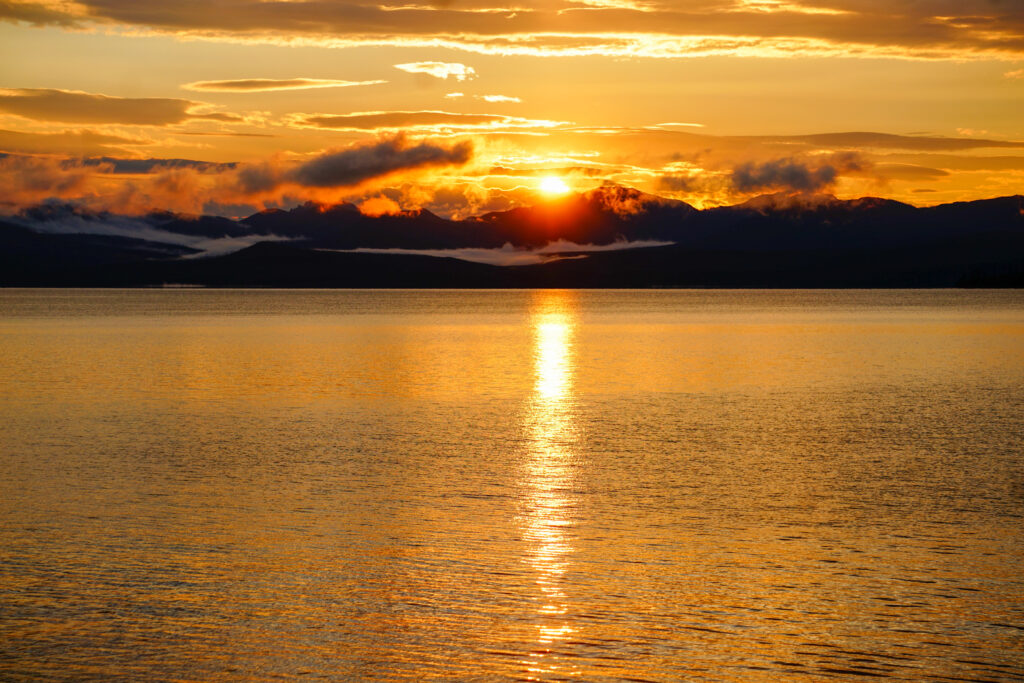
So I sleep with dogs. (You got a problem with that?) Actually that should be “dog,” singular, a particularly cantankerous Beagle-Terrier mutt named Swishy. Although in my head I think “dogs,” plural, because Swish is not the first dog I’ve ever slept with, and probably not the last. (Note I am not being “metaphorical.”) One mutt I slept with back in the Seventies was named Mozart. (I still miss him.) But why? It’s therapy. Who wouldn’t like a furry, warm, supremely loyal beast sleeping beside them in the night? One who would bark at and frighten any intruders? (Even though I can’t say I’m worried about intruders interrupting my sleep, but still.) There’s a kind of Zen calm you experience when waking in the middle of the night (like last night, when our house was shaken by tremendous mountain winds) and reaching over to pat your snoozing mutt. I pat her back, feel her furry ribcage, scratch her belly. Now Swish is an easy fit in bed: She weighs a little over twenty pounds and is on the Small side of a Medium. It is true, however, that if I nudge her accidentally with my foot at any time in the night she will growl or yelp out of all proportion with my gentle nudge. But . . . what can you do? A true dog lover doesn’t flinch at an occasional growl. Or quibble about size and poundage. I visited a friend in Austin, Texas a few years back and his guest room was his dogs’ room. So I had two oversized furry mutts, Luke & Tazz, as my bed companions. They were both long-haired beasts and it was shedding season. I was covered in so much fur in the morning I was an Honorary Dog. Here’s a photo of the Most Loyal Dog in the World (which is, like, every dog owner’s dog):
So here’s a story that hasn’t been featured much in the news media: The Southwest has had a pitiful winter so far—parched and warm. It’s drier than a tumbleweed here in south-central Colorado. And it’s worse elsewhere south and west of here. It’s like the flip side of the famous “Year Without a Summer” (1816) that is cited as an impetus for the creation of Mary Shelly’s Frankenstein and is widely believed to have been caused by the eruption of Mount Tambora in Indonesia, circa 1815. What’s our warm winter cause? Most likely La Niña, which tends to cause the jet stream to veer farther north, making winters warmer and dryer in the Southwest. Whatever the cause, the result is very little snow and brown grasses in fields and hillsides usually white. Ski resorts in Colorado are panicking. I’ve owned a home in the Sangre de Cristo mountains since 2003. This is the worst snow drought I can remember.
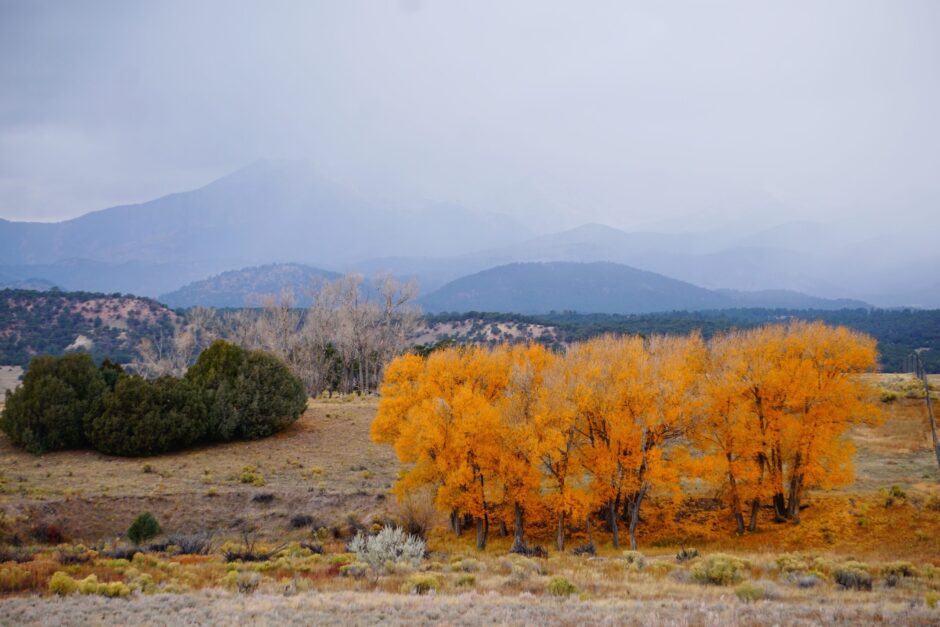
Although there is some snow—as the photo above illustrates, showing the Wet Mountain Valley and the Sangre de Cristo mountains west of Pueblo, Colorado—it’s a pittance of what we usually have. Climate change likely has a role in this moisture decrease as well. At one point in climatologist Michael Mann’s excellent book The Hockey Stick and the Climate Wars (2012) he warns that La Niña winters could become common in the West, and exacerbate a mega-drought. It seems to be happening.
So I have to begin with a confession: I’m most definitely a fan of the much-acclaimed nonfiction writer Simon Winchester. One of my first Winchester reads and still one of his finest (and my favorite) was Krakatoa: The Day the World Exploded (2003), his epic description of the eruption of Krakatoa in Indonesia, the final explosions of which are still recognized as the loudest sounds ever heard by humans, back in 1883. (The noise was heard over a thousand miles away.) It does a great job of bringing that (literally) earth-shaking event to life, and setting it in the context of the history of Indonesia, as well as the geography and vulcanology of the Pacific’s Ring of Fire. One image he describes has stayed with me: In the months before the final eruption the beaches of Krakatoa actually split apart and spewed lava into the ocean. It’s an amazing book of an amazing event.
Since then Winchester has given his readers a number of excellent works, including A Crack at the Edge of the World: America and the Great California Earthquake of 1906 (2005), Atlantic (2010), and many others. He’s perhaps the King of Fun Facts, but that seems a slight of sorts: Not only does he have a knack for the scintillating detail that makes a story come to life, but he also writes in a literary, approachable style. With books on such expansive topics such as Land: How the Hunger for Ownership Shaped the Modern World (2021), the Atlantic and Pacific oceans, he tends to grapple with Big Topics, usually with a geographical angle. His latest book is a daring addition to that tendency, about no less than the atmospheric phenomenon we all know as Wind—titled The Breath of the Gods: The History and the Future of the Wind (2025).
It’s one of my favorites of his recent books—not as exhaustive and exhausting as Land or Atlantic. As usual it’s full of Fun Facts, including terrific descriptions of why hurricanes rotate counter-clockwise in the northern hemisphere and clockwise in the southern. From the “singing” sound of wind on sand dunes (which happens at The Great Sand Dunes National Park near Alamosa, Colorado) to the derided racial theories of climate, Winchester examines the minutiae of wind from both a physical and a cultural viewpoint. He notes in the beginning the curious phenomenon called The Great Stilling, the diminishment of wind speeds over land in the decades between 1980-2010 (which has abated in some areas). Readers of a scientific bent will love it.
So I recently read the somewhat-infamous bestseller by Eliezer Yudkowsky and Nate Soares, If Anyone Builds It, Everyone Dies: Why Superhuman AI Would Kill Us All (2025). It’s a white-knuckled warning about the imminent peril of ASI (Artificial Super Intelligence). Note that they emphasize the distinction between run-of-the-mill A.I.—the kind that will write your term paper on The Great Gatsby or create a video of a cat playing a banjo—and the humanity-shattering A.S.I. that will bioengineer a super-virus to infect us all.
Did I enjoy the read? Hmmm. Technically I’d say it’s not really “good” and has many flaws, but is fascinating nonetheless. Basically it argues we could never control ASI so we shouldn’t build it: ASI will find humans dispensable and get rid of them. They (two authors) may very well be right but their writing style/organization is rather slipshod. They don’t have much evidence for the argument so you basically just have to believe them (that we’re all doomed). Worst thing about the book: Each chapter begins with a parable that it seems they (wait: two authors? how does that work, anyway?) made up. And the parables aren’t very good. After the parable comes a lot of ranting. The rants certainly include scary info nuggets: Some A.I. experts say the chance of ASI apocalypse is anywhere from 10-50%! (They quote various experts.) And they’re talking about the very foreseeable future. At some point they posit we maybe have 10 years left. They make a good argument that ASI research needs to slow down, that we’re rushing to create a super machine intelligence that we won’t understand or be able to control. One implication/subtext suggests ASI would be sneaky and untrustworthy. That it could pretend to be “aligned” with our goals—say, searching for cure for cancer—but meanwhile it would be developing some way to get rid of the pesky humans who want to find the cure for cancer. And we would have no idea what it was up to.
In the wider context of the A.I. and A.S.I. benefits/drawbacks debate—on the one hand we can giggle at the banjo-playing cat, before wailing in anguish as we face a horde of killer A.I. drones—certainly Yudkowsky and Soares argue an extreme viewpoint, but one that (according to them) is shared by many A.I. experts, including Nobel-prize winners. Others are equally cautious, and suggest an even earlier expiration date for humanity, such as the scenarios suggested in AI 2027, a polemic published last year by Daniel Kokotajlo, Scott Alexander, Thomas Larsen, Eli Lifland, and Romeo Dean.
A more moderate, cautious approach to the peril is suggested by Mustafa Suleyman’s The Coming Wave.
As the credits note, Suleyman is the co-founder of Deepmind and Inflection AI, so it’s an insider’s perspective. The Coming Wave has a user-friendly structure and more “evidence” to support its grandiose proclamations that A.I. will be the greatest invention since fire, but its Pollyanna view of the future at times seems decidedly foolish. One example: He asserts that A.I. will be such an economic benefit that humans won’t have to work much anymore, and gives a casual nod to the idea of a “universal income”—that seems rather unlikely, considering human nature. Okay we’ve taken driving away from humans, and factory work, and medicine, and retail work . . . . So someone (who? the government? Google?) is going to give us all the money to buy all the products that A.I. will make so incredibly efficient to market? Good luck with that. Sounds like a recipe for disaster, sugar-coated. But I imagine many readers will read TheComingWave out of the same impulse as I: Curiosity. For that reason, it’s a good book. Actually, after reading both books (plus A.I. 2027), I think I understand the nature and dangers of A.I. more than ever, and that at least my worries are informed. But how to reconcile the urgent warnings in If Anyone Builds It and A.I. 2027 with the well-documented and much-discussed frantic research into achieving A.S.I.? Greed, basically. Could the combination of greed and entertaining fake videos of banjo-playing cats do in humanity? Maybe.
So one of the downsides of our irritating Consumer Culture is that we’re programmed to be always looking for the next New Thing—be it car, refrigerator, book, movie, or significant other. It can lead to a niggling feeling that our lives are disposable, cheap, and tawdry. And while I read “voraciously” (though I don’t eat the pages) I’m often less-than-impressed with the results: I read 24 books in the last year and would count maybe 4-5 as “good” or “excellent,” with the other 20 being so-so or disappointing. (Case in point: Andrew Ross Sorkin’s 1929 (2025). It’s okay and interesting, but that’s about it.) After finishing a recent read—Simon Winchester’s The Breath of the Gods—I cast about for a new read. Nothing new grabbed me. So I poked around my library and found a First Edition (American) of Yasunari Kawabata’s novel The Lake, originally published 1954. (American first edition published 1974, 52 years ago!)
It’s nothing less than an eerie, exquisite masterpiece. First novel I’d read in several months. There’s a timeless weirdness to it. And a bit of synchronicity: At times it feels like a reimagined Lolita (1954), with less sex and more pathology. Both novels have a lyrical quality that elevates them over the ordinary best-seller with which we often clog our brains. (I’m looking at you, Dan Brown.) The final scene unfolds at a Firefly Festival in Japan, where they release captured fireflies from a tower in park, with a lake below. The festival-goers paddle rowboats onto the lake to catch the fireflies as they float from the sky. I want to live in that festival. That’s what the best books do.
So my title today is a nod to my writer-friend’s excellent book of stories, George Saunders’s CivilWarLand in Bad Decline (of which I have a rare first edition). With all the ICE chaos and MAGA mayhem it’s a relief to see the natural world surviving and thriving in the face of such stupidity. Yesterday during a snowstorm we had a bobcat hunting squirrels in our back yard. Our dog and cat harass the squirrels but never come close to actually catching one. Here’s the predator in its glory:
This one is something of a “gray morph”: We’ve had bobcats in the yard before that were much redder. It almost looks like a lynx. The hunt was fascinating to watch: Bobcat treed the squirrel up our large locust tree and kept getting closer. It sat patiently for a while, at base of tree.
Finally the squirrel ran up high and bobcat shot up after it and knocked it out, then scampered down and nabbed it when it was still stunned. Like the snail said after the wreck with a tortoise, “It all happened so fast.”
So I’m still a skeptic as far as alien visitors are concerned but it seems I’m bumping into extraterrestrial stories whenever I turn on the TV. Following the epic success of Better Call Saul (one of my favorite series of all time) the show’s creator, Vince Gilligan (great name), has returned to the New Mexican landscape with a mind-bending show titled Pluribus.
Without giving too much away I can say that it’s a clever send-up of the often-asked question, “Why can’t we all just get along?” Well, in Pluribus, we do all get along, or at least most of us—all but 12 survivors of a global cataclysm. Rhea Seehorn (who played Kim on Better Call Saul) is the flinty star of the show. She’s good in the role but awfully ornery. At least she is until toward the end of Season One, when she does loosen up a bit. My take: The shadow of ASI (Artificial Super Intelligence) lurks in the background. The cataclysm that occurs seems a metaphor for an ASI apocalypse of sorts. Good news: It’s not all bad! Everyone gets along! (Of course there’s a catch that I won’t give away: Watch the show and find out.) That brings us to Bugonia, which will no doubt be somebody’s darling in the awards shows.
Alien life forms and civilizations hover around the edges of this story, and not wanting to give too much away, I’ll leave it at that. Jesse Plemons and Emma Stone are both terrific in it, and mange to pull off the kookiness with aplomb. But in both Pluribus and Bugonia there’s a hint (or more) of humankind having an expiration date. It’s our zeitgeist. Will the 21st century be our last? I doubt it. But every century has its apocalyptic moments, and we seem to be fodder for the End Times.
So has it really been over two years since I posted anything to my sadly neglected blog? Ah well: Be assured that I’ve been alive and kicking the whole time, and rather too busy to bother to post anything. I mean it’s not like I’ve been sitting around staring at the wall. In the last couple years I’ve run the Austin Marathon twice, traveled to Hawaii, Thailand, and Yellowstone multiple times, and generally kept on truckin’. But really, I should either post to my sadsack blog or take it out in the field and . . . . What’s that great Jane Fonda movie? They Shoot Horses, Don’t They?
What brings me to break out of my blogging lethargy? Nothing less than the proof of extraterrestrial life . . . kind of. Last night I watched a newly released (November 21st) documentary titled The Age of Disclosure. About UFOs (or, to use the current nomenclature, UAPs).
It’s mind blowing. Basically you have a gaggle of scientists and government officials (including our Secretary of State Marco Rubio) saying UAPs are real, extraterrestrial, and we have recovered bodies (or “biologics,” term they use). I’ve always been a curious skeptic on the subject. Most of the UFO documentaries/shows are silly/redundant. This one is in a class of its own. A piece in today’s NY Times mentioned how members of Congress screened the movie last Monday.
Without giving too much away it has credible scientists and government-official whistleblower-types asserting that not only do we have multiple UAP sightings by military personnel but these officials are aware of a “deep state” organization called The Legacy Program that retrieves alien craft and bodies and has done so for years. The best testimony, for my money, comes from the pilots who have encountered the “Tic-Tac” shaped UAPs over the Pacific and Atlantic oceans while on military maneuvers. Much of the material covered was revealed in the Congressional hearings on UAPs that took place in the last couple years. According to this group, many of the stories that are considered laughable or kooky are real, including the infamous Roswell crash.
This is earth-shaking. And it’s all on Prime Video! Crazy crazy.
So with the Congressional hearings on the little-green-somethings formerly known as UFOs (now called UAPs) and crazyass whatnot we should all be aware the Alien Apocalypse is soon upon us—imagine old geezer croaking “The end is nigh”—and there are two new streaming shows to offer a glimpse of what these intergalactic ne’er-do-wells have up their spacesuit sleeves: Hulu’s fictional No One Will Save You and Netflix’s documentary (semi-fictional?) Encounters.
I watched No One with no expectations and was pleasantly surprised: I’ll rate it a Minor Gem. The gal who plays Brynn (Kaitlyn Dever) is certainly an up-and-coming It-Girl actress and does a terrific job of getting under the skin of this character and convincing you to keep watching. (She’s been in numerous hit films/series, including Dopesick and Unbelievable.) I expected a typically cheesy alien-abduction movie. It’s not that. Kind of Action Adventure/SciFi with a spritz of Psycho Thriller. I’ve seen other pretty-good films (Underwater, The Babysitter, Divergent) by this director (Brian Duffield) and they tend to be Action-Adventure (I guess) flicks, more eye candy than anything else. No Onereaches a higher level, I’d say: It’s good action/drama, while also being cleverly thoughtful. Yes, there are aliens who get considerable screentime. It’s like a cozier Spielberg’s War of the Worlds—and without Tom Cruise shouting “Rachel! Rachel! Rachel!” for two hours plus. Kind of a slow burn to a twisty ending that echoes Don’t Worry Darling, only with aliens engineering human happiness (we wish). A largely positive review in the New York Times can be found here.
And then there’s Netflix’s Encounters. It’s a series and I’ve watched all four eps. I can’t say any of the footage or alien-encountered “survivors” are particularly convincing, but it is good for a few laughs—the Texans are particularly amusing. You gotta love those hillbillies. (Confession: It’s my former home state.) For my money, the production/direction mostly undercuts the believability of the various stories and the people telling them. Too much New Age hooey. While I’m certainly a UFO skeptic I do find the subject fascinating and there are some amazing/bizarre stories out there (don’t know about the truth, though), particularly the infamous Travis Walton abduction tale and the various U.S. military encounters that have been in the news for years now. But too much of Encounters is rather . . . squishy. People see strange lights in the sky, yes. When the people seeing these strange lights get telepathic messages—or feelings, as this show is big on feelings—from unknown/unseen aliens, you lose me. But hey, maybe I’m wrong. I laughed when Encounters played the great Carpenters song from the early 1970s, “Calling Occupants of Interplanetary Craft.” Or when the Texan claimed that aliens always look kind of gray and pasty—and his town (Stephenville, Texas) is known as the Milk Capital of the state—which prompts him to say, “They’re comin’ for our milk.” You gotta love that.
So after a long hiatus the much-acclaimed Netflix series Black Mirror arrived (Season Six) and I loved the first (terrific) episode, “Joan Is Awful.” It’s a funny twist on media, deep-fake technology, and other wrinkles of our tech-hungry culture, featuring Annie Murphy (of Schitt’s Creek fame) as a woman whose life is being broadcast as a TV show starring Salma Hayek, kind of. I’ll try not to give anything away to spoil it, but there are twists and turns and I laughed a lot. Admittedly I’m a Black Mirror fan, though I’d say about half are knockouts and the other half not-so-good. Season Six is a mixed bag, as usual. But when it hits, it really hits, as in episodes like “Fifteen Million Merits,” “Nosedive,” “U.S.S. Callister,” “Crocodile,” and many others.
But what made “Joan Is Awful” particularly unsettling: A similar thing actually happened to me when viewing the AMC series Lucky Hank, which stars Bob Odenkirk, who created (inhabited?) one of the greatest TV characters of all time—Jimmy McGill in Better Call Saul. I’ve been an Odenkirk fan for years, from his days as the ruthless agent Stevie on The Larry Sanders Show and as one of the creative masterminds of The Mr. Show. But all of it pales in comparison to the magnum opus of Better Call Saul. Unfortunately all good things must come to an end and Saul season finale aired last Fall—in one of the best TV-series finales ever. (The going-back-in-time riff is genius.)
So following Saul Odenkirk stars in the AMC series Lucky Hank, which aired Season One this Spring—to mixed reviews, as far as I can tell.
The man
But watching the first episode of Lucky Hank, was a surprise: It’s about a fiction writer (as I am) working as an administrator in an English department (which I was until January) at a college in Pennsylvania (in the series it’s the fictional Railton University, while in my life it was Penn State University—Go Nittany Lions!), who has irritating students (uh huh) and can’t stand his colleagues (don’t get me started). He has a sweet, lovely wife (ditto) and daughter (ditto), and doesn’t like his job anymore (he’s the Head of his department, I was the Director of Creative Writing). At season’s end he quits his job and leaves Pennsylvania, just as I did (last December).
The second episode features something truly weird: Odenkirk-as-Hank brings the writer George Saunders for a reading gig, just as I did—twice, actually. Now I realize this isn’t special to me, as George is a fabulous (and funny) fiction writer who has won all the awards. I’m sure he’s visited many college campuses for reading gigs. But here’s where it gets really meta: Although George is very much alive and kicking, it’s not him in the episode, but an actor playing George Saunders. And the fictional fiction-writer George comes across as something of a smug jerk, and rival-of-sorts to Hank, who is less successful and who has a prickly history with George. I can attest to my experience as a person who arranged a campus visit at Penn State with the “real” George Saunders, however, that he’s not like that. George was kind to students and faculty, gave a great reading, and stayed up till two a.m. at a party at my house afterward. One of the biggest differences as well: In the Lucky Hank episode the literature faculty fawn over George and jostle for attention with him. At Penn State a few came to the reading, but that was about it. They certainly didn’t fawn (and most, I believe, didn’t really care). It’s an odd case of the idea “art mirrors life”: Superficially it was like my experience, but with much more emotional baggage and bad behavior. I’m not surprised, of course: The show wants drama. And it was a “fictional” George Saunders anyway.
But here’s where the Black Mirror episode “Joan Is Awful” connects: I was surprised to see this plotline, that seemed lifted (accidentally, albeit) from my own life. Fortunately it didn’t have the downside-of-internet-fame element of “Joan Is Awful.” But still. The experience was like watching TV and seeing Bob Odenkirk playing me! And as I’m a big Odenkirk fan, it was both disconcerting and . . . I kind of liked it. Now Lucky Hank has come and gone (though you can find it streaming) and the whole season had its ups and downs, ending with “Hank” resigning his job at Railton University and moving to New York to be with his wife. My life: ditto. Except I resigned and headed to the mountains of Colorado, where our home is a bit larger than the 520-square-foot apartment his wife, Lily, has rented in Manhattan. And if art does imitate life in some meta-fictional universe, I hope Hank is happy.