So Cormac McCarthy’s stunning second novel contains one of the most lurid, horrific scenes in American Gothic literature. This is saying quite a bit. Gothic lit tends to be horrible as par for the course, like how Leatherface in The Texas Chainsaw Massacre (1972) wears his mask. Published in 1968 (6 years before Massacre), McCarthy’s Outer Dark tells the story of an incestuous love affair between brother and sister that results in a baby born and abandoned in the woods. A peddler first saves the baby, then somehow a trio of ne’er-do-wells discover and “adopt” it. But it’s not out of the kindness of their hearts. In fact their hearts don’t seem to harbor “kindness.” Were they based on America’s first serial killers?
The (unnamed) ruthless brutes terrorizing the countryside in Outer Dark have a historical antecedent, most definitely. As Katherine Grandjean explains in her excellent new nonfiction book Kingdom of Devils: A Tale of Murder in the Shadow of the American Revolution (2026), a pair of crazed killers named Big Harp and Little Harp are the duo upon which Outer Dark might be labeled “Based on a true story.”
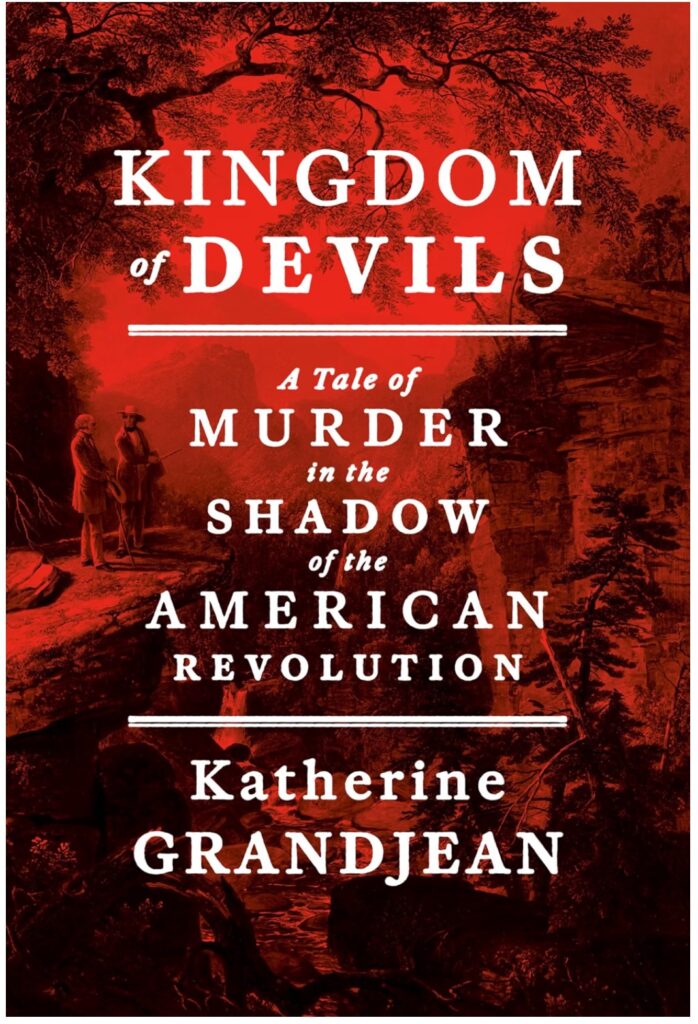
Oddly enough, Grandjean does not seem aware of McCarthy’s Outer Dark. At one point she mentions where and how the Harp brothers came to appear in various fictional forms by authors as diverse as Herman Melville, William Faulkner, and Mark Twain, but not Cormac McCarthy. (I sense she’s more of a 19th century historian. McCarthy’s novels are a century later.) I assume literary critics who specialize in McCarthy’s fiction have already noted the connection, but I’ve never explicitly heard of it.
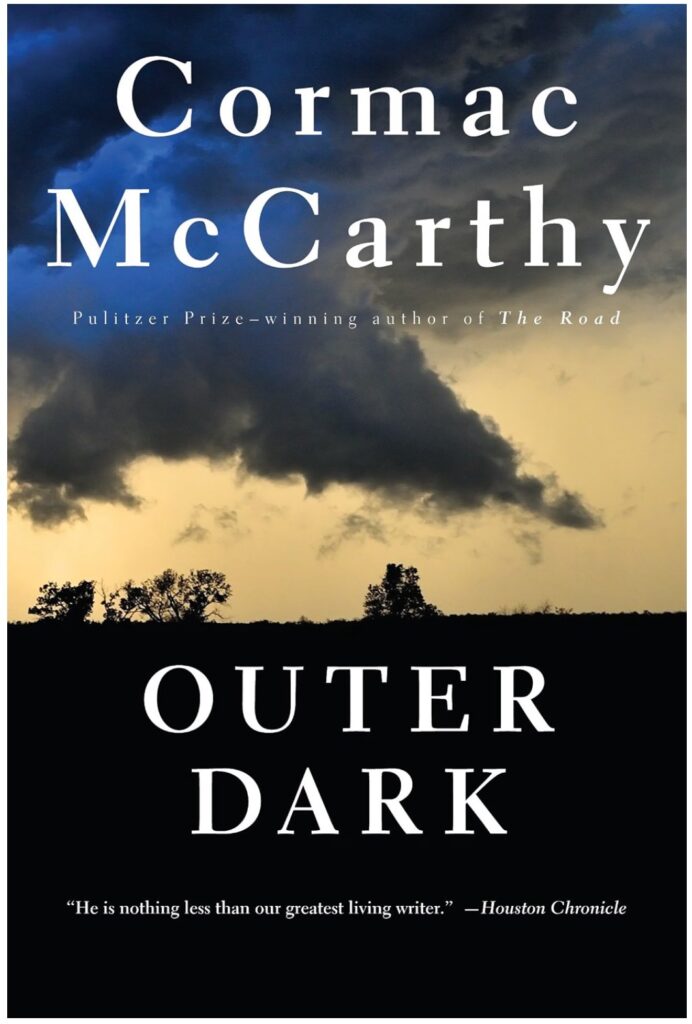
For those who would quibble with the “Based on a True Story” label: Outer Dark is fiction, certainly. It’s not a retelling of history, the way that Grandjean’s Kingdom of Devils is. Her story of the Harp brothers’ murders centers around Knoxville, Tennessee—McCarthy’s longtime home-base and stomping ground. I believe he knew the story of their mayhem and used it as a model of sorts for the killers in Outer Dark. He makes them more inscrutable and random, almost like mythic creatures of murder and chaos. So, no, he’s not milking their “true story” in some redundant, tawdry fashion. He elevates their crimes to biblical level and meaning. It’s a bit like the “Based on a True Story” acknowledgement at the start of the Coen Brothers’ film Fargo (1996)—not exactly “true” itself.
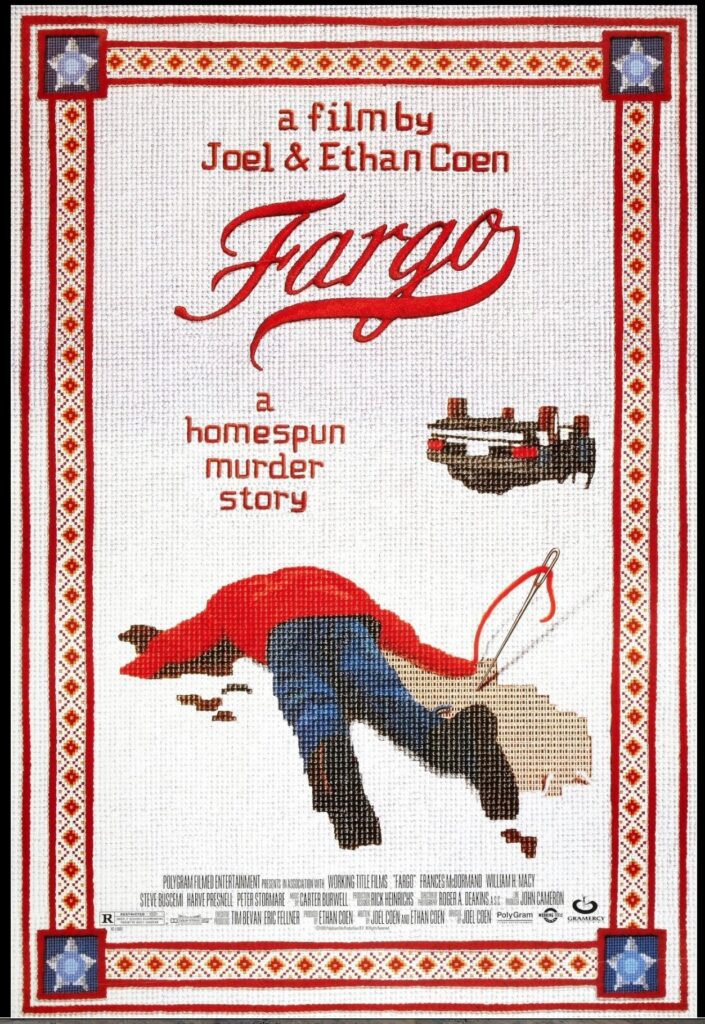
And since I mention it, the late-18th-century Harp brothers (their murderous rampage occurred roughly 1798-99) have many similarities to the cruel killers in Fargo, a story told some two centuries. Many people—including Cormac McCarthy himself—might categorize their actions as evidence of “evil.” Katherine Grandjean, on the other hand, does her best to understand what turned two ordinary brothers into serial killers. (She disputes that label, prefers “mass murderers,” in regards to the Harp brothers.) She makes a good argument that they lashed out at many more-successful folk because they felt they’d be cheated and treated unfairly.
Due to debts and a lawsuit, one of the Harp brothers lost his farm. According to Micajah (Big) Harp’s confession before his death, they felt so betrayed they decided to wreak havoc, to be at war with mankind. It’s a devastating example of the threat implicit in the sometimes-comical ask, “You think you’re better’n me?” One way to level the playing field: Bring the mighty down. The murderous Harp brothers did just that, although at times they seemed to kill indiscriminately: Yes, they killed a judge and prosperous land-owners, but they also killed the twelve-year-old son of a landowner, perhaps because he seemed “privileged.”
In tone and macabre violence, Cormac McCarthy’s Outer Dark captures the Harp’s bloody reign of terror. I won’t describe the gruesome climax of the brother looking for his abandoned incest-begot child, but it seems in keeping with the actual Harp history: As Grandjean notes, both Harp brothers were eventually caught and killed. Then both were beheaded and their heads placed in view for all to see—as warnings. (American Gothic reflects its Appalachian origins and history.) Both Harp brothers’ heads ended up rotting on Appalachian roadsides: A fitting end for serial killers.
The murders ended when Big Harp (Micajah) was caught after killing and burning down the cabin of a family who had been kind enough to let them sleep in their barn. The father of that family had been away from home, and when he returned to find his family dead, he hunted down Micajah, shot him dead, chopped off his head and placed it in the crook of a tree, on a remote backroad in Kentucky.
Little Harp (Wiley), on the other hand, escaped. Fate caught up to him in Mississippi, years later. Under an alias, he was part of a criminal gang plundering folk on the Mississippi, headed by a rogue named Mason. When Mason’s crimes got enough attention a large bounty was placed on his head. Wiley arrived in town with a head in a burlap sack, claiming it was Mason’s and asking for the bounty reward. Unfortunately for Little Harp, he was recognized, put in jail and eventually tried for various crimes, resulting in his death by hanging. Three desperadoes ultimately lost their heads, no doubt to warn the public: “Let that be a lesson to us all.”
Grandjean emphasizes how the violence and promise of the Revolutionary War was the impetus for frontier violence and mayhem: Our struggle for “freedom” unshackled serial killers. At book’s end she argues, ““They are the revenants of the Revolutionary past, dragging its chains into the present. The American Revolution gave rise to a new kind of society: Common people felt promised new liberties, new possibilities. With these changes came a new ‘release of energy, ‘a flowering of individualism, a magnificent display of economic and artistic virtuosity.’ But the Revolution was not only freeing; it also sent men spiraling into a fearful new world of competition and aloneness” (252).
Perhaps the Harps were America’s first serial killers: A sinister side effect of our country’s origin that continues to this day.