Standoff With Sam Shepard at Ten Thousand Waves: Guest Blogger Elizabeth May's Brush With Greatness

Standoff with Sam Shepard at Ten Thousand Waves

On a recent trip to Santa Fe I took my mother to Ten Thousand Waves, a gorgeous, serene Japanese spa located on Hyde Park road. I first read about the spa when I was a college student, coming west every summer with my friend Butch Barefoot. At the time, we didn’t have the kind of money to go such a chichi-poopoo place but wondered what kind of people did.
So, when twenty years later I finally treated myself to a soak and massage at Ten Thousand Waves, the first person I saw was Sam Shepard. Swaggering out of the men’s room, his right-eye-squint so characteristic his eye was practically shut, he stood like a cowboy in a Buddhist temple. I wore a torn cowboy hat and a sunset purple and orange sundress that my daughter chose from a catalogue and told her daddy to order for me in the dead of winter in Pennsylvania. I was ready to wear that sundress and wear it well. Standing before me, still in his tracks, as the employee was trying to orient us to the spa, Mr. Shepard gave me a look, with his good eye, like a bandit scrutinizing his victim before drawing his gun. A look that made me feel like I’d robbed the train and gotten away with it. Like I was Jane Fonda in Cat Ballou.
Ruffling his hand through his spiky gray hair, he walked away and the moment was gone with the wind.
Thank goodness for hindsight and blogs because later of course, I wished I’d been cleverer. Wished I’d said something as smart and witty as the dialogue in his fiction. Something like, “You’re not leaving so soon are you? We just got here.” Or flattery along the lines of how inspiring and influential his plays, short stories and films have been to me, but how corny and cliché. Maybe a simple, “Konichiwa.”  Or I could have been gutsy, given him a wink, and lassoed him with, “Whadaya say we take a Xanax and go shoot some starlings?”
Beggars can’t be choosers but I wish I’d seen Jessica Lange on his arm. I remember discovering both of them in a jewel of a video rental store called Dod’s Video when I lived in Denton, Texas. I remember watching Frances, True West, and a rare recording, with bad sound, of Jessica Lange and Tommy Lee Jones in Tennessee Williams’ Cat on a Hot Tin Roof, which I watched over and over with my college-friend Geoffrey Schroeder, who turned me on to every Jessica Lange movie in existence.
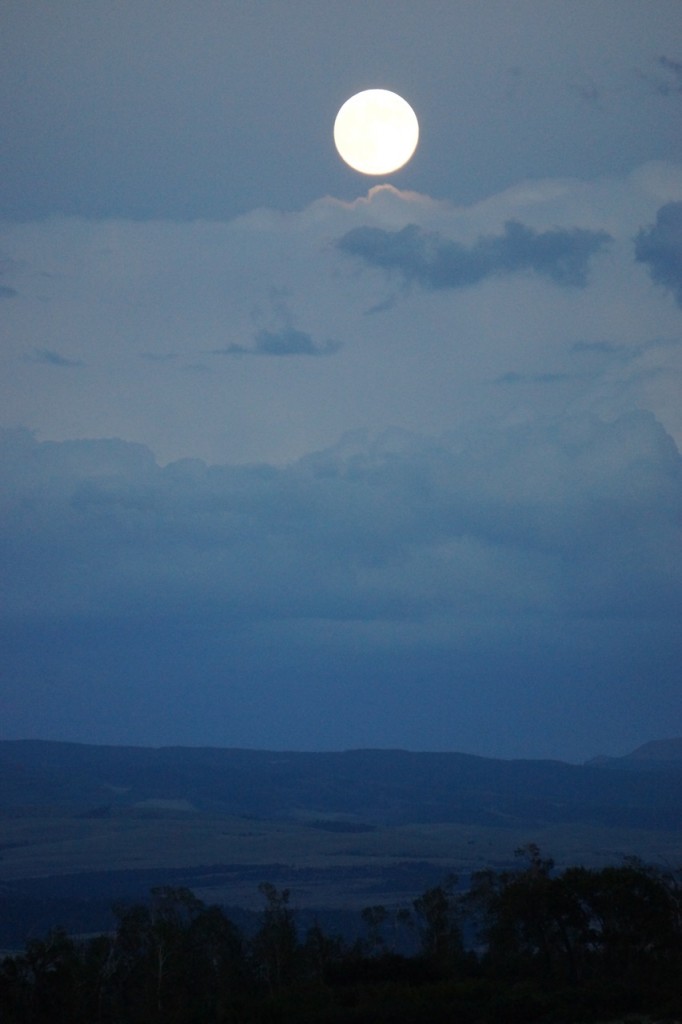
On the drive north from Santa Fe to Westcliffe, through the bright buttes and hoodoos of Georgia O’Keefe country, I was still as high as and as puffed-up as the cumulonimbus clouds rolling over the shamelessly-blue western sky. Joking about the Sam Shepard encounter, Bill said things like, “We’ll be home before you can say, ‘Sam Shepard.’” The rest of the ride, my mother, daughter, and husband creatively worked his name into our conversation just to taunt me. “I wonder if Sam Shepard likes prickly-pear juice?” “Hey, doesn’t that rock look like Sam Shepard?” “Let’s eat some Sam Shepard’s pie when we get home.”—Elizabeth May

Posted in books/film, The West, writing | Tagged , | Leave a comment

"My Father's Guns": An Essay for Father's Day, Plus Good Reviews of "The Bird Saviors" in the Dallas Morning News and the Houston Chronicle

So I woke up this morning to read two good reviews of The Bird Saviors, which of course makes my Father’s Day: One in the Dallas Morning News, here, and another in the Houston Chronicle, here. And in honor of Father’s Day, I’m including an essay about my own father’s life & death, and the role that guns played in it. I (obviously, after you read the essay) have ambivalent feelings about guns, and now live in the boonies, where the sound of gunshots from my neighbors “target practicing” (I guess) in their backyards is a common occurrence. It’s something I live with. I guess you could say I’m used to it.
My Father’s Guns
My father died when I was too young to know how it happened, but I always believed that he died in his sleep. This was a disturbing thought when I was six and seven years old, especially at night, lying in the bunk bed below my older brother, because I had insomnia and chronic nightmares and, lying there in the spooky darkness, with the handlike shadows of the fig tree leaves waving at me through the window, I often wondered if I too could die in my sleep. If my father did it, why not me? It seemed like a peaceful way to go, like slipping your head into the warm water of the bathtub, but even if I considered entering it peacefully, eternal nothingness gave me the willies.
I vaguely remember my mother telling me, “One day, your father just didn’t wake up.”
We had a space heater in our room, and mother always told us to turn it off before we went to sleep, or the blue flames might burn off all the oxygen in the room.
“You wouldn’t want to wake up dead, would you?” she asked. Like papa?
We never talked about my father when I was growing up, and the only souvenirs we had of his existence were a double-barrel .410 shotgun, a .30-.30 rifle, and the disembodied bill of a sawfish he had caught off Galveston Island in 1949. The sawfish bill was a pale yellow, bony snout about three feet long, with a vicious row of teeth on either side. I was fascinated by this bill, by the yellowish teeth, thrilled that such an absurd creature could possibly exist. We kept it in the back of the closet of the boys’ bedroom, where my brother and I slept, and I took it out to look at it and play with it so often that some of the teeth fell out. By the time I was ten or eleven, it resembled a monstrous broken comb.
My brother was more fascinated by the guns, and he used to take me hunting in the woods around our house near the outskirts of San Antonio. As great white hunters, our routine was to walk slowly through the oak and juniper thickets, as quietly as possible, trying to sneak up on something and kill it. Once my brother shot a cottontail, and as we stood over it in the gray autumn air, blood sprayed on the brown grass beside it, it seemed to stare up in our eyes with a what-did-I-ever-do-to-you look. Mainly, though, all we shot were cactus, broad green blades of prickly pear. They were easy to kill. They couldn’t run away. You could walk right up to them and say, “I’m gonna kill you, plant!” And blast away. Nobody sympathizes with plants, not even vegetarians. You have to sing or moo for our compassion. Fur helps too. Or warm blood. Look at fish. Who defends the mackerel? The herring? The sawfish?
Tommy, being seven years older than I, inherited my father’s guns. This was fine with me at the time, because I knew I would never make it as a hunter. Once, in the Big Hole Valley in Montana, I shot at ground hogs in the fields with a .30-.30. I felt like a prairie hit man, sent from Detroit with a contract on the Marmota monax family. The pickup truck was parked on a dirt road, and we leaned against the hot hood for support. I purposely missed. My friend also had a gun, and I kept thinking that any minute he was going to shoot me. This was an irrational but persistent feeling. Maybe it was because I kept thinking about shooting him. Just a crazy thought, I know, but one that comes now and then. To prove my courage, I kept turning my back to him, whenever I had to reload. I squinted in the direction of the mountains and said, “I think I smell elk.”
Guns are always going off when you’re not expecting it, as if they have a mean streak of their own. I knew a Texas Ranger who had to carry his gun at all times, in case he needed to shoot first and ask questions later. He was fishing in a skiff in Aransas Bay when his .45 fell out of his holster, went off, and shot him in the face. The bullet went in below his jaw and out his cheek; he lost an eye and afterward wore a black patch. He was skinny, six-foot-six, had white grizzled hair, and wore stove-pipe Levis. With the black patch, he took on an almost legendary quality, and he continued to come into my family’s restaurant after the accident. He would place the gun on the table, in front of him, as he ate his chicken fried steak. He seemed almost inverted by the accident, somehow made bad, almost an outlaw. For some odd reason we laughed and joked a lot whenever he was there eating, and the merriment seemed forced, nervous, as if he had yelled at everyone “Dance!” and pointed his gun.
It wasn’t until I was seventeen that my sister Judy set me straight about my father’s death. “Boy, you’ll believe anything,” she said, when I somehow mentioned his dying in his sleep.
She told me he had blown his head off with a shotgun. Although that seems such an ugly way to put it, that’s how I remember it. And maybe that’s the best way to state something so catastrophic. Bluntly.
I later wondered if he had used that same double-barrel .410 that we used to hunt cactus with. Would my mother have let us use that gun? And even if it wasn’t the same gun, why did she let a nine- and a sixteen-year-old wander around the woods alone, playing Lee Harvey Oswald? (She always told us to take the spoon out of our iced tea glasses when we were drinking, because we might put our eyes out. But don’t forget your ammo!)
I remember those guns, how heavy and hard they were, how they hung from the walnut gun rack in our room, with a fishing rod on the top rack, the red and white bobber still clipped to the monofilament line, the treble hook stuck in the cork of the handle, how the guns smelled of oil, the serious click of the broken breach. Whose lives were we going to defend with those guns? Whose lives were we going to take? To end?
These thoughts disturb me now more than ever, replacing the fear of dying in my sleep I was once so naively obsessed with, because my brother also used a shotgun to kill himself.
Of the three males in my family, two killed themselves with shotguns.
I don’t want to be the next.
I wonder if Tommy used the same gun he inherited from my father? But it’s not a question that’s easy to ask, not a question you perhaps want an answer for. The gun has not been passed on to me and has left the hands of the family, probably now stacked in a row of rifles in a San Antonio pawn shop, waiting for a family quarrel, waiting for a little disagreement among friends, waiting for action. I have no souvenirs left to remind me of my father’s life, not even the yellowish snout of the sawfish, lost years ago in a move from one house to the next.
The only souvenir of my father I own now is a handful of photographs taken of him after World War Two, when he’s young and smiling and his eyes are as blue as my own.—William J. Cobb
I should also note that I’m glad to report that my own relationship with my daughter, Lili, is much more peaceful, and healthier. She made me a paper buffalo for Father’s Day! And here’s a picture of us a few years ago, backpacking in Yellowstone National Park.

Posted in books, Gun Control, The West, writing | Tagged , , | Leave a comment

"Prometheus" at a Cinema in Santa Fe, An Experience in Intensity

So while I was in Santa Fe I caught Ridley Scott’s prequel to Alien (1979), the flashy and eye-catching Prometheus, which is certainly trippy, even if it doesn’t all add up. I guess if I were rating it as such, I’d give it 3 1/2 to 4 stars—that is to say, I did like it, had fun watching the film, for all its flaws. What I didn’t like: it seems to end with a begging for a sequel, though Ridley Scott took so long to do the prequel, I doubt if he really plans for another: But who knows? He might be casting a glance at the Harry Potter franchise and thinking why not. Some catty Hollywood observations are easy: It’s like 2001 meets Alien meets Chariots of the Gods, with an homage to Werner Herzog’s Cave of Forgotten Dreams (2011) in the early scenes, plus a little spritzing of David Lean’s Lawrence of Arabia—and Michael Fassbender does resemble Peter O’Toole. What I liked: It throws in enough complexity to make you think and wonder, ponder over the implications of this or that scene. The opening, for instance, is gorgeous and puzzling, when an alien/human on a distant planet swallows a mysterious liquid, falls apart and dissolves in a river, the final shots of the scene showing his DNA recombining to another life-form, which most likely becomes the precursor of the badass arthropod in Alien. The alien/humans who seem to have “terraformed” Earth and to have seeded humans here later appear to change their minds and decide to destroy us (as happens in Arthur C. Clarke’s novel of 2001), but why? It begs a philosophical question, and an interesting one, at that. Perhaps because we are only one stage in a creative/destructive cycle of intelligent beings in the universe? Maybe.
But the film was only part of the megaplex cinema experience. The trailers were so over-the-top I was exhausted by the time the film started. Even the bathroom was intense: The hand blow-dryer practically took off two of my fingernails. To regain some sense of normalcy, I ended the night taking pictures of the cool neon signs along Cerrrillos Boulevard, like this one:

Posted in books/film, Film, Photography, The West | Tagged , , | Leave a comment

"The Bird Saviors" Playlist at Largeheartedboy.com, Live From the El Rey Inn in Santa Fe

So I’m at the El Rey Inn in Santa Fe, a supercool motel in the (greatly upgraded) motor-court mode on the historic Route 66, on this the official debut day of The Bird Saviors. Part of the debut is a guest blog appearance at Largeheartedboy.com, for which I designed a music playlist of songs that inspired the novel, here. It was a treat to do that, which would only be topped by getting to design a soundtrack for a movie version, but we’ll see about that (fingers crossed). There’s also a great animated ad for novel at the website of Unbridled Books, here. As an added bonus, a cow skull at the El Rey Inn, in the Santa Fe homage to Georgia O’Keefe tradition:

Posted in books, books/film, Photography, The West, writing | Tagged | Leave a comment

Review of "The Bird Saviors" in Booklist, With Bonus Bird Pics

So there’s a good review of The Bird Saviors in Booklist, which is another one of the pre-publication review entities:
Booklist: May 15, 2012
The Bird Saviors./Cobb, William J. (Author)/Jun 2012. 320 p. Unbridled, hardcover, $25.95. (9781609530709).
“The dusty town of Pueblo, Colorado, has been beset by a ravaging bird flu, a crippling drought, a growing cabal of criminals, and a revitalized fundamentalist religious presence. Amidst this negativity, the townspeople of Pueblo continue to seek meaningful human connections. In stories of survival, love, and the resilience of the human spirit, set against a backdrop of pawn shops, seedy motels, and cattle feed lots, the characters manage to triumph. Focusing on a young mother, a police officer, a disabled war veteran, and a grieving ornithologist, The Bird Saviors is an immersing and emotional piece of literature. Cobb devotes an impressive amount of attention to his novel’s setting, allowing readers to experience the fullest picture of life within the confines of Pueblo. Glimpses of climate change, economic unrest, religious fanaticism, and immigrant hardship contribute to the near-futuristic setting, giving Cobb’s fiction an eerie familiarity. In a voice reminiscent of Charles Frazier’s, The Bird Saviors tells a fascinating story of success in spite of chaos, opportunity in spite of despair, and love in spite of hate.”
Plus here’s a picture of a couple birds that don’t appear to need any saving, a Pine Siskin (Spinus pinus) caught in midflight, about to bother a Black-Headed Grosbeak (Pheucticus melanocephalus), during a May snowstorm in Colorado.

Posted in Birding, books, Photography, The West, writing | Tagged , | Leave a comment

Alex Prud'homme's "The Ripple Effect" Excellent Summation of Western Drought/Drying Out, as NOAA Notes This Spring Was Warmest on Record, by 5 degrees!

So I’m continuing to read the tome (a word I rarely use) that is Alex Prud’homme’s The Ripple Effect, on the myriad water problems we face in the 21st century, and I’m up to the chapters on drought and the ongoing drying out of the climate (and the landscape) in the West. He has some excellent quotes and factoids, a brilliant chapter on the watering of Los Angeles, a city that qualifies for a desert landscape, as does Las Vegas, which has the dubious distinction of being the second driest city in the country, the only other major city dryer than it being Phoenix. About that city, here’s a quote:
“According to the National Weather Service, the average temperature of Phoenix has risen five degrees since 1960. . . . Signs indicate that Arizona forests, stressed by rising temperatures, are dying . . . . During a drought in 2002, the Rodeo-Chediski wildfires—the first started by an arsonist, the second by a stranded motorist—combined in central Arizona to scorch 467,000 acres, an area the size of Phoenix. Fed by high winds and tinderbox-dry woodlands, it was the worst forest fire in the state’s history.”
As I write, the forest fire in the Gila Wilderness in southern New Mexico is the worst fire in that state’s history. See a pattern here? Then comes this news today, that NOAA has noted that this spring was the warmest on record, by a whopping five degrees, here.
Meanwhile, life goes on, albeit hotter. Here’s a wren building a nest in the birdhouse outside my writing studio—which is a shed, actually, spruced up:

Posted in Birding, books, Climate Change, Photography, The West, Water Crisis, Weird Weather, writing | Tagged , , | Leave a comment

A Bear Sighting, With a Literary Twist

So this evening as I was finishing a salmon dinner (note the subtle motif about to emerge), a bear showed up in my yard–actually he kind of shambled up. Ever the amateur shutterbug, I grabbed my camera and snapped a few photos. It’s funny (not ha ha funny, though) that in my novel about to debut, The Bird Saviors, there’s a part about a cranky polygamist father, nicknamed Lord God, who tells his daughter that the bears come down from the high country during droughts, to raid outlying homes for food. (Raid is perhaps a term best used for barbarians at the gate, but the bears are hungry. One ripped open my shed last year to get at the garbage cans inside. Now I pay for a bear-proof dumpster. You get the picture.) We’re in the middle of two-year drought, and have had bears mangle our bird feeders, multiple times.
It’s like a chapter out of the book, life imitating art and all that. I nicknamed him Billy. How original! An artsier sort would no doubt name him Balthazar, BoBama, or Beethoven. Of course I could name him John Irving, who has a new novel out right now. But I won’t. He can name his own bear.
For those who like their wildlife info particular, this is actually a Black Bear—Ursus americanus—though his coat is obviously a shaggy brown, which is common in these here parts.

Posted in Bears, books, Climate Change, Photography, The West, writing | Tagged | Leave a comment

Great Review of "The Bird Saviors" in Foreword Magazine

So Foreword magazine, which specializes in Indie books, has a great review of my new novel The Bird Saviors, here, and I’ll paste it below:
Summer 2012 — ForeWord Review

THE BIRD SAVIORS
William J. Cobb daringly dips his pen into the inkwells of past, present, and future, and comes up with a story that is at once gritty and gripping, portentous yet promising, raw but redemptive.
When we meet seventeen-year-old Ruby Cole, a single mother living with her fundamentalist father, “Lord God,” drought and unyielding dust storms drape the Southwest desert landscape. Dying birds signal man’s demise, a killer fever is spreading like the wildfires burning nearby, and rogues and murderers are a dime a dozen. Amidst such hardship, Ruby must decide whether to yield to Lord God’s plans to wed her to a man twice her age or stand her ground and carve out a life for herself and her daughter. Ruby is beguiling, her innocence and pluck in stark contrast to Lord God’s unyielding stance.
But nothing is as black and white as Lord God, a disabled war vet, would have others believe. And nothing is as hopeless, either. Credit Cobb for that.
Weaving a biblical motif with social, political, economic, and environmental undertones, he does a yeoman’s job of bringing together complex themes in a touching and memorable tale that readers won’t soon forget. It’s Cobb’s prose, in particular, that breathes life into this tumultuous terrain, his every sentence dulcet in the discordance. Characters range from murderous fuel hijackers and cattle rustlers to a bottom-feeding pawnshop owner and garden-variety thugs. But there are good people here, too: a grieving “bird savior,” an honorable police officer humping duty on horseback, and an imposing Native American (Crowfoot) who rescues damsels in distress when he’s not meting out gentle justice or painting petroglyphs on canyon rock.
“She [Becca] wonders what George Armstrong Crowfoot has in his heart that gives him the confidence to offer his own depiction of the history of the world. There’s a daring quality to it. ‘This is amazing,’ says Becca, and immediately regrets it. The words are weak and meaningless.”
Likewise, readers will wonder what William J. Cobb has in his heart: doubtless, courage and a daring quality that gives him the confidence to render such a depiction of our world. To say The Bird Saviors is “amazing” is also to short-change Cobb. For his is a timeless story of love and redemption, a classic tale of good vs. evil, and a can’t-miss page-turner that leaves readers wanting more. The Bird Saviors was selected as an Indie Next pick for June.—Chris Henning

Posted in Birding, books, Climate Change, The West, writing | Leave a comment

Big Friend, Boohoo, Big Mess: How the Facebook IPO Symbolizes the False Hype of the Financial World

So I’m mildly amused by the debacle that was Facebook’s Wall Street debut, in that I always found the multi-billion dollar value of FB to be an illusion. Now that it’s dropped in value by over $20 billion, my suspicions are (slightly) confirmed. . . . But then again, it’s still worth many billions, so the drop in value is only a matter of degree. But it irks me that all consumers of products advertised on FB are essentially paying a surcharge for the “value” of advertising there, which experts have claimed is of unknown efficacy—that is, just because a product is seen by millions on FB pages, it doesn’t mean people are actually going to buy it–they might likely just ignore it, tune it out. But the FB drop is symbolic of just what a house of cards Wall Street is, and how dubious and shaky our economic base can be. If a company can drop in value by $20 billion in a matter of a bad week, isn’t it common sense that it was never worth that much to begin with, or never should have been? Five years after the crash of ’07-08, nothing has changed. Donald Trump still pretends to be a wise businessman. And we might very well end up with a plastic businessman as president, god help us.

Posted in Economics, Politics, Social Networking, Uncategorized | Leave a comment

John Kennedy Toole's "A Confederacy of Dunces" Finally to be Filmed, With Zach Galifianakis playing the Inimitable Ignatius Reilly

So one of the funniest American novels EVER is about to (finally) make it into a film version (in which Hollywood will no doubt muck it up, but so it goes): John Kennedy Toole’s (infamous) A Confederacy of Dunces (1980), published 11 years after he committed suicide (supposedly because he was unappreciated as a writer/could not get published). We sympathize, don’t we? Does it matter that the book, published that many years after his untimely end, then went on to win the Pulitzer Prize for Fiction? Yes, kind of.
I’ve heard from writer friends that Dunces is a book you either love or hate, and I’m definitely in the love category. (I actually have a hardback of it, from LSU press, though not a 1st edition, a 10th printing.) It’s laugh-out-loud funny. Ignatius Reilly is fat, arrogant, bawdy, homebound, and hilarious.
And I’m no fan of Zach Galifianakis, but I think he’s got the right physique for the part. John Candy could have done it best, but like John Kennedy Toole, he died rather prematurely. Mainly Galifianakis seems to inhabit a lot of dopey “guy comedies,” and many of them (including Hangover 5 or whatever) seem rather disposable. But this might be a classic. If he can pull it off. I’ll be waiting for it. For more info on the upcoming film, click here.

Posted in Art, books, books/film, Film, writing, Zach Galifianakis | Leave a comment