The People Smarter Than Voters? Obama's Approval Rating at 63%, With a Dig at Spineless Turncoats on the Comedy Channel

After all the mainstream blather about the recent midterm elections being a repudiation (as opposed to ‘refudiation,’ which is what Sarah Palin does every time she opens her mama-grizzly mouth) of Obama and his policies, this little gem today makes you scratch your head in wonder: Obama’s approval rating is 63% in the poll of polls.
http://politicalticker.blogs.cnn.com/2009/04/29/poll-more-than-six-in-ten-give-president-obama-thumbs-up/?iref=obinsite
One thing it reminds me of: in Clinton’s dog days of impeachment, polls generally gave him approval ratings in the high sixty percentile area, all the while the Republican hypocrites spent $50 million plus of our money to prove he had sex with an intern. (He did. They were jealous.)
Considering the no-balls media stooge Jon Stewart has had a long conga line of Republican stalwarts on his show recently, including Eric Cantor and Newt Gingrich, perhaps he should invite Sarah Palin to kick off her presidential campaign run on air, so Stewart, the spineless turncoat, can giggle and feel superior.

Posted in Politics | Leave a comment

The Coral Is Dying and Don't Let Anyone Say "No One Saw It Coming": With a Nod to Warren Brussee's "The Second Great Depression"

One of the convenient lies about the financial crisis is the oft-stated excuse, “No one saw it coming,” usually referring to the real estate bust that triggered the credit crunch that ate the mouse that scurried away from the house foreclosure that led to the Great Recession. It’s all bullshit. Back in 2006 I read Warren Brussee’s  The Second Great Depression: 2007-2017 (2005), which basically made the argument that the world’s debt was going to kill the global economies for a decade or so, until we get our financial ducks in a row. It’s a fairly one-dimensional argument, and I thought the book was only so-so, though convincing enough.
Cut to 2010, no progress in any significant climate change policy. In today’s Scientific American there’s a piece about the rapid die-off of coral in the Caribbean. http://www.scientificamerican.com/article.cfm?id=caribbean-coral-die-off
In the not-too-distant future, the mainstream idiots surely won’t be able to claim, “No one saw it coming,” will they? You never know. George W. is back in the news and history is quickly being rewritten.

Posted in books, Climate Change | Leave a comment

The Seas Are Rising, and the Tea Party Fiddles While Rome Burns

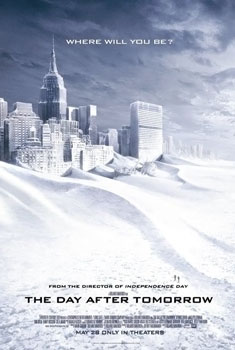
Although I realize I’m preaching to the choir in this venue, most likely read by like-minded souls whose intelligence understands that science should be taken seriously beyond the gadgets/consumer products one can purchase (I’ve noticed that right-wing types don’t “doubt” the viability of their cellphones or HDTVs, only the things that take some greater imagination to digest), the latest midterm elections and the triumph of the idiocracy has me feeling rather gloomy for our future. Here’s a couple ‘graphs from a good piece in today’s NY Times about melting glaciers/icepacks, at this url:
http://www.nytimes.com/2010/11/14/science/earth/14ice.html?hp
“Such doubts have been a major factor in the American political debate over global warming, stalling efforts by Democrats and the Obama administration to pass legislation that would curb emissions of heat-trapping gases. Similar legislative efforts are likely to receive even less support in the new Congress, with many newly elected legislators openly skeptical about climate change.
A large majority of climate scientists argue that heat-trapping gases are almost certainly playing a role in what is happening to the world’s land ice. They add that the lack of policies to limit emissions is raising the risk that the ice will go into an irreversible decline before this century is out, a development that would eventually make a three-foot rise in the sea look trivial.”
“As a scientist, you have to stick to what you know and what the evidence suggests,” said Gordon Hamilton, one of the researchers in the helicopter. “But the things I’ve seen in Greenland in the last five years are alarming. We see these ice sheets changing literally overnight.”
Now consider some recent scenarios from the midterm elections: Republicans bragged about how they discount climate change theories, usually with the caveat that “we don’t know” that the climate change, if it’s happening at all, is human-driven. The Tea Party agenda flatly denies the need for rapid movement on climate change. Often the argument is something to the effect of “It will cost too much. It will cost jobs! It will raise taxes!” All of which is to argue for a “business as usual” approach, which many climate change scientists (and writers) argue is the worst thing we could be doing right now. Which is what we are. Obama’s administration is failing in this respect, but I won’t go brain-dead (or giggling like a nitwit, ala Jon Stewart) and blame Obama alone: To effect any change he must have the cooperation of many legislators and bureaucrats, not to mention business interests who, by lobbying vigorously, with millions of dollars, can also effectively stymie any progress or change. “Major elements of the administration’s program won support from both parties on Capitol Hill and were signed into law recently, but amid a larger budget impasse, Congress has not allocated the money President Obama requested.”
So right now, we’re failing. Not for the weaknesses of one man, but for the weaknesses of our entire government/business community.
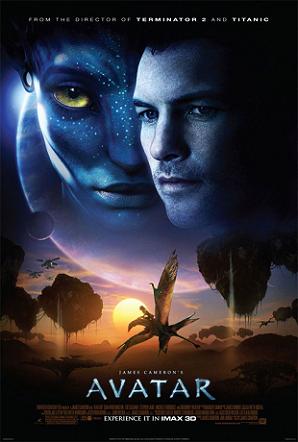
Where’s the hope? I don’t know. But our idiocracy is failing us now, when we most need it to make sound, forward-thinking decisions. Maybe I’m just pessimistic this morning. Maybe I should read another Harry Potter book and chill. Or watch Avatar again and imagine myself as a big blue person riding a pterodactyl wannabe.

Posted in Climate Change, Politics | Leave a comment

"Avatar" as Metaphor for the Fantasy Craze

So a year ago it seemed every acquaintance I bumped into asked the same thing, “Have you seen Avatar yet?” With chagrin I’d admit that, no, actually I had not, any minute now though, I can’t wait. They would frown. “You have to see it! It’s, like, the best movie ever! And go soon! You have to see it in 3D! It will change your life!” Whenever I hear that a movie will change my life, I cringe slightly. I know right away that it has an uplifting message. Something spiritual, even. Watch the antihero groan and rub his eyes. “O Good Lord. Just what I need.”
Fade to black. The screen opens on an lovely autumn day, the legend says, “November 2010, Pennsylvania.” A man watches a silly movie about alien planets and evil capitalist corporate villains and aboriginal aliens.  (The Nav’i! Like Native Americans, only blue. And taller!) Am I changed? Am I changing?
Well, not exactly. (“But you didn’t see it in 3D!”)  Avatar does seem a handy metaphor for the 21st century fantasy craze. Not that fantasy hasn’t always been popular, but it does seem (at least slightly, if only for the media frenzy) more popular than ever, what with the Harry Potter hoopla and all the Potter wannabes and couldhaves and shouldhaves. (“Skyline” looks cool to me. Badass aliens breathing down our necks, with big ships. Leslie Kean is right! Invasion is imminent!)
The metaphor: the crippled marine who gets (somehow quite improbably) inserted into a healthy Nav’i body and frolics on Pandora in tall, slender form is like all the (somewhat lumpy, god bless ’em) readers/viewers (see U.S. population soars to 42% obesity rate) who glory in imaginary, fantastic worlds, or play video games and become their own avatar of themselves, only in virtual splendor. Help me, Will: “O wonder!/How many goodly creatures are there here!/How beauteous mankind is! O brave new world! That has such people in it!”

Posted in books/film | Leave a comment

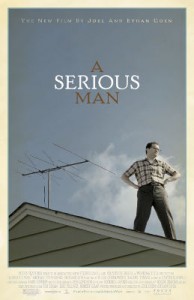
On the Coen Brothers' "A Serious Man": A Guest Blogger Takes on the Critics of the Coen Brothers' Little (Misunderstood) Masterpiece

So it’s no secret I’m a serious fan of the Coen Brother’s latest film, A Serious Man, which I’ll call a Little Masterpiece. (Why “little”? It doesn’t have the epic sweep of, say, Doctor Zhivago, but then again, it’s not long and tedious, either. It does have some snowy scenes in Russia, just no Omar Sharif and Julie Christie canoodling in the snowy house.) Judging from the bad reviews it received, it’s also certainly misunderstood by many—though I’ll note it was a finalist for Best Picture. Guest blogger Elizabeth May takes on the critics, and they lose:
Coen Brothers’ A Serious Man Not Taken Seriously Enough
After analyzing The New Yorker’s and The New York Times’ reviews of A Serious Man, for a unit I taught on film reviewing, I was disappointed and disheartened by David Denby’s and A.O. Scott’s analysis or should I say, lack of analysis. David Denby says the film is “in their bleak, black, belittling mode, and it’s hell to sit through” while A.O. Scott reviews the film from a narrow, religious lens, missing universal themes of the human condition. He claims, “When we first meet Larry, in the spring of 1967, his tenure case is pending, his son’s bar mitzvah is approaching, and, a lot of bad stuff is about to happen, for no apparent reason.” I quibble with his judgment that bad stuff happens in the film “for no apparent reason.” The following kibitzes that just as  “actions have consequences” in this film, details have reason.
The puzzles the film poses haunt me like the bad mojo that follows Larry Gopnik around in the film, and among friends, colleagues, and students I have been unable to stop jabbering about the details, symbols, and significances in the underrated A Serious Man. Exactly what details I’m disappointed were left out of such high-brow reviews include, the relevancy of the Yiddish-folktale prologue and the metaphysical symbolism of the Mentaculus, the Uncertainty Principle, and Schrodinger’s Paradox on the plot-line of the film.
In comments about the allegorical prologue, both reviewers mention the uncertainty of an authentic dybbuk but don’t offer any explanation of possible answers. And while I wouldn’t dare draw absolute conclusions concerning director-intentions, my students discussed the prologue as a puzzle for the viewer to unravel through the details in the film. With such bad luck showered on Larry, we determined the husband in the prologue was correct in thinking Treitle Groshkover wasn’t a dybbuk and they were in fact “cursed.” This point of view, we argued, isn’t exclusive if you question who is cursed in the film and what is considered bad luck.  After all, Sy Abelman is the character who died, and Oy, did he have it coming.
After first viewing A Serious Man, I compared the film to Vladimir Nabokov’s famous short story “Signs and Symbols,” in which literary critics have argued against the details being inconsequential to understanding the ending. By considering the tone of Nabokov’s details, it is argued a reader should understand the relevance  “zero” and “crab apple” have on the story’s dark ending. Similarly, I concluded the Brothers Coen wanted their audience to “do the math”; add up the signs and symbols to answer questions concerning the film’s ambiguities, greater meanings and significances.
Furthermore, the mathematical theorems in the film were the clues by which my students deduced the meaning of certain character decisions. For example, when Larry explains the uncertainty principle to his students in a dream, he says even though nothing can be explained, they will be held accountable for it on their exam. The principle holds for Larry as well. Even though he can’t explain the circumstances of his life or find answers to what it all means, the film articulates specific ways in which he is held accountable for his decisions and actions or inaction. The most glaring example being the moment when he changes Clive’s grade to a passing grade and then suffers the consequences of an ill-fated phone call. Other examples include the ease with which he is taken advantage of by his kids, wife, brother, and Sy Abelman.
While some viewers were disappointed with the “open ending,” we argued there might be clues and metaphors to explain the possibilities. Firstly, we felt the philosophy of the Uncertainty Principle, was metaphorical of the question whether or not the tornado would hit and that the ending could be justified in this light. However, if you viewed the ending from a signs-and-symbols approach and considered that “actions have consequences” the editing of the film’s conclusion, switching from Larry changing Clive’s grade to David deciding whether or not to pay off his pot debt, seems to imply a correlation between their actions or inaction. Directly after Larry gives Clive a passing grade, he receives an unlucky phone call from his doctor delivering what is ambiguous but obviously, bad news. If we are supposed to parallel this action and consequence with David hesitating to give the twenty bucks to Mike Fagle, we might conclude if he doesn’t pay the money he’ll suffer the consequences of the tornado.
One student argued the film was about kharma and I enjoyed this term being applied to a film dealing with Jewish culture. Students understood a certain give and take, yen and yang, good and evil struggle for balance running through the film. Uncle Arthur’s Mentaculus  symbolized this balance when considering it’s relationship to Schrodinger’s Paradox and the Uncertainty Principle. The Mentaculus extrapolates probability theorems while Schrodinger’s Paradox and the Uncertainty Principle are ambiguous. Furthermore this represents a paradox of characterization between Larry and his brother Arthur. While Larry is focused on uncertainty; Larry is focused on probable answers. As if one holds the answer for the other and if only they could combine their brains, they might solve the riddles of their lives.
Furthermore, themes and refrains in the dialogue such as, “I didn’t do anything” correlate with specific moments in the film. When Larry Gopnik declares to Clive, “In this office, actions have consequences,” the lesson applies to Larry as well. Interpreting the ways in which Larry’s character is taken advantage of throughout the rest of the film suggests that even inaction—not doing anything—results in “consequences,” such as being taken advantage of by characters like Sy Abelman.
In the end, I believe Rabbi Scott embodies the right perspective in this bit of wisdom he offers to Larry,  “Look at the parking lot, Larry.”  I’ve adopted these words as my new mantra and the possibility lurking in that gray concrete expanse conveys worlds to me. “Just look at that parking lot.”

Posted in Film | Leave a comment

On Dave Eggers's "Zeitoun" & the Odd Feel of Finishing a Book via Kindle: the Latex Comes Between Us

So I’ve just finished reading Dave Eggers’s Zeitoun, and here’s an easy reaction: It’s certainly a good addition to the many books written about the Katrina disaster. It makes you feel ashamed of our government’s disaster preparedness and, in particular, our reaction to the flooded city of New Orleans. Although I don’t blame the ex-nitwit president George W. exclusively, Zeitoun is also a testament to the embarrassment of the Bush years. I’ve read (and reviewed) several books about Katrina, and this one has the most egregious examples of bad behavior by government, and in particular the much-vaunted Office of Homeland Security, which has always sounded (and seemed) Orwellian from its outset. Zeitoun’s story is harrowing and all wrong: In a nutshell, and without giving too much away, a good man is falsely imprisoned by our government during the aftermath of Katrina. This should never happen. But it did.
On a writerly note, Zeitoun is utilitarian, efficient, and almost without style. Like many gripping nonfiction chronicles, it sticks to the unfolding story and builds a great deal of momentum. It’s a fast read, to put it mildly. I calculate my total reading time for the book around four to five hours, max. Some of the editing seemed rushed: There are obvious comma errors, verb conjugation errors (‘lay/lie’ mistakes, for example), and simple constructs that seem rather basic, like obvious thoughts quoted in italics. (Why did I just say that? I’m not going to be arrested, am I?)
On a readerly note, I read it via a Kindle edition, perhaps the fifth or sixth book I’ve now read on Kindle, and I’m noticing an odd facet of this ebook craze: Finishing an ebook is a flat, somewhat disappointing experience.
You don’t have an actual book to place upon your desk or nightstand, admire the cover, savor the good moments from the book. You hit the ‘Home’ button and move on to the next book. (Of course in some ways that’s a good thing. I think the Kindle people should use this ad phrase: It’s not a book, it’s a library.)
But back to that odd feel of a Kindle finish: It’s like sex with a condom. You’re know you’re done, but it’s not the same. The latex comes between us.

Posted in books, Weird Science, writing | Leave a comment

"127 Hours" in Theaters Now, But Not Everyone in Utah Loves Aron Ralston

Last summer I stayed a few days in Green River, Utah, at the River Terrace Inn, a cool hotel right on the river, with a pool and hut tub, plus great birding: Scott’s Orioles, Western Tanagers, and Bullock’s Orioles, all showy types, just to name a few, winging through the mass of trees and rush of water just beyond our balcony. The restaurant had good food, and after the knockout breakfast, the owner came out to chat with guests. Somehow the subject of Aron Ralston came up, and apparently he had visited town during the filming of the movie, which was set nearby. The owner recounted how he went up to Ralston in the cafe and told him he wasn’t welcome there, because his stupidity had cost the state a huge amount in fees for search and rescue people, and Ralston, who made a considerable amount of money from his book/movie deals, did not pay them. **Note: This is what was said, but I don’t know if it’s actually accurate.** I thought it was a funny example of that, “We don’t like your kind around here” staple joke, only “your kind” refers to a rock climber off alone (a serious no-no, for good reason, in the rock climbing world), who later doesn’t show enough appreciation for his searchers. I used to be a (somewhat) hardcore rock climber, and yes, I can vouch for many who would frown at Ralston’s foolishness. But then again, he paid a high price for it, right? But then again, I read how he has habitually done risky things, like ski alone and get caught in an avalanche, so I suppose at some point we can just shrug.
The film, “127 Hours,” actually looks intense, from the trailer. Here’s a url to a piece in the Huffington Post about how the movie is making people faint and vomit. So it must be good:
http://www.huffingtonpost.com/2010/11/04/127-hours-causes-fainting_n_779118.html

Posted in books/film, The West | Leave a comment

On the Republicans Return to Power: The Empire Strikes Back!

After all the blathering about the midterms elections (“Let’s Dumb Down America Now!”), at least one of the news sites should have led with the headline, “The Empire Strikes Back!” The least they could do. Boehner is a Darth Vader with orange makeup, and hats off to Mitch McConnell, who essentially embodies the corruption of his party by stating his goal (as legislator) to be ensuring Obama is a one-term president. How’s that for cooperation?
McConnell is a no-chin wonder that makes dogs howl in pain when he walks down the street. He’s so ugly they should pixilate his image just to give the rest of us a break.

Posted in Politics | Leave a comment

A Smidgen of Hope in the West, and Another Good Defense of Obama

If you’re like me, last night’s election seemed a triumph for the latest version of the Know Nothing Party, and in honor of the writer who mentioned that historical reference most eloquently, I should note that Tim Egan sums up the various campaigns (and Sarah Palin’s poison touch) in the West here:

I hope he’s right and the Dems hold on to both Colorado and Washington senate seats. A smidgen of hope.
Tim Egan also confronts Obama’s critics quite smartly, and specifically, here:

I like how he tackles Jon Stewart’s whiny complaints. Stewart can make me laugh, but his “rally” might as well have been held for the Republicans, and for his trying to stick Obama with a “Timid” label, what’s so bold about the Stewart/Colbert rally, which ultimately seems no more than a milquetoast lovefest for nothing?

Posted in Politics, The West | Leave a comment

On Leslie Kean's "UFOs: Generals, Pilots and Government Officials Go On the Record": We Are Not Alone, and the Visitors Have Some Awesome Toys

So I’m a sucker for UFO stories, though I remain a fairly strong skeptic. For instance, the more I’ve learned about the much-vaunted Roswell Incident the more I lean toward it being a rather complicated story of interstellar hooey. I’ve watched the many UFO programs on TV over the years, and most of them are so bad they’re good—funny, that is—but now and then you see one that seems hard to dismiss. Particularly the stories that issue from the experiences of military figures and airline pilots, backed up by air traffic controller transcripts and multiple witnesses.
Enter Exhibit A, Leslie Kean’s new nonfiction book, UFOs: Generals, Pilots and Government Officials Go On the Record, which is fascinating, eye-opening, and also somewhat hokey, sometimes tedious.  Actual witnesses (as opposed to Kean, who tends to rant a bit) tell the best stories. For instance, the former governor of Arizona, Fife Symington, during the famous 1997 Phoenix Lights mysterious event goes on record to admit he lied, that he actually saw the craft! Which was huge, silent, and not just a matter of dubious ‘lights.’ I’ve seen a documentary that “proved” the Phoenix Lights were military flares, which appears to be, in its own way, a cover story. Symington, the ex-governor (Republican, no less), saw them with his security corps, as in a group of several people, and like most of these witnesses, admits he had no idea what to do. He actually staged a silly press conference, complete with Halloween-costume-aliens, as a kind of cover up. But he admits the U.S. government was of no great help, and did not want to investigate the matter. Kean insists that various documents presented via the Freedom of Information Act imply that our government does have a “super secret” UFO investigation team (Muldar & Scully, most likely), but it’s hard to find any actual data to back that up.
The flaws of Kean’s UFOs: She proselytizes too much, harps on the same thing over and over again (our government’s reluctance or policy of denying UFO reports), and generally her prose is rather flat-footed. THAT DOES NOT, HOWEVER, ruin the book. Several witnesses recount stories that are fascinating simply from the technology involved: The Rendelsham Forest incident in the 1980s, with multiple witnesses who actually touched a UFO, the Japanese Air cargo flight over Alaska, where the UFOs were tracked and recorded on radar, and, most recently, the appearance of a UFO over Chicago’s O’Hare airport in 2007 are convincing, and amazing. If these are aliens, they have some kickass toys. Spacecraft that can hover, go from standing still to several thousand miles an hour in an instant, even seem to move many miles in a second . . . .
Kean makes a big deal about claiming We don’t know they’re extraterrestrials, which is true, but also obvious, and disingenuous, because that’s what we think. The Belgian ‘wave’ of UFOs in the 1980s is another highlight of the book. If you’re the least bit interested in the subject, you’ll dig this book.
Weird note: I read this book on my Kindle, which made it seem like The Future Is Now.

Posted in books, Weird Science | Leave a comment