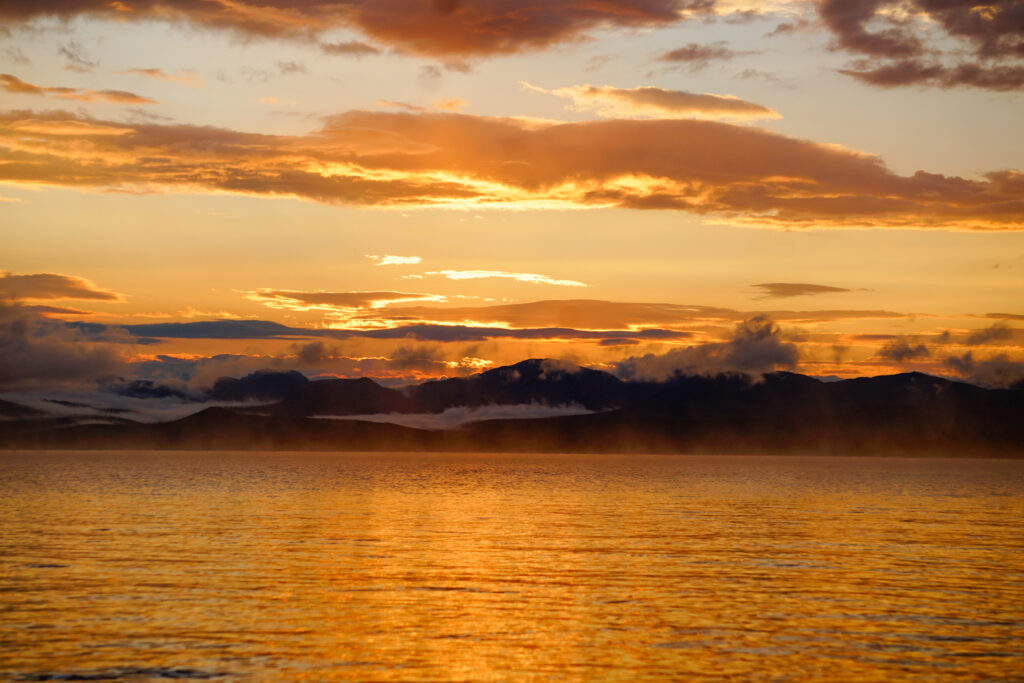
For my own modest version of Proust’s Remembrance of Things Past, I’ll post a Trip Report. It covers kayaking on Yellowstone Lake in 2024 and is perhaps shorter than Proust’s famously long novel.
Two years later, we (my wife Elizabeth and I) are about to backpack to Heart Lake in Yellowstone. Additionally, it is essentially just south of Yellowstone Lake and marks our third backcountry adventure in as many years.
The seeds of an interest in paddling Yellowstone Lake were planted many years ago. Our daughter, Liliana, was a toddler then, and we stayed at the big yellow Lake Yellowstone Hotel.
That visit we heard loons at night and saw people canoeing. That made me think paddling the awesome lake might be a great adventure trip.
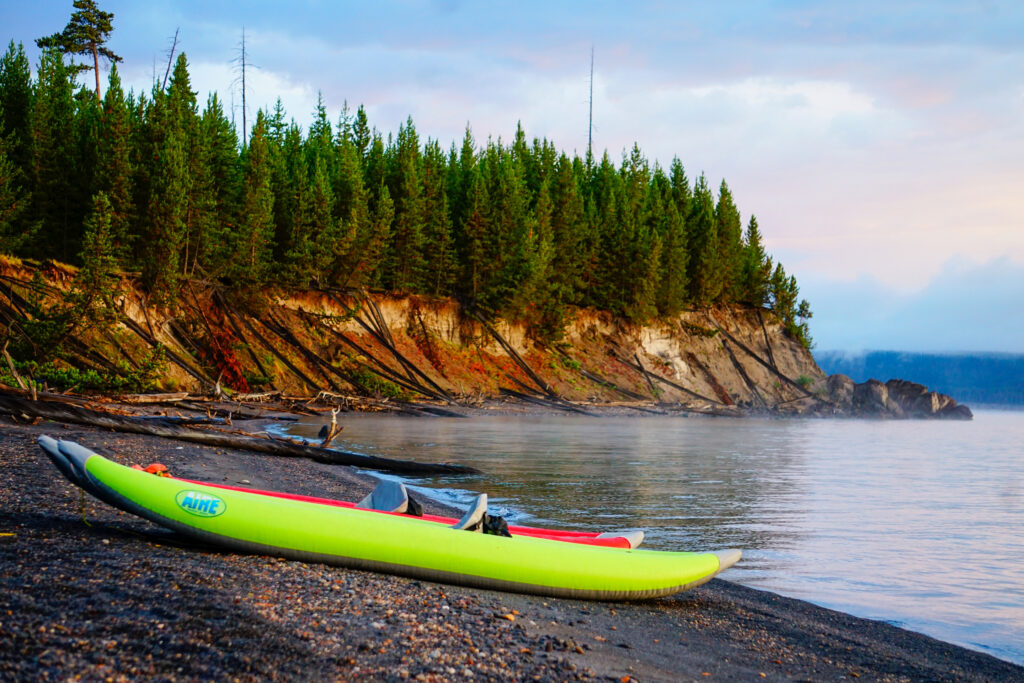
Yellowstone Lake is the largest high-elevation lake in the lower 48. It is bordered by hot springs and thermal pools along its long shoreline.
The water is cold and deep, which creates paddling hazards.
However, the weather can be bad.
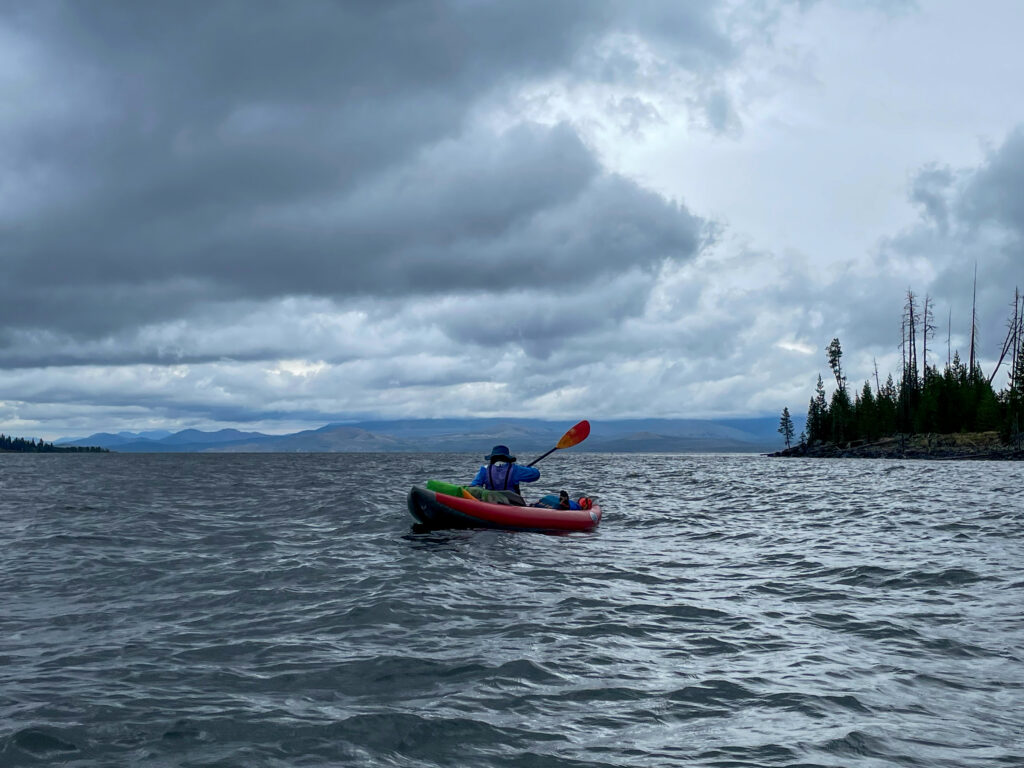
On our first day in the kayaks, we launched later than we intended. Around 10 a.m., we were on the water. That meant we were on the water later than planned and encountered rain and wind.
A simple rule: reach your campsite by noon. Thunderstorms often pop up later in the day, which can make paddling difficult.
Going directly into it means you fight the headwind. If you have a tailwind, you still contend with the wind twisting your kayak.
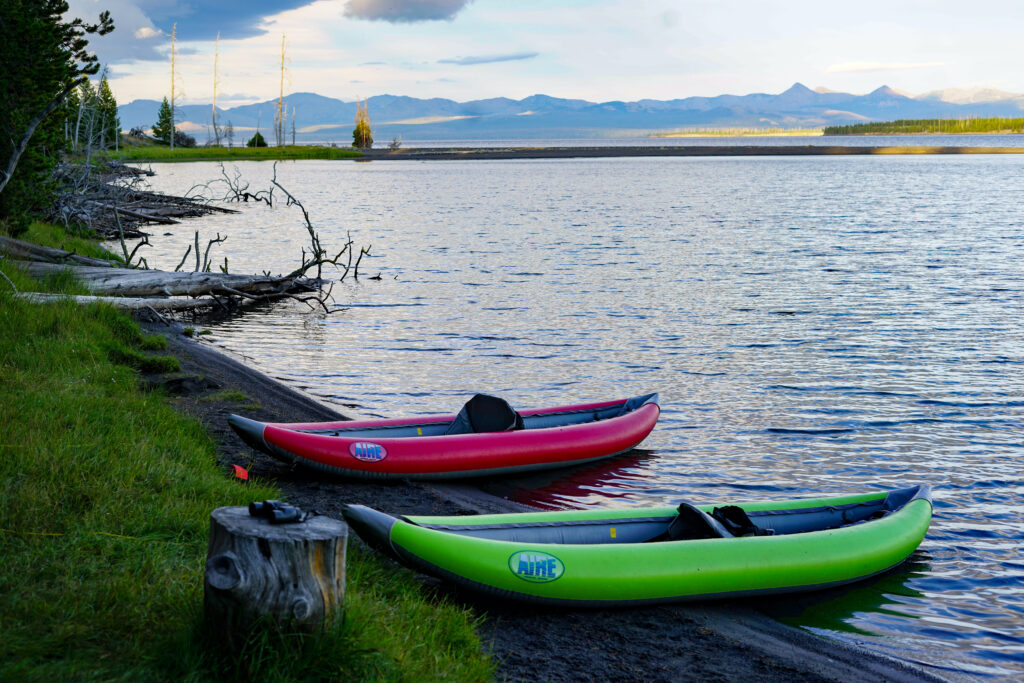
We have Aire Lynx II inflatable kayaks. They’re excellent, but not as aerodynamic as some touring kayaks that sit lower in the water and have rudders.
I remember late in the first day the rain pelting us, the waves rocking our kayaks.
Wind kicked up the waves to whitecaps.
We launched from the Grant Village marina parking lot and made it to first campsite (7L1) by 2 p.m.
Beaching the boats in a heavy rain.
But it seemed as soon as we had the boats tied off, the rain stopped.
The sun came out.
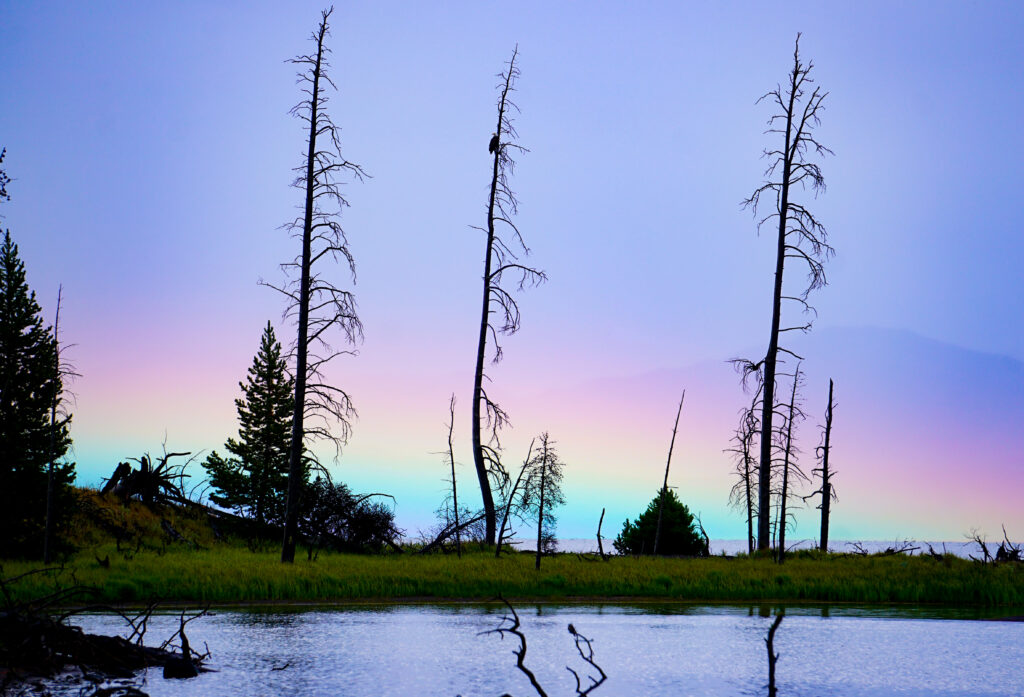
On the lake behind us a cloud rainbow settled over the water.
In the trees near the shoreline perched bald eagles.
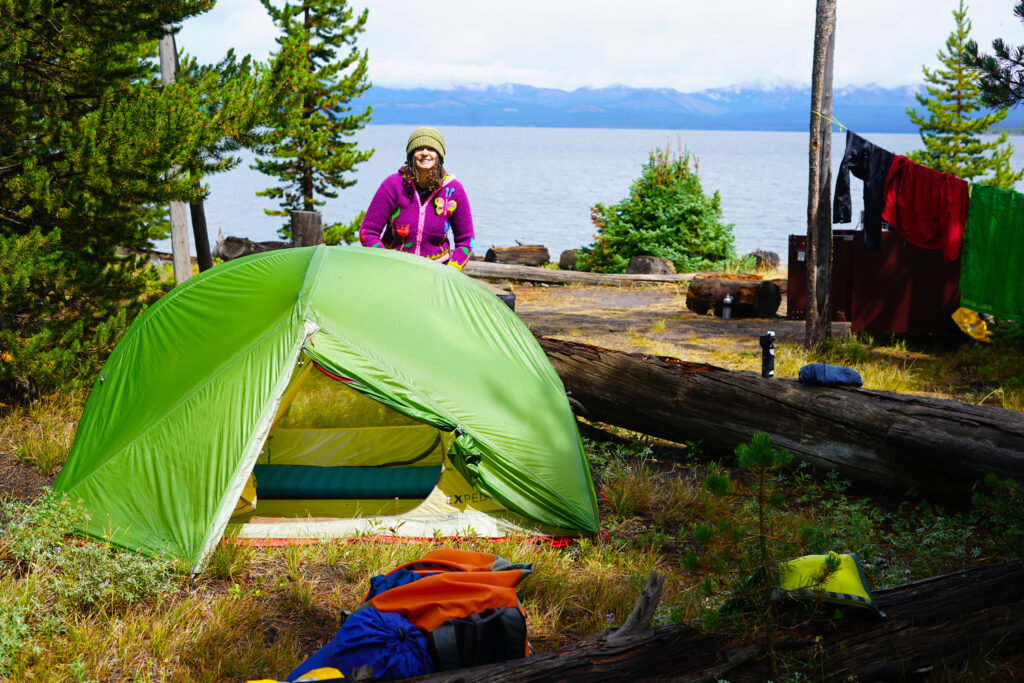
With a respite from the rain, we quickly put up the tent and camp. We didn’t need to rush.
Now that we’ve spent about two weeks paddling Yellowstone and Shoshone Lakes, we’ve learned afternoon thunderstorms are normal in summer. Moreover, they usually fizzle out fairly quickly, including in September when we went to Shoshone Lake last year. On that trip, August 2024, we had storms every day but the last. We had a wicked headwind bedeviling us on our return paddle.
We actually liked the storms, the dramatic skies, the lightning and thunder. They brought cool air and freshness with the rain.
At one particular camp the thunderstorm was practically biblical. Lightning blasting all around us, very close to our tent. But the worst effect was puddles because the rain fell so hard and fast it didn’t have time to soak in the ground. I’m always impressed how our good lightweight tent can keep us dry and safe no matter the storm, even when it gets flattened by wind, which happened at one alpine lake campsite in Colorado.
A word about Bears: Whenever you think Yellowstone backcountry, it’s natural to consider the grizzly danger. I must confess to thinking about the bear danger more so before the trip than during. Once you’re out in the backwoods and aren’t finding a bear behind every pine you kind of forget about the danger. We saw grizzly tracks on the shoreline but that’s it. My best wildlife encounter was meeting a frisky Pine Marten on a log staring at me. I’d always heard of them but never saw one in person until that moment. They’re cute little things that eat rabbits, scamper quite quickly, and have furry, rounded ears. They seem a little like a small fox or a cross between a fox and a ground squirrel.
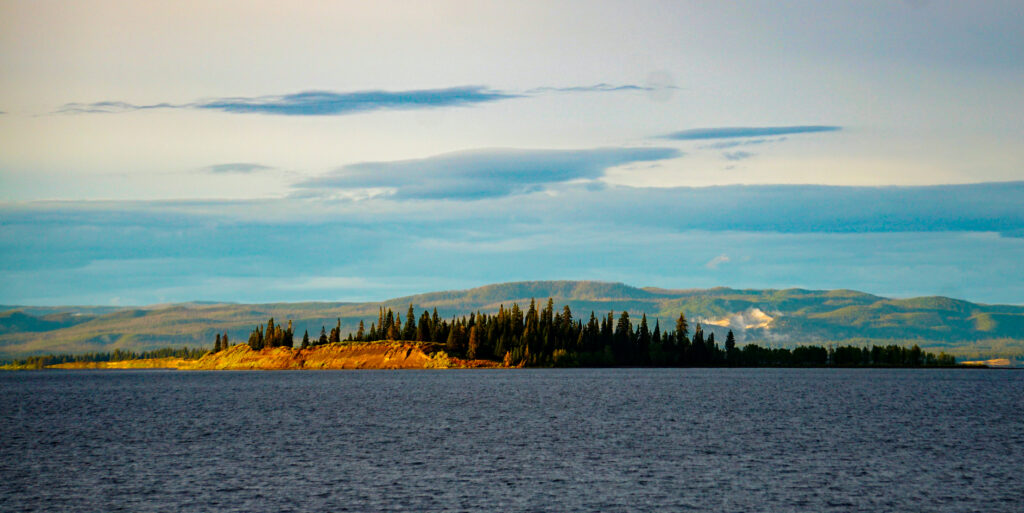
The other wildlife moment was a birder’s treat: At dusk we were eating dinner on our perch above the lake and I started shining a flashlight into the sky to attract moths and bats, then was surprised to see a good-sized bird swooping and flapping wildly in the beam of light. Turns out it was a Short-Eared Owl, our first siting ever of one, which are known to swoop and flit wildly while eating insects. From the south shore of the lake we had great views of Frank’s Island, below.
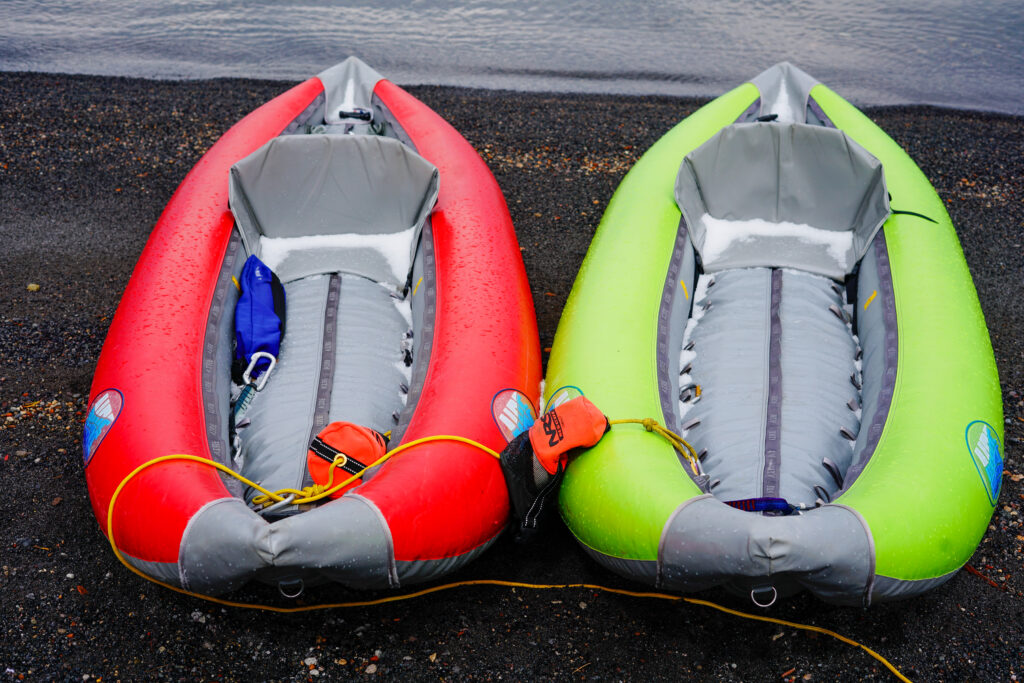
It’s a cliche that the Yellowstone plateau creates its own weather. And it’s true. Our trip was mid-August and on the last two days we had ice on our kayaks in the morning, same as we did when we paddled Shoshone Lake the next year in September. Once I backpacked to Heart Like in late July and woke the first morning to find snow on Mt. Sheridan.
The worst day of our trip was the last: As we paddled back through the West Thumb area we chose to head directly toward the put-in/takeout near the marina. At first it was fine paddling, blue skies and calm winds, but quickly the wind picked up until it was a wicked grind. Clouds blotted out the sun and I was chilled from the wind and waves. Same thing happened the next year on Shoshone Lake. But eventually we made it to the marina and all was well. A beautiful trip in a wild corner of the world.