
So I’ve just finished reading my third Richard Yates novel—in this case, A Good School (1978), about a dying prep school in Connecticut, in the 1940s. It’s touching, raunchy, and slightly weird in its gritty depiction of an all-boys school during WWII. Cut to 2026: In this bizarro-world era in which we live most fiction/film concerns the fantastic, unlikely, or impossible. Witness the many stupid-hero movies and books featuring ghosts, demons, vampires, and wizards. To some extent, that’s fine. People like fantasy. I’m all for imagination. But at times it seems to seep into the culture at large. People believe in lies and liars and factual accuracy doesn’t seem to matter anymore. It’s a symptom of the death of Realism.
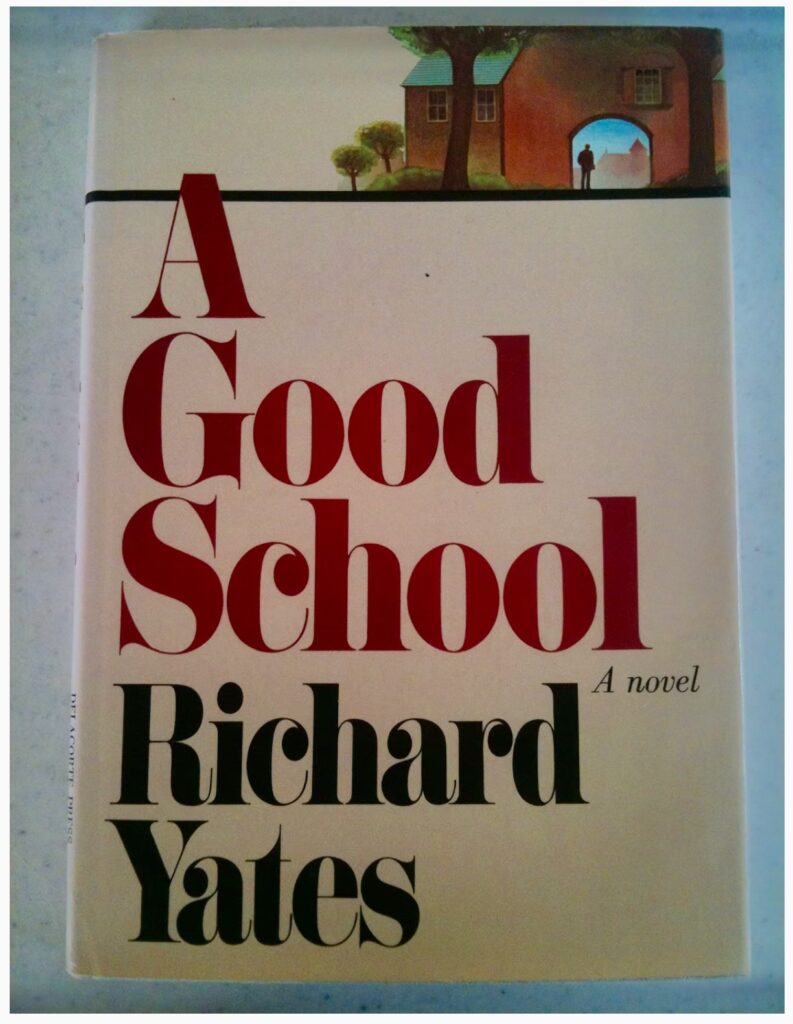
I’m sure there are some excellent realistic fiction writers out there in the world writing at this point in time, but generally no one seems to be paying much attention to them. For instance, a writer I greatly admire, George Saunders, has a new novel out: Vigil. Some of its main characters are angels. Funny angels, kind of. Slapstick, even. It’s satire/fantasy. But if we go back in time a few decades, we come upon a neglected writer who is a master of Realism, Richard Yates. He’s like J.D. Salinger who has grown a pair. Or the flip side of John Cheever. All three are among the finest writers of the post WWII era.
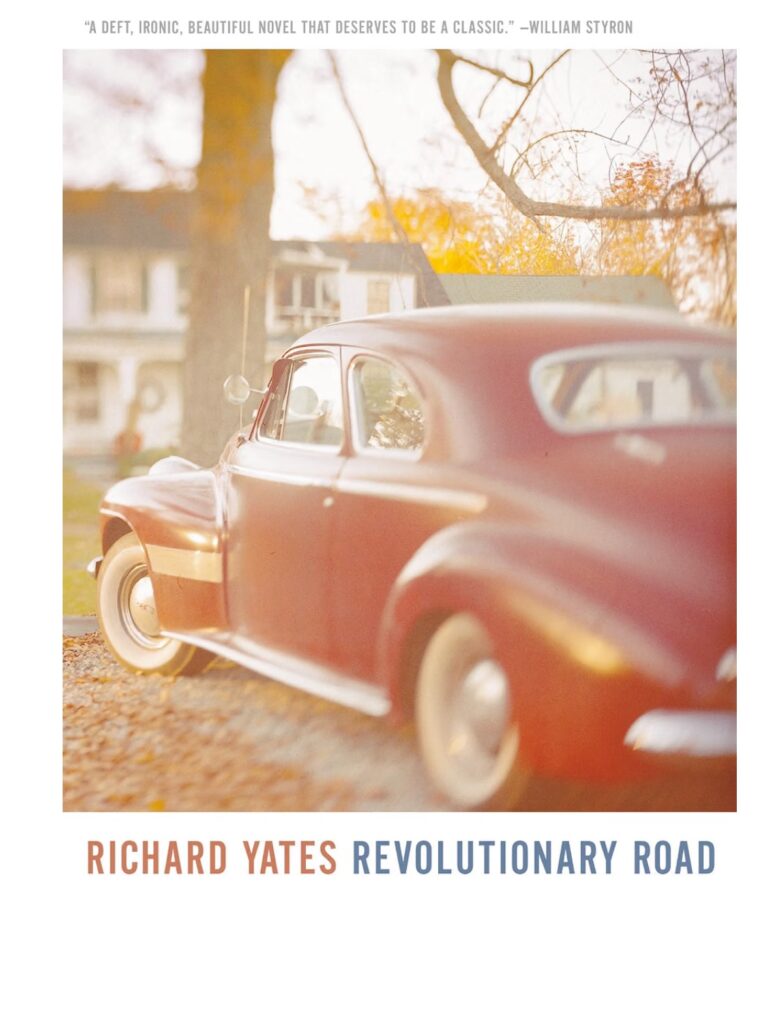
Revolutionary Road (1961) is a good place to start, as it was Yates’ first novel and a Finalist for the National Book Award in 1962. For whatever reason, Yates was a writer greatly admired by other writers and critics, but who never achieved popular success and readership (join the club). Supposedly no book of his ever sold more than 12,000 copies—which is meager, for a major writer at least. His reputation was revived in the late 1990s and throughout the 21st century. As an example, in 2008 Revolutionary Road was made into movie starring Leo DiCaprio and Kate Winslet. That was actually my first taste of a Richard Yates story. It’s bleak. But both DiCaprio and Winslet do a great job and make it heartbreaking, and with an early-career performance by David Harbour as a smitten neighbor.
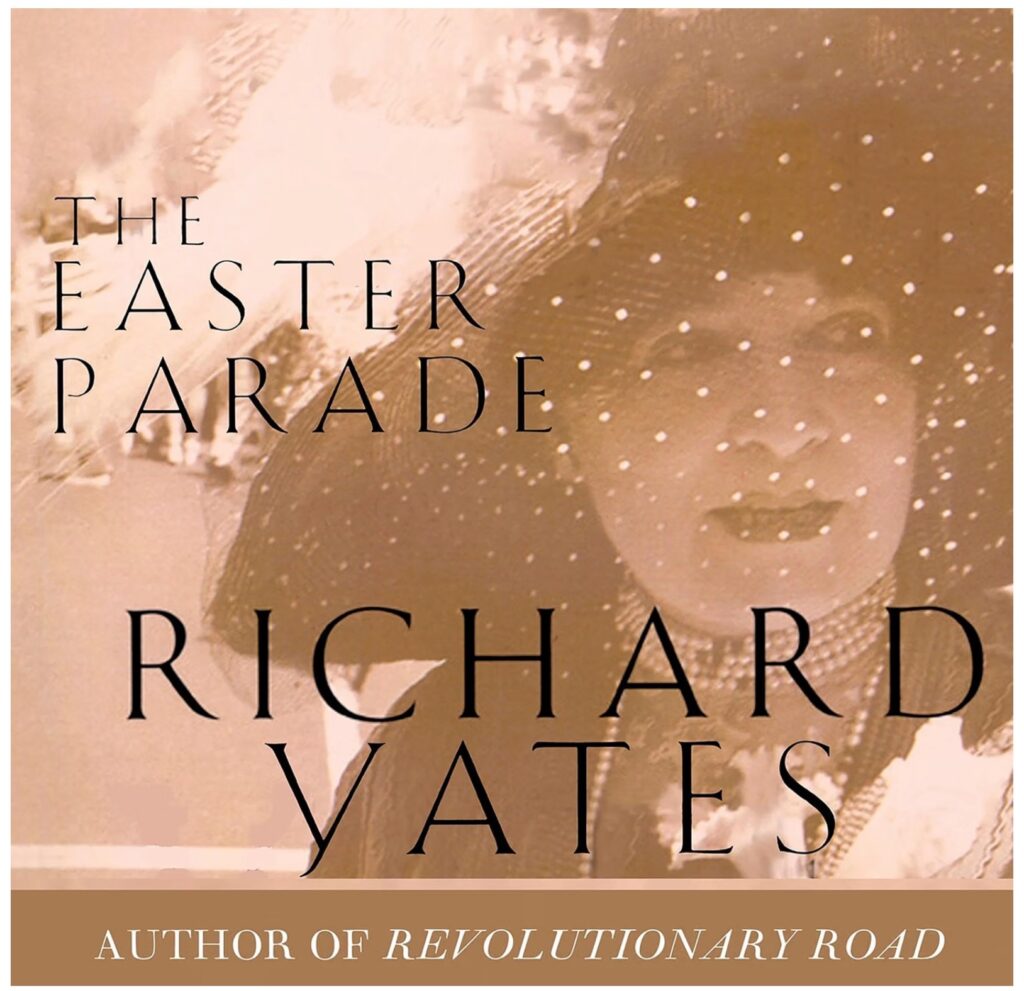
My favorite so far is The Easter Parade (1976), which is a kind of novel that we don’t seem to produce anymore: Emily Grimes, the main character, stands for something, exemplifies a certain kind of person in a particular time and place. (Sure, many novels feature characters like that to some extent, but here Yates nails it.) So does the actual parade in the novel, a lost era, time gone by. Emily is a career-minded young woman, something of a sexual free-spirit, and all her hard work in Manhattan and love affairs dry up as she approaches middle-age, when she feels washed-up and spent.
Yates is considered a master of The Age of Anxiety. Perhaps he was never quite popular because he portrays life with a healthy dose of failure and disappointment. Consider the Tolstoyan tone to this opening to The Easter Parade: “Neither of the Grimes sisters would have a happy life, and looking back it always seemed that the trouble began with their parents’ divorce” (1).
I don’t know why he didn’t achieve popular acclaim. It’s the real world. I love it. It’s not like I’m some purist, above-it-all kind of writer. I’ve often imagined the fantastic in my fiction: In my story “My Wife, the Unicorn” I described a world in which the U.S. is in a low-level Civil War and people are transforming into animals. His wife morphs into a unicorn for comic effect. It echoes Carol Emshwiller’s great little novel, Carmen Dog (1990) or William Kotzwinkle’s Dr. Rat (1976). My recent story “Camp America” features an A.I.-assisted law enforcement division. So, sure, dream away. Imagine away. But sometimes we need a depiction of the real world that hits home, that makes us sit up and take notice. Richard Yates is a master at that. If you haven’t read him, you should.