So I’ve been a fan of Ian McGuire’s fiction ever since the publication of his novel The North Water (2016). I haven’t followed his career closely or anything (I see there’s a novel published in 2020 titled The Abstainer, about which I know nothing), but just recently I discovered he has a new novel that debuted in February—White River Crossing. It’s a terrific read and a great follow-up to The North Water.
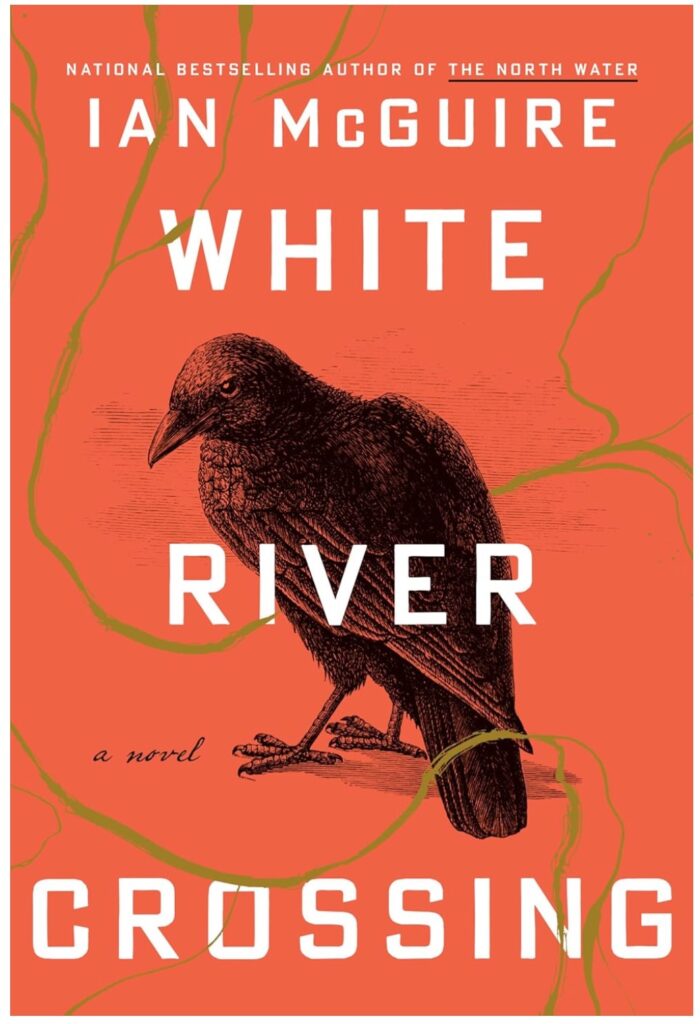
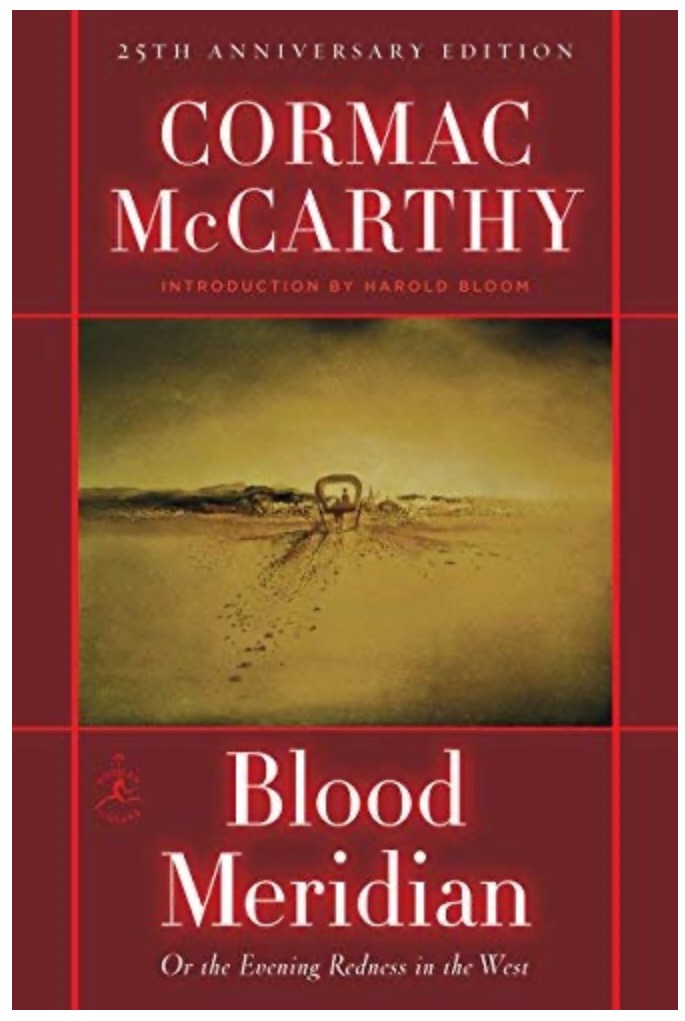
Set in the late 18th century (begins in 1766), White River Crossing is ostensibly a historical novel, but I find that genre category rather dismissive. Some of the world’s greatest novels, including Tolstoy’s monumental War and Peace (1869), would fit under that label, or Cormac McCarthy’s epic Blood Meridian (1985). No label does a work of artistic genius justice. In his preface McGuire mentions how he did considerable research for the novel, mainly concerning the Hudson’s Bay Company—which had a monopoly on the Canadian fur industry for a good two hundred years—and its interactions with the Native Americans who supplied them furs. Without giving much away (this is mentioned in the novel’s jacket description) I can report the impetus for the novel’s “quest” is the discovery of gold in a remote area northwest of Hudson’s Bay, in a bleak landscape known as the Barren Grounds. Three men working for the Hudson’s Bay Co set out to find the gold and . . . trouble ensues.
What impresses me most about McGuire’s fiction is not so much his subject matter (although I do love a good adventure story) but his style and diction. He has a knack for the odd, specific word, framed in lyrical, complex sentences. When I was teaching a graduate-level creative writing course at Penn State I had the class read The North Water, mainly for the stylistic pyrotechnics, and the class . . . hated it! I’m not kidding. I have to say they disappointed me greatly, and seemed to fall into the trap of gender-sensitivity and the cliches of “wokeness.” I tried to argue the novel’s strengths, to no avail. They weren’t having it. How could he write a novel with no exemplary female characters in it? That was their main beef. How could he write such despicable “toxic maleness”? Groan. Yes, there are despicable male characters in The North Water. We’re not supposed to “like” them. My easy summation of the novel? It’s a revisionist Moby Dick. The men are not noble and level-headed, such as Ishmael in Moby, and not austere and sexually disinterested, such as Ahab. It’s a 21st century vision of the past.
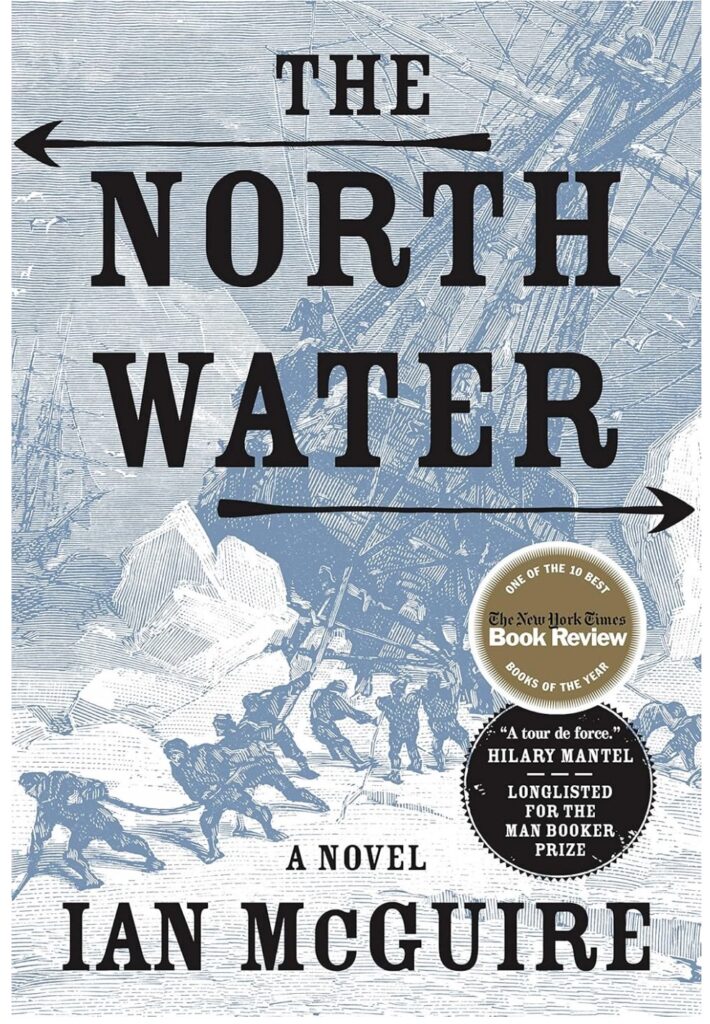
They’re men, some of them violent and dangerous, and sailors on ships in the Atlantic and “North Waters” with sexual urges and crimes. Some of the language echoes Cormac McCarthy’s Blood Meridian. At times it’s a mixture of obscure technical lingo (sailing terms, for instance) and archaic usage (historically accurate, we assume), with a zing of Anglo-Saxon spice. I’m digging the book: Best novel I’ve read since Richard Yates’s The Easter Parade (1976), which is a classic that I finally got around to reading a couple years ago.
As a diehard McCarthy fan (my Houston Chronicle review of No Country for Old Men, for instance, is quoted as a blurb on the paperback edition) know that my comparison of McGuire’s fiction to McCarthy’s is not taken lightly. I usually wince when a book comes out that is compared to any of McCarthy’s novels: It’s a literary Kiss of Death. He’s just too hard of an act to follow. But with The North Water, and now White River Crossing, he pulls it off.