Review of Kevin Grauke's "Shadows of Men," Plus a Northern Harrier To Boot

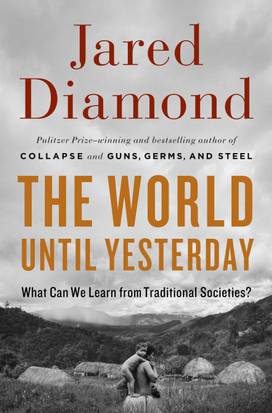
So last Sunday my review of Kevin Grauke’s debut collection of short stories, Shadows of Men, appeared in the Dallas Morning News, here. It’s an excellent book—at times funny, at times touching, and pretty much hits the nail on the head of The Decline of Men.
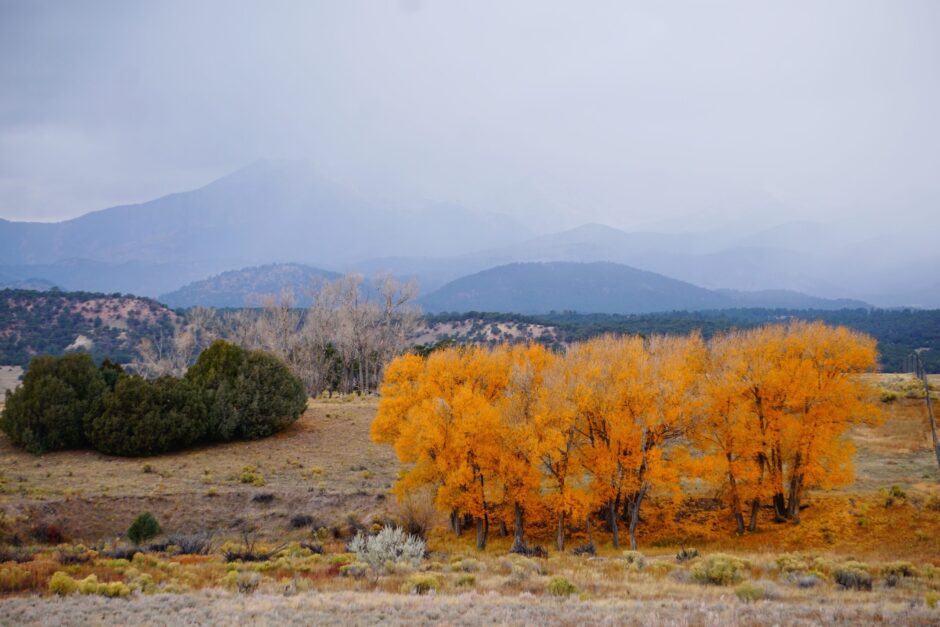
Not to be too declining (or reclining), I was out and about this snowy morning in Colorado, and I snapped a photo of a Northern Harrier on a fence post off Hermit Road (I like the name), Custer County. A fine looking bird if I do say so myself.

Posted in Birding, books, Photography, The West, writing | Tagged , , , , , | Leave a comment

"A Flag From the Poor Kid": A Christmas Essay

So a week ago I attended my daughter’s first community choir event for the Christmas season, at a Lutheran church no less. It was a lovely—even, dare I say, spiritual—event, a crowd of darling children singing (or not) Christmas carols in unison, some of the kindergartners simply standing there smiling (or not), looking forward, occasionally dancing, my daughter standing back-to-back with one of her little friends on cue, looking sassy. Like any proud papa, I was in the first row, recording the event on video with my expensive Sony camera. And on this date in late December 2012, a person can’t help but think about the recent Sandy Hook shooting tragedy, what a senseless heartbreak it is.
As I sat there and watched the kids, I noticed one boy in the second row, a cute kid who wore ripped jeans. The kids were told to wear their Sunday best, so he kind of stood out, being a bit in disrepair. It tweaked my heart strings, guessing that this wasn’t a fashion statement for the boy, but simply a hole in his pants. It brought me back. Sitting there in the Lutheran church, I remembered what it was like, being the outlier in an elementary school play.
In the U.S., we like to think we’re all somehow “middle-class,” unless you’re stinking rich and are proud to identify with that class. But most of my friends throughout life would roughly be identified as middle-class, or, if you happen to be fortunate enough to attend a good university (as I was), usually means, more accurately, “upper middle-class.” In grad school, it seemed that most of my classmates had trust funds, and didn’t really have to work, but some of them did—you know, for a character-building experience.
For most of us, if we are poor, or have been poor, we don’t like to admit it. Why do so many people vote Republican, whose policies obviously favor the moneyed class? Because we all want to be part of that class. In the recent election, my daughter came home from kindergarten one day and to report that one of her friend’s parents said that they didn’t like Obama “because he gives money to poor people.” I would imagine that quote was mangled a bit from parent to daughter to my daughter, but this is a rural, Republican-leaning county in southern Colorado, and I assume the sentiment was accurate: The idea that Obama’s policies are too heavy on “entitlement” programs, such as Social Security (into which I’ve paid all my life, and know full well I’ll never recover all the money I’ve paid in, which I accept as part of the social contract of helping others). My wife and I answered my daughter that helping out others, and especially poor people, was a good thing. And I told her that I was in fact a poor kid when I was young, and knew how it felt to be one.
So as tactless news reporters often ask at the scene of a tragedy, “How did that make you feel?” Well, I can admit to many fond memories from my impoverished childhood, and a few painful ones. I was the youngest of nine kids, a good Catholic family, with a single mother—my father committed suicide when I was three, my mother remarried a louse, then divorced him. She worked as a book keeper at a hospital in San Antonio, Texas, and we got by. Christmas was a glorious affair, and I don’t remember ever being short-changed under the Christmas tree, though I’m sure others had much more lavish bounties.
I noticed our relative poverty as I got older in grade school—say, in fifth and sixth grades, especially. I happened to live in a school district near a wealthy enclave called Shavano Park, whose home-owners would definitely be described by the term “upper middle-class,” or higher. Most of my friends had swimming pools in their back yards. I wanted one. Most of my friends got an incredible array of Christmas gifts: I wanted all that stuff. But what I found most humiliating in all my poor-kid experience was not something that I did or did not get for Christmas, but something I had to give: a little American flag.
It was one of those share-the-gift days late in the season, at the class Christmas party before the holidays. We were all supposed to bring a simple gift. My mother did the shopping, and bought a smallish American flag, the flimsy red-white-and-blue pattern on cloth stapled on a simple wooden spool. I didn’t think much of it, and guessed that no one else in my class would, either. What could you do with such a thing? Be patriotic? As if grade-schoolers get a big kick out of flag-waving? (Maybe some do. Maybe I was just an anti-flag child zealot.) I didn’t know the recipient of my gift until the day of the gift-trade party, because we’d already been informed we should each bring a gift, then we would draw names from a hat. I don’t remember what gift I received from that swap, nor do I remember to whom I gave the pathetic little flag. But I remember how ashamed I was for not having more to give than that, for having one of the crummiest gifts in the classroom.
Now I certainly understand the standard conservative blather about people needing to work hard to get ahead in life (which I generally agree with), expressed rather intelligently (if statistically) by Charles Murray’s recent conservative-cultural-analysis, Coming Apart (2012). Yes, I agree that we make decisions that affect whether we will be financially secure—a term that usually means fairly wealthy, say, a Volvo owner—or not. (I chose Volvos as the example because I like them, and not something smacking of rich vulgarity, like a Hummer.) But when you’re a kid, you haven’t made any of those decisions that affect how much money you have to spend on something as minor as a gift for a grade-school classmate. And sure, as much as I love my mother, I can admit that she probably made many decisions that affected that financial status, though some of them were a matter of love and compassion, rather than cold-hearted eye on the bottom-line. (She had six children of her own, and raised three children—two boys and one girl, my stepbrothers and stepsister—from her second marriage.)
Although I won’t cast my own life in some corny Horatio Alger mode, I’ll acknowledge that it’s much different than my childhood. I’m ensconced in what I’d describe as at least comfortable middle-class financial security (a Subaru owner, though I would like a Volvo), although I’m aware that some others would consider it above that category. My six-year-old daughter will never be the Poor Kid (I certainly hope not, at least), and won’t have to deal with that onus and discount-store cross to bear. But I’ll try to instill in her a sense of what’s like to be that kid with the hole in his pants, with the crummy flag to give, the kid who has less. Me? I’m glad for the result of the recent election. I’m glad the businessman who claimed that forty-seven percent of the country just want the government to give them things lost. I’m glad the guy who gets characterized as “giving money to poor people” won. It’s the season of giving, right? In the aftermath of Sandy Hook, we’re all holding our children a little more closely, and we need to hold the disadvantaged closer still.
Here’s a picture of that choir event, all those kids singing—my daughter, Lili, is on the right, standing next to her friend, Kenna Ingram:

Posted in Economics, Education, Politics, The West, Uncategorized | Tagged , , , | Leave a comment

Three Ideas for "Real" Change: Support States' Rights on Marijuana, Mandate Solar Panels of New Home Roofs, Ban All Assault Weapons

So the Obama administration has one chance for real change right now, with a couple more that are much needed. I live in Colorado, which has legalized marijuana, but the Obama administration has yet to respond on exactly what they’ll do about it. There’s some encouraging sentiment (and thought) expressed by Obama in a recent interview, here. My suggestion, which even fits the Republican “states’ rights” principle, is that we should let states decide the issue. I also think that once states see how much revenue could be generated by taxing it, and by reducing the amount spent on law enforcement and incarceration, that most will see the light. End this stupid Prohibition. It hasn’t worked, this asinine War on Drugs, but especially with regard to marijuana.
Another idea whose time has come is to mandate solar panels on all homes, but especially with new home construction. An op-ed in the New York Times made a good argument for it this week, here, written by no less than RFK Jr., too. The West tends to be sunny much of the time (even in winter), and it’s a waste of energy not to use it. Help out the home owners with tax breaks and incentives. Get this going.
Lastly, ban assault weapons. The arguments in favor of them don’t hold water. We’re all horrified by the Connecticut massacre, and afraid for our children. The assault weapons ban is the least we can do.

Posted in Climate Change, Gun Control, Politics, The West, Uncategorized | Tagged , , , | Leave a comment

The End of Santa? As the North Pole Melts, Kris Kringle's Days Are Numbered

So at dinner last night I mentioned to my six-year-old daughter, “You know, as the arctic ice sheet melts, I guess Santa’s North Pole toy factory is going to sink into the sea.” My daughter struck an immediate sad face, my wife glared at me. “Just kidding!” I chirped. But you know, I’m onto something. The jolly old fat man’s days are numbered. Maybe all the toy stores and humongous Christmas industry should take heed: Once the North Pole is mush, Santa’s workshop will be a hard sell to the young’uns. Already the winter snowfall has become so erratic that ski resorts are suffering, with shorter seasons and patchy slopes, as reported today in the NY Times, here. When the weatherman on Christmas Eve starts to mention that the NORAD satellites have picked up an unidentified object heading south, you’ll know it’s simply another alien spacecraft UFO doing recon for the invasion, as how could Santa launch his sleigh from the middle of the melted ice sheet?
Meanwhile, we still have some time, running out as it is. And we’re all getting psyched for the holidays at my house: the tree is up (a fir cut from our own yard), the ornaments are sparkling, and the solar-powered outdoor xmas lights are keeping us awake at night with their frantic flashing. Bring on the reindeer! I think I’m even going to write a Christmas essay. Here’s a pic of the house:

Posted in Climate Change, The West | Tagged , , | Leave a comment

"The Evil Dead" as Seminal Precursor to "Cabin in the Woods," With a Remake in the Works for Next Year

So although I’m a fan of last year’s witty (and sometimes gory) film Cabin in the Woods, I’ve been reluctant to say anything about it, as it’s one you don’t want to spoil for those who have yet to see it. (I keep telling my wife—who is decidedly NOT a horror movie fan—she has to watch it, but won’t tell her why. I won’t really tell you, either.) But in my late-night Netflix “creeping” I came across Sam Raimi’s seminal horror film of 1981, The Evil Dead, which I vaguely remember seeing years ago, and rewatched out of curiosity. I was surprised to learn Evil Dead is one of the all-time “cabin in the woods” movies, that the latest Cabin in the Woods is referring to, bloody tongue in bloody cheek. The only thing the new Cabin in the Woods does NOT have is the eldritch (I’ve been dying to use that word) rape-by-vines scene in Evil Dead, which I think was the filmmakers way of trying to throw in some weird sex into the gorefest. (It’s the White Cotton Panties rule: you need some teens in white cotton panties to be butchered, for prurient interest. It happens all the time, I notice, in horror movies.) But the rest is all there: the teens visiting a remote cabin, the incantation of lost “spells” that bring the demons back to life, the lighthearted hijinks followed quickly by bloody gore, and more disgusting images than you can imagine. What Cabin in the Woods does so well, however, is have much fun with these tropes (such as the obvious nod to Shaggy of the cartoon Scooby Doo, Where Are You? being one of the heroes), while Evil Dead takes itself a bit more seriously. For any wannbe horror aficionados, you have to watch both, back to back, and enjoy. In the fascinating trivia category, Joel Coen of the Coen Brothers duo helped to edit Evil Dead, and has been friends with Same Raimi since, and Raimi was only twenty years old when he made the movie. Lastly, there’s a remake of The Evil Dead coming out this April (not to be directed by Sam Raimi, however), which will surely have flashier special effects: I wonder if that vine-rape sequence will get the ax?

Posted in Film, Horror Films | Tagged | Leave a comment

While Reading Melanie Challenger's "On Extinction," Life in "The Other Season"

So I’ve begun reading Melanie Challenger’s On Extinction, to review for the Dallas Morning News, a timely book when Climate Change is panting its hot breath down our neck like an oily wolf: the weather has been so warm this month in southern Colorado we’ve (morbidly) joked that we’re living in The Other Season—should be late fall, feels like early spring. There’s a fire in Rocky Mountain National Park, described here, when it should be snow-covered.
It’s like winter is coming but no one believes in it anymore.
Yesterday at a Festival of Trees in our small town of Westcliffe one of our friends said she had driven from California a week before and it was dry the whole way, no snow evident anywhere, even ski resorts like Park City, Utah. It causes an unsettled feeling in the populace, to which I can attest. Several conversations I had yesterday were about how dry it has been, how we need some snow, and if we don’t get it, how bad it will be for the ranchers and hay season. People ran screaming through the sleepy streets, Please, Lord. Let it snow!
Meanwhile let’s not forget all the plants and animals that need the moisture to live. We saw bear tracks near our house last week, when they should be cozy in their snow-wrapped dens. Or the birds, who seem awfully pleased with my bird feeder of late. They even eat out of our hands now. Here’s some chickadees eating sunflower seeds out of my daughter’s hand. She’s a little like Ruby, the girl I write about in The Bird Saviors.

Posted in Birding, books, Climate Change, The West, Water Crisis, Weird Weather | Tagged , , , , , , , , | Leave a comment

Phillip Roth Hangs Up His Pen, While Kent Haruf and George Saunders Have New Books in the Offing

So on the literary beat there’s an interesting tidbit in the news this week (delayed, as you’ll see, from our attention), in that the great American novelist—he did name one of his books that: The Great American Novel (1973)—Phillip Roth has decided to call it quits at age 79, here. Roth wrote many novels, my favorites being Goodbye, Columbus (1959) and Portnoy’s Complaint (1969), which were major literary works of their time. Both pin a particular brand of East Coast male wriggling on the wall, and have some laugh-out-loud funny moments to boot. I remember reading Portnoy’s Complaint in high school, when it was all the rage for being a “dirty” book. And I applaud and sympathize his honesty in this quote: “Writing is frustration — it’s daily frustration, not to mention humiliation. It’s just like baseball: you fail two-thirds of the time … I can’t face any more days when I write five pages and throw them away. I can’t do that anymore.”
For all of us who are still determined to face that frustration every day (and I’m one of them, putting my nose to the grindstone as soon as I post this diversion from real work), it’s good to hear that two of our best fiction writers have new books out in the coming months: George Saunders has a new book of stories out in January, titled Tenth of December (which is a great story itself, published in the New Yorker a year ago), and Kent Haruf has a new novel out in February, titled Benediction. That’s the kind of news to make a reader’s day, and to make all the frustration worthwhile.
And to keep things in perspective, I asked this horse her opinion on Phillip Roth’s retirement, and she said, “I liked his early novels best.” So there you have it, from the horse’s mouth.

Posted in books, Uncategorized | Tagged , | Leave a comment

Interview on Montana Public Radio About "The Bird Saviors"

So I’m busy with writing a new novel and haven’t made much time for posting here lately, though I’ve been busy rereading Pete Dexter’s Paris Trout (1988) while also reading Harper Lee’s To Kill a Mockingbird (1962), as both are terrific novels that have an angle of racial injustice in the South as backstory. But it has come to my attention that an interview I did with Montana Public Radio is online now (and has been: I’m slow about these irksome self-promo tasks), here. And as a bonus, here’s a picture of an iridescent cloud above my Colorado home the other day, high clouds that catch the sun’s rays and create a rainbow effect. As waitresses the world over say, Enjoy.

Posted in books, The West, Weird Science, Weird Weather, writing | Tagged , | Leave a comment

Reading Harper Lee's "To Kill a Mockingbird" for the First Time (Maybe)

So I’m reading Harper Lee’s To Kill a Mockingbird (1960) for the first time ever (maybe: I might have read it in high school because we did get assigned books like that, but I’ve seen the film many times, and can’t separate the film story from the book, so I don’t know). It’s a study in bygone diction. Lee uses the word “hain’t”—a Southern dialect noun that means something like “spooky person” (Boo Radley is a “hain’t”)—and gems like this: “Simon made a pile practicing medicine, but in this pursuit he was unhappy lest he be tempted into doing what he knew was not for the glory of God, as the putting on of gold and costly apparel. So Simon, having forgotten his teacher’s dictum on the possession of human chattels, bought three slaves and with their aid established a homestead on the banks of the Alabama River . . . .” [italics mine] (4). When was the last time you heard someone say lest in conversation? I like the book, perhaps least because it’s an American classic, most because of the spunky narrator and the way Lee holds up the flaws of the American South to view, pointing her figure from the insider’s view. The other novel that does that beautifully is Pete Dexter’s Paris Trout (1988), which is a knockout from start to finish, and made me think, Now that’s what’s wrong with the South.

Posted in books | Tagged | Leave a comment

On Finishing David Quammen's "Spillover: Animal Infections and the Next Human Pandemic"

So I’ve finished David Quammen’s excellent new book of nonfiction, Spillover: Animal Infections and the Next Human Pandemic, about zoonotic viruses and the danger we face from new pandemics originating in crossover viruses leaping from animals to humans. At 520 pages, it’s a detailed and impressive read. Like other long nonfiction books on ecology or natural science I’ve read this year (Alex Prud’homme’s The Ripple Effect comes to mind), it takes a time commitment, and I felt like I should get a merit badge when I reached the last page. But the merit badge of Spillover is found in the organization of the book itself. In some ways he saved the best for last. The penultimate chapter is a fascinating (and minutely detailed) investigation/explanation of the origin of the HIV virus, a story with many twists and turns. I won’t go into it here, but I was surprised to learn that scientists now believe the virus actually originated (the “spillover” event from animals to humans, in this case believed to have occurred some time in the act of killing/eating a monkey or chimpanzee) in 1908, more or less. It also ends with this fascinating observation: Quammen quotes several scientists who describe the population boom of humans in the last century as being an “outbreak,” similar to other species outbreaks, when they suddenly swell in population over a short period of time. With insects, it might be a year or two. With humans, it’s occurred within a matter of decades: “From the time of our beginning as a species (about 200,000 years ago) until the year 1804, human population rose to a billion; between 1804 and 1927, it rose by another billion; we reached 3 billion in 1960; and each net addition of a billion people, since then, has taken only about thirteen years. In October 2011, we came to the 7-billion mark and flashed past like it was a ‘Welcome to Kansas’ sign on the highway. That amounts to a lot of people, and certainly qualifies as an ‘explosive’ increased within Berryman’s ‘relatively short period of time'” [my note: the definition of an outbreak] (496).
That’s where Quammen weighs in, with the threat of virus as a possible end to our outbreak: “We are prodigious, we are unprecedented. We are phenomenal. No other primate has ever weighed upon the planet to anything like this degree. In ecological terms, we are almost paradoxical: large-bodied and long-lived but grotesquely abundant. We are an outbreak. And here’s the thing about outbreaks: They end. In some cases they end after many years, in other cases they end rather soon. In some cases they end gradually, in other cases they end with a crash” (497-8).

Posted in books/film, Climate Change, Uncategorized | Tagged , , | Leave a comment