The End of Santa? As the North Pole Melts, Kris Kringle's Days Are Numbered

So at dinner last night I mentioned to my six-year-old daughter, “You know, as the arctic ice sheet melts, I guess Santa’s North Pole toy factory is going to sink into the sea.” My daughter struck an immediate sad face, my wife glared at me. “Just kidding!” I chirped. But you know, I’m onto something. The jolly old fat man’s days are numbered. Maybe all the toy stores and humongous Christmas industry should take heed: Once the North Pole is mush, Santa’s workshop will be a hard sell to the young’uns. Already the winter snowfall has become so erratic that ski resorts are suffering, with shorter seasons and patchy slopes, as reported today in the NY Times, here. When the weatherman on Christmas Eve starts to mention that the NORAD satellites have picked up an unidentified object heading south, you’ll know it’s simply another alien spacecraft UFO doing recon for the invasion, as how could Santa launch his sleigh from the middle of the melted ice sheet?
Meanwhile, we still have some time, running out as it is. And we’re all getting psyched for the holidays at my house: the tree is up (a fir cut from our own yard), the ornaments are sparkling, and the solar-powered outdoor xmas lights are keeping us awake at night with their frantic flashing. Bring on the reindeer! I think I’m even going to write a Christmas essay. Here’s a pic of the house:

Posted in Climate Change, The West | Tagged , , | Leave a comment

"The Evil Dead" as Seminal Precursor to "Cabin in the Woods," With a Remake in the Works for Next Year

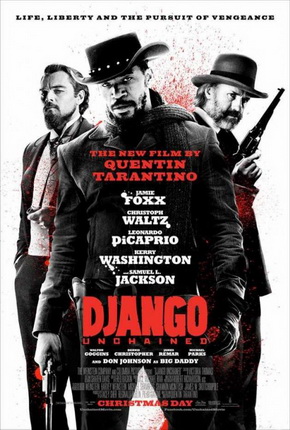
So although I’m a fan of last year’s witty (and sometimes gory) film Cabin in the Woods, I’ve been reluctant to say anything about it, as it’s one you don’t want to spoil for those who have yet to see it. (I keep telling my wife—who is decidedly NOT a horror movie fan—she has to watch it, but won’t tell her why. I won’t really tell you, either.) But in my late-night Netflix “creeping” I came across Sam Raimi’s seminal horror film of 1981, The Evil Dead, which I vaguely remember seeing years ago, and rewatched out of curiosity. I was surprised to learn Evil Dead is one of the all-time “cabin in the woods” movies, that the latest Cabin in the Woods is referring to, bloody tongue in bloody cheek. The only thing the new Cabin in the Woods does NOT have is the eldritch (I’ve been dying to use that word) rape-by-vines scene in Evil Dead, which I think was the filmmakers way of trying to throw in some weird sex into the gorefest. (It’s the White Cotton Panties rule: you need some teens in white cotton panties to be butchered, for prurient interest. It happens all the time, I notice, in horror movies.) But the rest is all there: the teens visiting a remote cabin, the incantation of lost “spells” that bring the demons back to life, the lighthearted hijinks followed quickly by bloody gore, and more disgusting images than you can imagine. What Cabin in the Woods does so well, however, is have much fun with these tropes (such as the obvious nod to Shaggy of the cartoon Scooby Doo, Where Are You? being one of the heroes), while Evil Dead takes itself a bit more seriously. For any wannbe horror aficionados, you have to watch both, back to back, and enjoy. In the fascinating trivia category, Joel Coen of the Coen Brothers duo helped to edit Evil Dead, and has been friends with Same Raimi since, and Raimi was only twenty years old when he made the movie. Lastly, there’s a remake of The Evil Dead coming out this April (not to be directed by Sam Raimi, however), which will surely have flashier special effects: I wonder if that vine-rape sequence will get the ax?

Posted in Film, Horror Films | Tagged | Leave a comment

While Reading Melanie Challenger's "On Extinction," Life in "The Other Season"

So I’ve begun reading Melanie Challenger’s On Extinction, to review for the Dallas Morning News, a timely book when Climate Change is panting its hot breath down our neck like an oily wolf: the weather has been so warm this month in southern Colorado we’ve (morbidly) joked that we’re living in The Other Season—should be late fall, feels like early spring. There’s a fire in Rocky Mountain National Park, described here, when it should be snow-covered.
It’s like winter is coming but no one believes in it anymore.
Yesterday at a Festival of Trees in our small town of Westcliffe one of our friends said she had driven from California a week before and it was dry the whole way, no snow evident anywhere, even ski resorts like Park City, Utah. It causes an unsettled feeling in the populace, to which I can attest. Several conversations I had yesterday were about how dry it has been, how we need some snow, and if we don’t get it, how bad it will be for the ranchers and hay season. People ran screaming through the sleepy streets, Please, Lord. Let it snow!
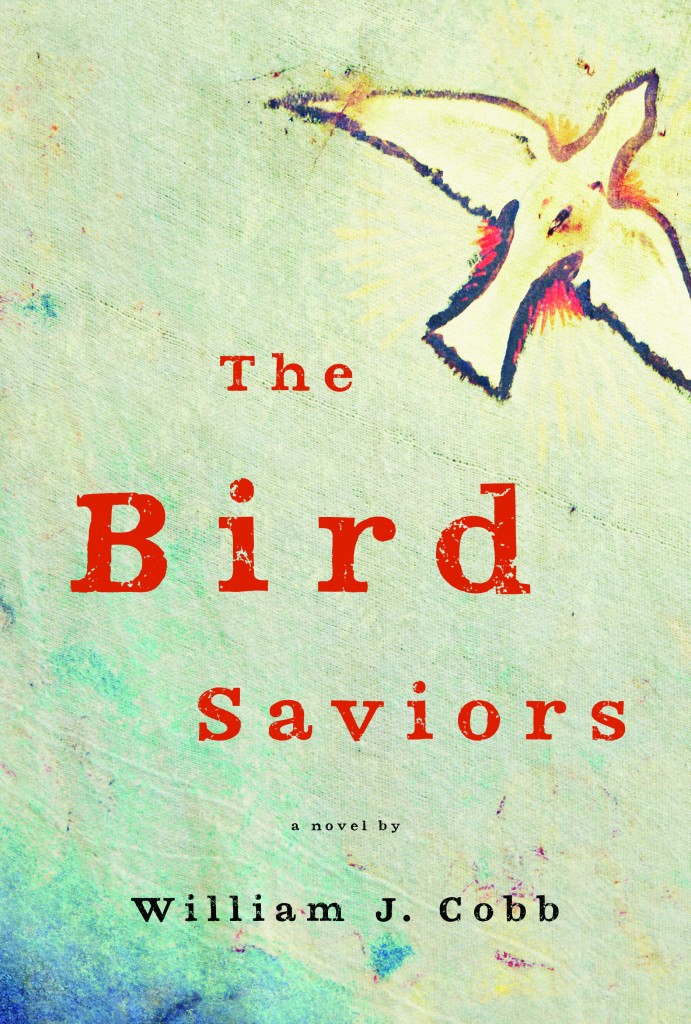
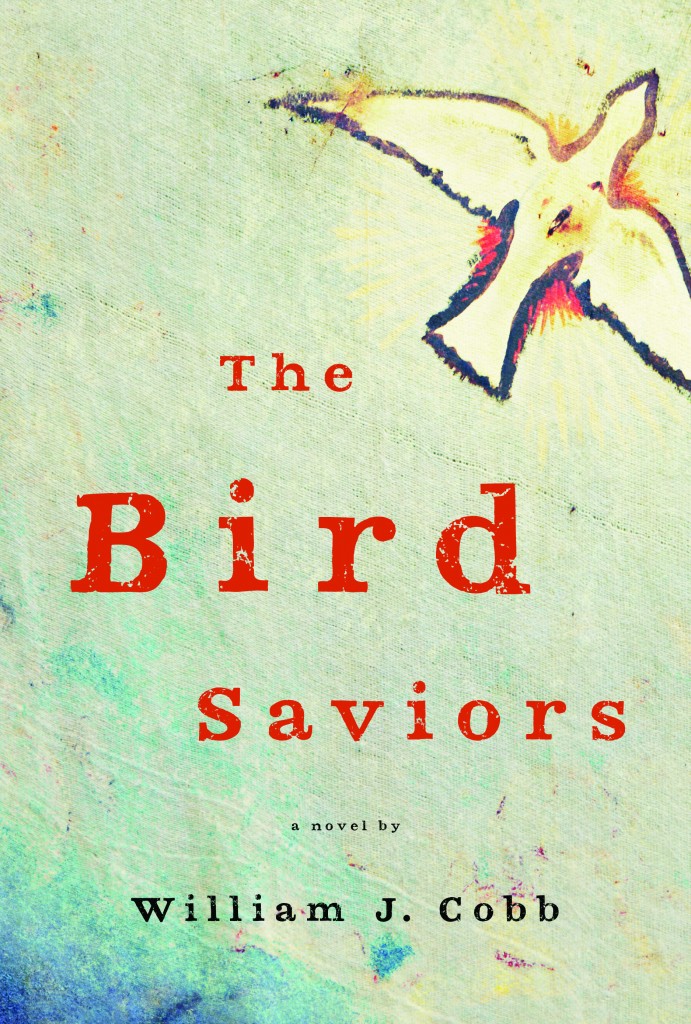
Meanwhile let’s not forget all the plants and animals that need the moisture to live. We saw bear tracks near our house last week, when they should be cozy in their snow-wrapped dens. Or the birds, who seem awfully pleased with my bird feeder of late. They even eat out of our hands now. Here’s some chickadees eating sunflower seeds out of my daughter’s hand. She’s a little like Ruby, the girl I write about in The Bird Saviors.

Posted in Birding, books, Climate Change, The West, Water Crisis, Weird Weather | Tagged , , , , , , , , | Leave a comment

Phillip Roth Hangs Up His Pen, While Kent Haruf and George Saunders Have New Books in the Offing

So on the literary beat there’s an interesting tidbit in the news this week (delayed, as you’ll see, from our attention), in that the great American novelist—he did name one of his books that: The Great American Novel (1973)—Phillip Roth has decided to call it quits at age 79, here. Roth wrote many novels, my favorites being Goodbye, Columbus (1959) and Portnoy’s Complaint (1969), which were major literary works of their time. Both pin a particular brand of East Coast male wriggling on the wall, and have some laugh-out-loud funny moments to boot. I remember reading Portnoy’s Complaint in high school, when it was all the rage for being a “dirty” book. And I applaud and sympathize his honesty in this quote: “Writing is frustration — it’s daily frustration, not to mention humiliation. It’s just like baseball: you fail two-thirds of the time … I can’t face any more days when I write five pages and throw them away. I can’t do that anymore.”
For all of us who are still determined to face that frustration every day (and I’m one of them, putting my nose to the grindstone as soon as I post this diversion from real work), it’s good to hear that two of our best fiction writers have new books out in the coming months: George Saunders has a new book of stories out in January, titled Tenth of December (which is a great story itself, published in the New Yorker a year ago), and Kent Haruf has a new novel out in February, titled Benediction. That’s the kind of news to make a reader’s day, and to make all the frustration worthwhile.
And to keep things in perspective, I asked this horse her opinion on Phillip Roth’s retirement, and she said, “I liked his early novels best.” So there you have it, from the horse’s mouth.

Posted in books, Uncategorized | Tagged , | Leave a comment

Interview on Montana Public Radio About "The Bird Saviors"

So I’m busy with writing a new novel and haven’t made much time for posting here lately, though I’ve been busy rereading Pete Dexter’s Paris Trout (1988) while also reading Harper Lee’s To Kill a Mockingbird (1962), as both are terrific novels that have an angle of racial injustice in the South as backstory. But it has come to my attention that an interview I did with Montana Public Radio is online now (and has been: I’m slow about these irksome self-promo tasks), here. And as a bonus, here’s a picture of an iridescent cloud above my Colorado home the other day, high clouds that catch the sun’s rays and create a rainbow effect. As waitresses the world over say, Enjoy.

Posted in books, The West, Weird Science, Weird Weather, writing | Tagged , | Leave a comment

Reading Harper Lee's "To Kill a Mockingbird" for the First Time (Maybe)

So I’m reading Harper Lee’s To Kill a Mockingbird (1960) for the first time ever (maybe: I might have read it in high school because we did get assigned books like that, but I’ve seen the film many times, and can’t separate the film story from the book, so I don’t know). It’s a study in bygone diction. Lee uses the word “hain’t”—a Southern dialect noun that means something like “spooky person” (Boo Radley is a “hain’t”)—and gems like this: “Simon made a pile practicing medicine, but in this pursuit he was unhappy lest he be tempted into doing what he knew was not for the glory of God, as the putting on of gold and costly apparel. So Simon, having forgotten his teacher’s dictum on the possession of human chattels, bought three slaves and with their aid established a homestead on the banks of the Alabama River . . . .” [italics mine] (4). When was the last time you heard someone say lest in conversation? I like the book, perhaps least because it’s an American classic, most because of the spunky narrator and the way Lee holds up the flaws of the American South to view, pointing her figure from the insider’s view. The other novel that does that beautifully is Pete Dexter’s Paris Trout (1988), which is a knockout from start to finish, and made me think, Now that’s what’s wrong with the South.

Posted in books | Tagged | Leave a comment

On Finishing David Quammen's "Spillover: Animal Infections and the Next Human Pandemic"

So I’ve finished David Quammen’s excellent new book of nonfiction, Spillover: Animal Infections and the Next Human Pandemic, about zoonotic viruses and the danger we face from new pandemics originating in crossover viruses leaping from animals to humans. At 520 pages, it’s a detailed and impressive read. Like other long nonfiction books on ecology or natural science I’ve read this year (Alex Prud’homme’s The Ripple Effect comes to mind), it takes a time commitment, and I felt like I should get a merit badge when I reached the last page. But the merit badge of Spillover is found in the organization of the book itself. In some ways he saved the best for last. The penultimate chapter is a fascinating (and minutely detailed) investigation/explanation of the origin of the HIV virus, a story with many twists and turns. I won’t go into it here, but I was surprised to learn that scientists now believe the virus actually originated (the “spillover” event from animals to humans, in this case believed to have occurred some time in the act of killing/eating a monkey or chimpanzee) in 1908, more or less. It also ends with this fascinating observation: Quammen quotes several scientists who describe the population boom of humans in the last century as being an “outbreak,” similar to other species outbreaks, when they suddenly swell in population over a short period of time. With insects, it might be a year or two. With humans, it’s occurred within a matter of decades: “From the time of our beginning as a species (about 200,000 years ago) until the year 1804, human population rose to a billion; between 1804 and 1927, it rose by another billion; we reached 3 billion in 1960; and each net addition of a billion people, since then, has taken only about thirteen years. In October 2011, we came to the 7-billion mark and flashed past like it was a ‘Welcome to Kansas’ sign on the highway. That amounts to a lot of people, and certainly qualifies as an ‘explosive’ increased within Berryman’s ‘relatively short period of time'” [my note: the definition of an outbreak] (496).
That’s where Quammen weighs in, with the threat of virus as a possible end to our outbreak: “We are prodigious, we are unprecedented. We are phenomenal. No other primate has ever weighed upon the planet to anything like this degree. In ecological terms, we are almost paradoxical: large-bodied and long-lived but grotesquely abundant. We are an outbreak. And here’s the thing about outbreaks: They end. In some cases they end after many years, in other cases they end rather soon. In some cases they end gradually, in other cases they end with a crash” (497-8).

Posted in books/film, Climate Change, Uncategorized | Tagged , , | Leave a comment

Where Do You Live? What Do You Do? & Other Ways to Define a Person

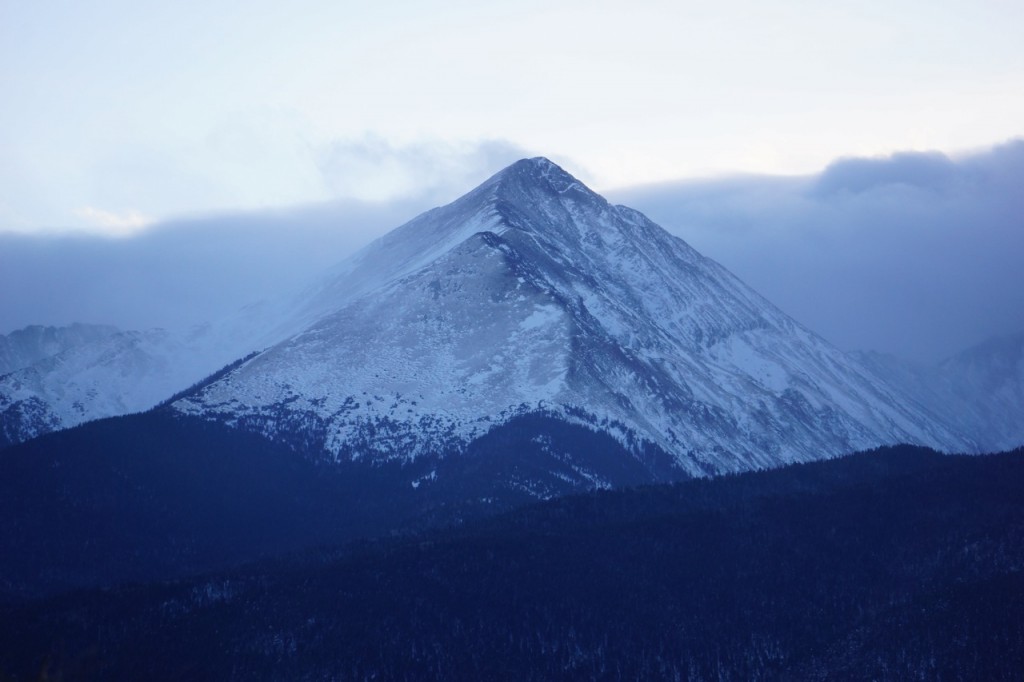
So I’m working on a new novel, which is really the only part about being a writer I like. I was just visiting a friend who went to one of my readings and commented on how cool it was to have people listening to me, paying attention to what I say, and discussing my work. He asked what I thought of it, and if I took it for granted, and I told him Yes, I thought I did. Readings/signings have their ups and downs, and as many writers attest, it’s not unusual to go to an event and have only a few people (or none) in attendance. My friend was at a well-attended event and that’s nice, but I don’t forget the ones that were sparsely attended, either. But most writers—and count me among this category—love literature, and love the ability to put their work into the mix, to be a part of the greater literary world, to do their best to rub shoulders with the likes of, say, William Shakespeare, William Faulkner, or, more recently (and one of my favorites), Cormac McCarthy. Which brings me to my new novel, in which I’m writing about a small-town lawyer whose son has disappeared, believed to be abducted, and who is, understandably, freaking out, melting down. But when I’m creating a character—a person—I can’t help but think about What Defines Us. Two of those things are Where We Live, and What We Do. And it’s natural to think of yourself in that vein, think about where you live, what you do, and how it affects you.  I live at the foot of a thirteen-thousand foot mountain in Southern Colorado, in the U.S. of A., and I’m sure it shapes me, to see that looming peak behind me. What I do is make up stories, crafted into literary work that hopefully enters the imaginative fray, makes an addition to the cultural soup—stories that offer some vision of the world, stories to make us think. And it makes me think about other people as well, where they live, what they do, and how it influences our world. So I’m just throwing it out on the table, so to speak. Where do you live? What do you do? Here’s a pic of my backyard mountain, Spread Eagle Peak:

Posted in books, Cormac McCarthy, The West, writing | Tagged , , , , | Leave a comment

Proposition 64 Passes in Colorado & Mitt Is a Loser, Which Means It's a Good Day

So my (second) home state of Colorado voted to legalize “recreational” marijuana. Cool. It’s like volleyball now! (Only where you keep forgetting the score.) Enough already with this Prohibition, Part II.
Obama even mentioned “this warming planet” in his acceptance speech—though it did sound somewhat like “Mormon planet” when he said it.
And about that Romney dude, that Mitt? Aren’t we glad we won’t have to see his smirk anymore? The pundits on TV are all saying Obama’s election to a second term is a result of demographics, but could it just maybe be that Romney lied in TV ads and his policies were untenable (disband FEMA, overturn Roe v. Wade, etc)? Methinks the sun hath set on the Romneys of the world, for a moment, at least.

Posted in Photography, Politics, The West | Tagged , | Leave a comment

On David Quammen's "Spillover," Today's Election, and the Great Horned Owls Beside Me

So I’ve been reading David Quammen’s new book, Spillover (2012), on emerging diseases (and particularly zoonotic viruses, a la Ebola, Marburg, HIV, SARS, etc.), and I keep feeling sicker and sicker. It’s like I’m catching Ebola from reading this book. But a little bug is not going to stop me. It’s an excellent (and spooky) read, detailing one virus after another that has “emerged” or spilled over (from animal hosts to human infection) in the last few decades. I’m on page 215, and I don’t care if I start weeping tears of blood—a symptom of Ebola reported in Richard Preston’s The Hot Zone (1994), which Quammen debunks—I’m going to finish it. I don’t care if the Zombie Apocalypse happens tonight—or Romney wins, same thing—I’m going to finish it.
Meanwhile it’s another in a list of terrific but exhausting books of nonfiction I’ve read this year, works that are dramatic, exciting, about important ecological developments—and long. Alex Prud’homme’s The Ripple Effect (2010), about our 21st century water crisis, and Edward O. Wilson’s The Social Conquest of Earth (2012) are also in this category. Good but they take reading stamina.
Meanwhile it’s been unusually warm in this part of southern Colorado, and a friend recently termed it “the Other Season,” because it’s not really like fall or winter, more like a displaced spring. (And the planet isn’t warming, really.) Everyone in this area of Colorado mentioned how warm Halloween was. At this rate next year we’ll be wearing shorts on Christmas Day.
Meanwhile it’s election day! Thank god this ordeal is finally coming to a close. Readers can probably guess I favor Obama, who hasn’t done enough on environmental issues (like Climate Change), but I begrudgingly realize he has a recalcitrant (and backward-looking) Republican Congress, and that he has taken some tangible steps in the right direction, such as the improvement of fuel-efficiency standards in the future, while Romney is a total sellout to the climate-change deniers in his party, and everything else, except worshipping the almighty dollar.
Meanwhile I’ve been trying to photograph a pair of Great Horned Owls on my mountainside here, who hoot in my backyard almost every night, and I keep getting tantalizingly close, but they’re shy enough that if they hear my footsteps crunching in the fallen aspen leaves, they swoop and silently fly away. Yesterday at dusk I managed to get this photo, not exactly award-winning, but they’re beautiful (and for rabbits and their ilk, terrifying) birds. Note that he (or she) is looking away from me, so we’re looking at his/her backside.

Posted in books, Climate Change, Owls, Photography, The West, Water Crisis | Tagged , , , , | Leave a comment