Reading Nicholas Carr's "The Shallows" Offline, amidst a White Christmas

So between wrapping zebra puppets and trees with colored lights, I’ve been reading Nicholas Carr’s The Shallows while living offline, which is an interesting contrast. He basically argues that our internet use is changing the way our brains work, and most of his analysis is convincing, if at times repetitive and somewhat simplistic. (His comments about Facebook, for instance, seem naive, basically only seeing it as what its proponents claim it to be, “a great way to keep in touch with family and friends!”, rather than a queasy narcissistic timesuck.) The book’s strength is that it’s not a jeremiad against the internet, although perhaps that’s a weakness as well: at times he softens his criticism so much that the book seems squishy. (If it’s not a problem, so what?) But I certainly agree with some of his observations, which are generally backed up by one (dubious psychological or pseudoscientific) study or another: We’re becoming more data-hungry, more scatter-brained, and are less likely to “lose ourselves” in books more than ever. Some of his recap of the development of the book is illuminating, and when he starts to suggest that “books are dead,” he counters that with reports from the 19th century about the decline of books, which functions as a useful reality check.
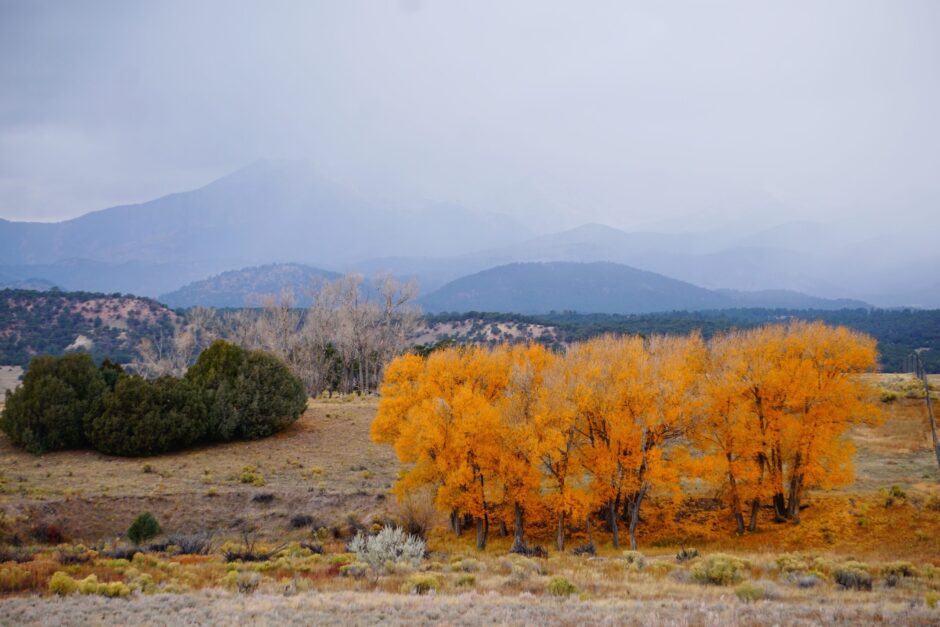
And then I go out hiking in the Colorado snowdrifts. This is a picture of the creek in my backyard.

Posted in books, Social Networking, Weird Science | Leave a comment

On Nicholas Carr's "The Shallows: What the Internet Is Doing to Our Brains"

So in between dressing up stuffed animal rabbits as Rapunzel and noticing that leopard-skin tights, boots, and earmuffs seem to be popular among mallrats, I’m reading Nicholas Carr’s The Shallows: What the Internet Is Doing to Our Brains (2010). It’s complex, not simply “the internet is bad” or anything that reductive. He gives a reasonable and well-balanced discussion of how internet usage (and ebooks, I would also argue) are changing the way we read and think, and that while there are some who argue the effects are largely beneficial, he does focus on the difficulty of being immersed in a long text, after being accustomed to the shorter bites of information on the internet. The Shallows was a finalist for the Pulitzer, and that seems a well-deserved honor. He begins with a discussion of Marshall McLuhan, hugely influential in the 1960s, now a bit of a cultural relic, but who makes some good points about the technological innovations and changes: “What both enthusiast and skeptic miss is what McLuhan saw: that in th elong run a medium’s content matters less than the medium itself in influencing how we think and act. As our window onto the world, and onto ourselves, a popular medium molds what we see and how we see it—and eventually, if we use it enough, it changes who we are, as individuals and as a society. ‘The effects of technology do no occur at the level of opinions or concepts,’ wrote McLuhan. Rather, they alter ‘patterns of perception steadily and without any resistance.’ The showman exaggerates to make his point, but the point stands. Media work their magic, or their mischief, on the nervous system itself.”
At one point Carr admits to having less and less patience for longer books, and for longer periods of reading in one text, skipping around a lot, intellectual multitasking, to some extent. If that’s a crime, I’m guilty too. And I agree there are great benefits to internet-based reading and learning, but drawbacks as well. Two examples I can cite from my own experience: The origin of the Magna Carta (signed in 1215) and the Gutenberg Bible (printed in 1450-51, it’s believed) are a couple topics I’ve looked up recently, that stick in my head. Add those bits of information to the snowball of information we see in any day, and it would be easy to argue that we’re gaining much for what we lose. I’m not so sure. I asked my students in a senior course some basic questions about history, and, for example, few of them could name the dates of the Civil War. Is that important? I’d say yes. But as Carr notes, there’s no going back.

Posted in books, Education, Weird Science, writing | Leave a comment

"The Descendants" & Kardashian Wannabes

So like all good (and not-so-good) Americans I ended up at a mall (in St. Louis) today, amused by the Kardashian/Jersey Shore wannabes with their alien-life-form hair and Cleopatra-on-meth eye makeup, getting a Teddy bear made from scratch, which was actually a rabbit dressed as a princess. Afterward we ended up seeing the new Alexander Payne film, The Descendants, starring George Clooney in a good role, like Up in the Air only different. But the teenage daughter of the film kind of stole the show. It’s funny, sad, and touching, with no car chases or things exploding, and I don’t remember any vampires or zombies, but they were probably lurking in the parking lot. The best part involved a grumpy old grandpa and an insolent if harmless teen.

Posted in books/film | Leave a comment

For Weather Freaks & Geeks: the NOAA El Nino Page

So if there’s one positive spinoff outcome of our collective Climate Change fears, it’s a greater understanding and respect for the science behind understanding climate and weather. {All Republican presidential candidates can now leave the room (like they’d be here anyway!), as the following is for intelligent grown-ups.} Below is the url of NOAA’s El Nino status page, which being the weather geek that I am, I check often, because if you want some practical advice about predicting the weather in the West, this actually works. The latest report is that we’re in a La Nina cycle, no surprise there, although the fact that it’s now two years in a row is somewhat unusual, but not unheard of. But take a look at this pdf document. The charts and data are fascinating. In Tim Flannery’s excellent nonfiction book Here on Earth he describes how more and more weather sensors are being placed around the globe, in air/water/land, and how we’re getting more and more accurate in recording actual temperature/precipitation etc all across the planet. Personally I think it’s kind of cool to see the data on temperature fluctuations in the Pacific, and explanations of how it affects weather in the U.S. Plus it changes often. Colorado, for instance, has seen some improvement in its weather forecast for the next few months, while Texas is still in a serious drought.
http://www.cpc.ncep.noaa.gov/products/analysis_monitoring/lanina/enso_evolution-status-fcsts-web.pdf

Posted in Climate Change, The West | Leave a comment

On the Climate Change Front, a Good News/Bad News Day

So the latest hubbub on the Climate Change front is that global emissions spiked last year to a record high increase, while obviously we should be making those numbers go down (and they did, briefly, from the effects of the Great Recession), and here’s a link in the NY Times that explains the data: http://www.nytimes.com/2011/12/05/science/earth/record-jump-in-emissions-in-2010-study-finds.html?_r=1&ref=science
But there’s also some good news from the Climate Progress website, which tracks various scientific developments re: Climate Change and analyzes media responses to these, such as their point that Fox News viewers are the most misinformed about Climate Change, although that’s hardly a shocker. The good news is that renewable energies are increasing. Here’s a quote:
“Renewable energy is surpassing fossil fuels for the first time in new power-plant investments, shaking off setbacks from the financial crisis…. Electricity from the wind, sun, waves and biomass drew $187 billion last year compared with $157 billion for natural gas, oil and coal, according to calculations by Bloomberg New Energy Finance using the latest data. Accelerating installations of solar- and wind-power plants led to lower equipment prices, making clean energy more competitive with coal.”
Here’s the url to that article in Climate Progress:
http://thinkprogress.org/romm/2011/11/26/376250/clean-energy-renewable-power-tops-fossil-fuels-for-first-time/

Posted in Climate Change, Politics, The West | Leave a comment

On Stuart Dybek's "Saint Stuart" and Kent Haruf's "Benediction": Books to Come From Two of Our Best Writers

So last week I had the good fortune of overseeing the visit to our campus and fiction reading by Stuart Dybek, one of the finest contemporary American fiction writers of all. Dybek is known as something of a “writer’s writer,” but that sounds too effete for how good he is, and he’s anything but effete: His fiction, set mainly in Chicago, is gutsy, earthy, nostalgic, funny, ribald, and insightful. During his visit he read excerpts from a nonfiction novel-in-progress titled Saint Stuart, which had some hilarious descriptions of being an oversized, outmanned boxer at a Chicago Catholic high school. And during the visit I found out Dybek is also friends with Kent Haruf, who has finished a new novel that should be out in the not-too-distant future, titled Benediction. I’ve no doubt it will be knockout, following on the heels of his two most recent novels that were published to much acclaim (and became best-sellers): Plainsong (1999) and Eventide (2004). Kent is one of the best American novelists, and writes about my adopted home-state, Colorado. Right now I’m rereading Stuart Dybek’s I Sailed With Magellan (2003), and am excited to look forward to two good books in the future.

Posted in books | Leave a comment

My Short Story, "The Lives of Gofers," in The Superstition Review

So I have a short story titled “The Lives of Gofers” out today in an online literary magazine, The Superstition Review, set in a hardscrabble Colorado. It’s available for all to read at this url:
http://superstitionreview.asu.edu/n8/
This fall I also have a short story titled “The Lousy Adult” (set in Taos, New Mexico) published in The Hopkins Review, but they don’t post all their material online for free. Here’s the url for the excerpt, and you can order the story/journal from this webpage:
http://muse.jhu.edu/login?uri=/journals/the_hopkins_review/v004/4.4.cobb.pdf

Posted in books, The West, writing | Leave a comment

"The Muppets Movie" Meets "The Human Centipede": Now That Ain't Right

So the title for this post should be “The Muppets Movie cleanses the horror of The Human Centipede,” but oh well. These two happened to be the films I saw this weekend: The Muppets Movie at a local cineplex, where the real fun of the (silly, sweet) movie experience was watching how totally engrossed my daughter was in it, and later seeing The Human Centipede on Netflix. One of my students recommended it, which should have been a warning. And I actually really knew nothing about it, except that it’s a “cult” film, which often means a good thing: Dead Man and The Big Lebowski are both considered cult films, and both are great. The Human Centipede? Seriously disgusting, odd, disturbing, awful, and so over-the-top it makes one shake one’s head and say, as Hank Hill often says in King of the Hill, “That ain’t right.” My students have since informed me there’s a sequel, and plans for another. If it’s any indication of my “rating,” I won’t watch the sequel. I don’t want to give it all away by describing it in detail, but suffice to say it’s a British-Dutch horror film, with one memorable mad-scientist dude named Dieter. It was banned in Britain. I can see why. By the end I wanted to rush back and rewatch Amy Adams in The Muppets Smalltown one more time, just to remind myself there’s some goodness left in the world.

Posted in Film | Leave a comment

On HBO's "Enlightened": Or The Resurrection of Laura Dern

So Monday night has become one of those rarities: the premier night of must-see TV. I mostly ignore network TV these days, because the many commercial breaks get so tedious that once you get used to programs without them, they seem too intrusive to put up with. That leaves most of the TV series, then, to the movie networks, as in HBO, Showtime, etc., and those can be hit-or-miss. I like Boardwalk Empire, which has still not quite reached the heights of The Sopranos, though it is the product of some of the same writers/producers. My new favorite show is Enlightened, now in its first season, which features nothing less than The Resurrection of Laura Dern’s Career—as in once again showing what a dynamic actress she is/can be. She seems most noticeable in the Jurassic Park films, which are fun in their own way, but she’s a much better actress than that. The last film I can remember where she was used to her potential was Alexander Payne’s Citizen Ruth (1996) in which she uttered the famous line, “I slept on some babies!” She was also great in Recount (2008), doing the famous Florida Republican stooge Katherine Harris to a tee.
In Enlightened she plays Amy Jellicoe, a frustrating/sad/agonizing/narcissistic/New Age train wreck of a character, who alternates between being profane, funny, heartbreaking, and self-destructive, all in the space of a half-hour show. It’s not quite a comedy, not quite a drama, not quite a dramedy: It’s painful at times to watch, because I know people like Amy, and they can be frustrating. It has an up-to-date feel that anchors it in the here-and-now. It’s not another Medieval wetdream targeted at withdrawn teenagers daydreaming of swords and talking unicorns. There’s a realness to the events/people that makes for great TV. The recent episode about a kayaking trip was maybe the best yet: both comical and heartbreaking.

Posted in Good TV | Leave a comment

"The Blood People": On Horror Creeping in Netflix, With Nods to "Night of the Demons," "Primal," and the Awful "The Awakening"

So the other morning my five-year-old daughter wakes up and the first thing she says to me is, “People are made of blood.” She’s right, actually. And I kind of like the poetry of the line, although the way her eyeballs glowed an iridescent yellow was a bit disconcerting. I encapsulated her sentence into “The Blood People,” good title for a bad horror movie. Which is what Netflix has become for me: A zone where I creep around (a la Facebook ‘creeping’) and search for the worst horror movies (or close to worst) I can find, in the hopes of finding one in the So-Bad-It’s-Good category. Primal, Night of the Demons, and The Awakening come to mind, while Pelt doesn’t make the cut, in the category of So Bad It’s Just Bad. Primal and Night of the Demons play on the tried-and-true plot setup of horny college students turning into monsters and/or getting their just desserts by being ripped apart by said monsters/demons, and The Awakening (which, I must confess in the interests of “transparency,” I could not finish) is so goofy it’s likable: too-old (thirtysomething?) deadbeat slackers get invited to a rave by a sexy girl (read: demon) and end up battling a flurry of demons, awakened by the discovery of (you guessed it) an ancient Aztec amulet (alliterative, too), or perhaps an ancient omelette, I forget which. (Omelette horror? Now that would be different. “Those aren’t eggs you’re beating! They’re eyeballs!”)

Posted in Film | Leave a comment