
So for years I’ve come across mentions of Sinclair Lewis’s infamous novel It Can’t Happen Here, published in 1935, which depicts the Fascist takeover of the U.S. government by a duly elected conman, Buzz Windrip. Many have noted the similarities between Windrip’s rise to power and Trump’s. Both rode waves of populist support. Both parlayed a resentment of “elites” into a successful installation of corrupt, abusive government. I finally got around to reading it and agree that it’s a classic, warts and all. Some of the similarities are eerie and some of the differences are, well, somewhat hopeful.
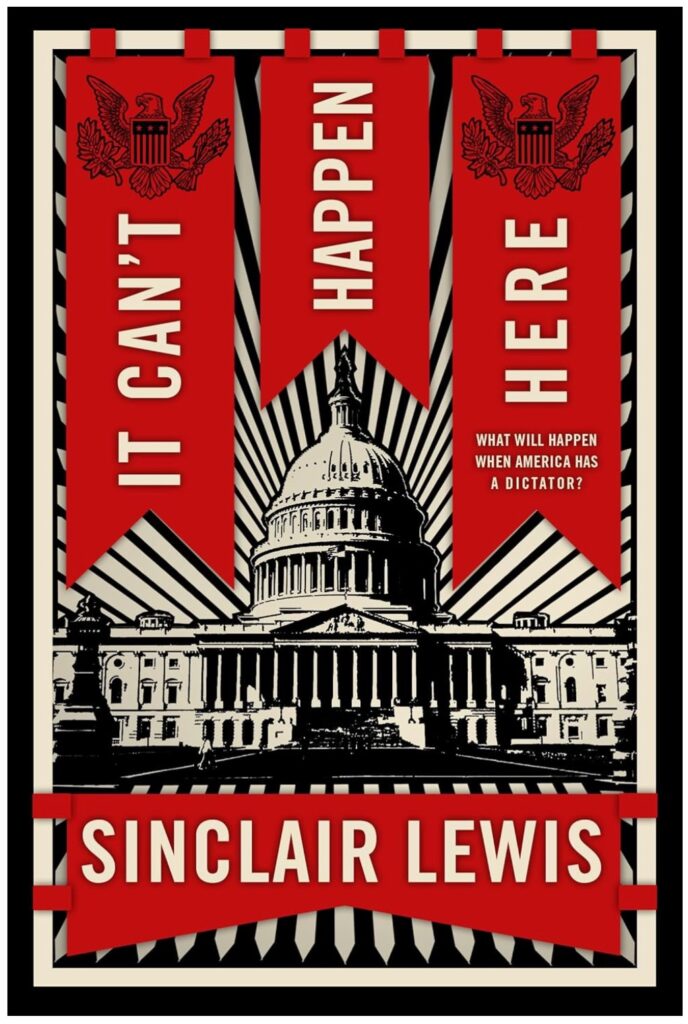
Lewis notes how, like Trump, his fictional strong-man POTUS stocks his cabinet with lackeys and goons to do his bidding. But his use of the man manipulating Windrip is the eerie part: The sinister politico Lee Sarason is the idea-man behind Windrip’s agenda, and comparable to Hitler’s German cronies such as Hermann Goring. He seems a lot like Stephen Miller, Trump’s deputy chief of staff known for promoting White Nationalist policies. In the novel, Sarason eventually deposes the elected Windrip and installs himself in as new president (after exiling the legitimate Vice President). That’s one trick Miller probably can’t emulate. And as far as the differences go, perhaps the biggest noticeable difference is the popularity of Windrip’s newly elected regime, initially. In time his fascistic policies lead to Civil War, but at first he’s much more liked than Trump, at least at this stage of Trump’s corrupt regime.
I mentioned “warts and all”: For one thing, the names are silly (Berzelius Windrip, Hector Macgoblin, many others): They establish a comic tone that undercuts the seriousness of his subject. Much of the action is summarized, not dramatized. It helps Lewis cover a lot of ground in a short period of page-time. (The ebook is only some 180 pages long.) But at times it creates a static feel, of events being summarized rather than brought to life with good description, dramatic action, and characterization. The main character, Doremus (“Dormouse”) Jessup, is the local editor of a small-town newspaper in Vermont. He’s no Bernie Sanders, although the book does have lengthy discussions about Socialism and Communism. He’s an Everyman of sorts—a bit nebbishy, quiet, soft-spoken, and careful. He’s horrified by Windrip’s rise to power and its abuses, but feels powerless to stop it. Perhaps the most dramatic turning point in the novel is the killing of Jessup’s son-in-law, a doctor, which underscores the danger for Windrip’s family and friends. Doremus is ultimately thrown in a concentration camp for publishing anti-Fascist writings (against the “Corpo” regime of Windrip’s “Corporate” party), beaten and abused, from which he escapes and joins the Resistance movement.
I should note Sinclair Lewis was the first American writer to be awarded the Nobel Prize for Literature, in 1930. The timing of the novel’s creation makes it a fascinating historical document. Lewis wrote it five years later, in the summer of 1935, before the election of 1936, during the crucial years of Adolph Hitler’s rise to power. (It’s even before Kristallnacht, in 1938.) Fans of WWII-era history should read It Can’t Happen Here and William Shirer’s The Rise and Fall of the Third Reich (1960) as companion pieces. Both explain, in part, the allure of Fascist policies, and how the Great Depression created an atmosphere ripe for strongman politics. Contemporary history often credits FDR’s New Deal policies for helping to ease the Great Depression, but Lewis’s ground-level narrative portrays a populace fed-up with Roosevelt’s policies and frustrated at the lack of economic growth. One of Windrip’s campaign promises is a gift of $5,000 to every American, on which of course he never delivers.
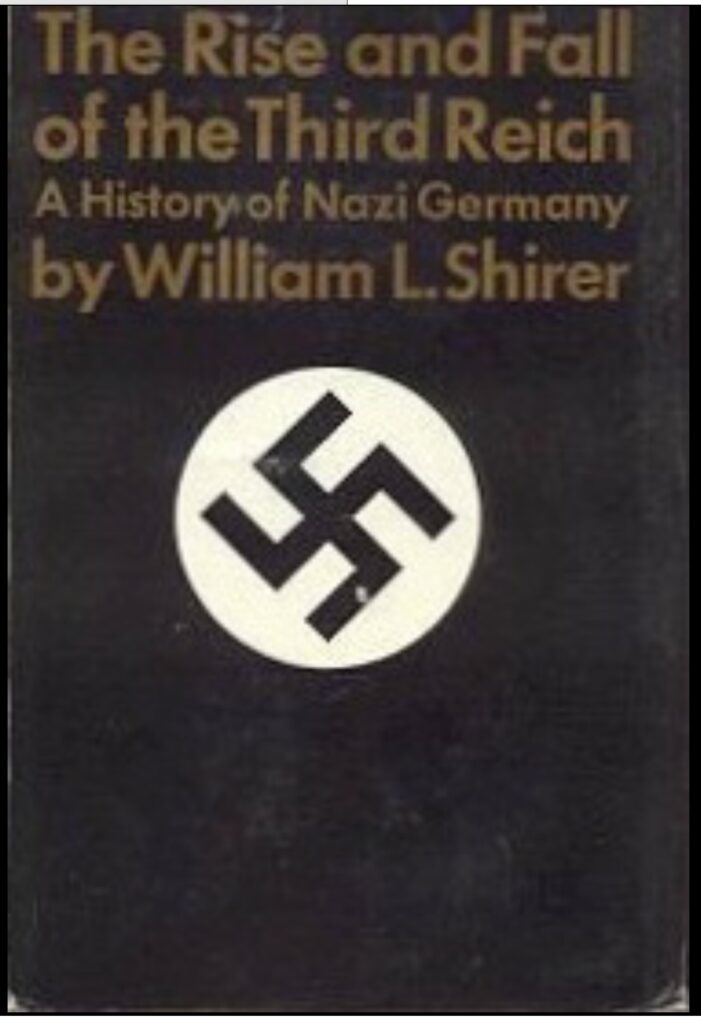
Of these two books, The Rise and Fall is the better read, for my money, by far (and much longer). Shirer does a great job of bringing the atmosphere of Germany in the 1930s to life, and the sinister and effective ways Hitler seized power in the mid-decade. (For one thing, he was elected. Then rigged the system to prevent his party from losing future elections.) But Lewis’s It Can’t Happen Here is a good companion, showing how Americans were worried about the rise of Fascism in the U.S. At times it also echoes George Orwell’s 1984 (1949), with more lighthearted jokes and folksy characters. Imagine 1984 narrated by Andy Griffith.